
Why marketing in the hotel and restaurant industry needs to be radically simplified
Why do so many hoteliers and restaurateurs feel overwhelmed by the topic of marketing—even though they do great work every day? Why do establishments with excellent cuisine, great design, and perfect service still have empty tables, while others with significantly less substance seem to be effortlessly visible?
The answer is more uncomfortable than many believe:
The problem is not a lack of budget.
It's not the algorithm.
It's not the wrong platform.
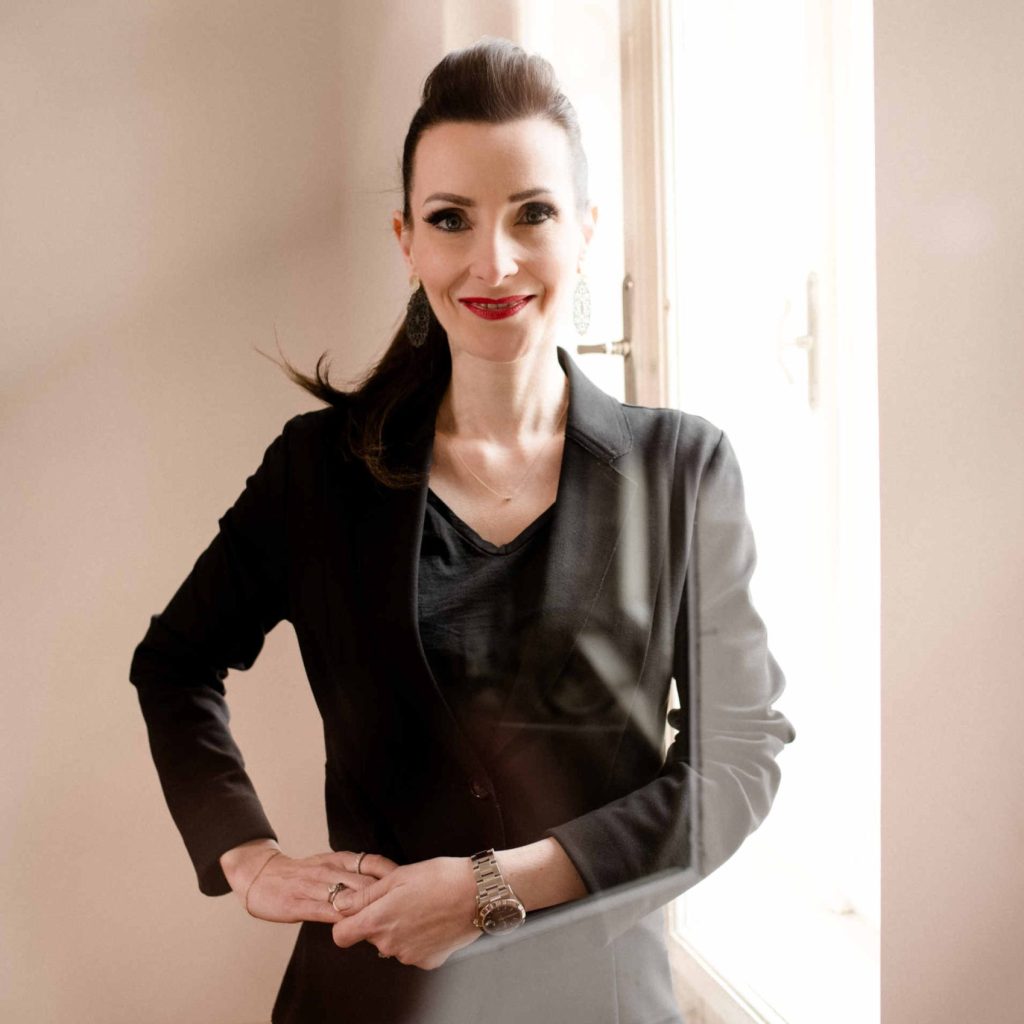
It's marketing that is no longer geared towards the business – but towards trends, agency logic, and digital activism. Theresa Strobl, founder of Strobl Marketing and active in strategy, positioning, and brand management for over 15 years, expresses in this interview what many in the industry are only thinking: why marketing in the hotel and restaurant industry needs to be radically simplified. Why AI without attitude leads to empty content. And why a business's strongest marketing weapon is not Instagram, Google, or ads – but the people who work there every day.
“Marketing is not advertising at the end, but understanding before.”
ALEXANDRA GORSCHE: Why do so many hotels and restaurants feel overwhelmed by marketing—and what should they consciously stop doing first?
THERESA STROBL: Many businesses feel uncertain because marketing is becoming increasingly complex and they are constantly bombarded with new trends, technical terms, and recommendations. This lack of transparency and flood of information leads to feeling overwhelmed.
The most important step is to accept that you don't have to know or implement everything yourself. Simplifying marketing takes the pressure off: set priorities, leave out the superfluous, and don't try to do everything at once.
It's helpful to get a one-time, neutral, independent consultation to determine what the business really needs. Some agencies often recommend measures that they themselves offer or that bring in money – which doesn't always correspond to the actual needs of the company. Marketing must adapt to the business – not the other way around.
When a company comes to you and says, “We don't know where to start,” what three questions do you ask before talking about channels or measures?
- Where does the business currently stand in terms of marketing, what is frustrating, and what measures have been tried so far?
- What specific challenges and problems is the business currently facing?
- What are the goals for the next few years—and what role should marketing play in this?
These questions provide clarity and form the basis for many meaningful marketing decisions.
What does “good marketing” really mean in the hotel and restaurant industry today – and what do you think is completely overrated?
Good marketing today thrives above all on authenticity. Precisely because AI is taking on more and more tasks, real stories, real people, humor, and the individual character of a business are becoming decisive factors for success. Guests want to feel what a hotel stands for – not interchangeable advertising messages.
The unreflective use of AI texts is currently overrated. Without clear instructions, generic, promotional content is often created that conveys little emotion. If you want to stand for authenticity and personality, you should consciously take the time to create genuine and personal content – because that is exactly what creates trust and stays in people's memories.
Many marketing strategies fail because they are too complex. In your opinion, what does a realistic, feasible marketing setup for small and medium-sized businesses look like?
Marketing should not be a theoretical construct, but must fit into everyday practice. Strategies only work if they contain concrete, actionable steps—otherwise, they quickly disappear into a drawer.
There is no one-size-fits-all setup, because every business has different goals and challenges. However, it can be said that a clean website that is easy to find, search engine optimization, and a clearly defined social media presence already provide a strong foundation. It is crucial to make marketing so simple and realistic that it can be implemented in everyday life.
Budget is a major issue: Where is marketing investment really worthwhile—and where is money often wasted in the industry?
Before businesses invest money in marketing, they should consistently use measures that do not require a budget, but rather time and attention. These include, for example, social media, editorial articles in regional media, active word-of-mouth advertising, and the conscious use of reviews from satisfied guests or, in the case of hotels, a strong channel manager. These channels are often underestimated, even though they are extremely effective.
Only then is it worth looking at paid measures. It is important to analyze past activities honestly: What has worked measurably, what has not—and why? Money is burned in the industry primarily where actions are taken in the short term and without a clear goal. Individual actions without a strategy often cost more than they bring in.
What role does content play in marketing today – and what content really works for hotels and restaurants in the long term?
Content is crucial today because it directly influences purchasing decisions. Those who want to eat or sleep well usually choose the establishment that impresses with atmospheric images, videos, and texts – often regardless of whether the offer is objectively better or simply better presented.
In the long term, content that focuses on the business itself works best: atmosphere, values, people, and what makes a place special. Interchangeable content about regional activities or events is less effective – that's what tourism associations and other sites are for. Guests follow hotels and restaurants to get to know them, not the surrounding area.
Social media creates pressure for many companies. How can it be used in a healthy, sustainable way without burning out teams?
Social media should always be managed by someone who enjoys it and likes to use the platforms themselves. Coercion is counterproductive here—no one should take on this task “on the side” or reluctantly. If there is no suitable person internally, the issue should be considered during job interviews or external support should be sought.
The greatest pressure usually arises from a lack of clarity. Once you take the time to determine who will manage social media, how, and to what extent, you will quickly realize that with a clear, realistic strategy, social media is quite feasible—even with little effort and without being overwhelmed. Quality always takes precedence over quantity here. You don't have to post every day, but what you do post must be relevant!
In your experience, what distinguishes companies that have their marketing under control from those that are hardly visible despite good quality?
Visibility does not happen by chance—it is the result of clear decisions. Successful companies know where they stand, where they want to go, and how marketing can get them there. The decisive difference is therefore rarely the budget, but almost always a clear plan.
Businesses without visibility often have high quality, but no strategy for communicating this to the outside world. Marketing then seems random—and that is precisely what prevents sustainable success. Without clarity, marketing becomes a constant source of stress and costs more than it brings in.
If you could give hoteliers and restaurateurs just one marketing rule for 2026, what would it be?
Stay true to yourself. People long for genuine personalities, not staged social media appearances that only exist because “that's just what you do now.” The biggest mistake is copying others. The greatest success lies in implementing marketing in a way that truly suits you, your business, and your values.
Which marketing opportunity is currently most underestimated in the hotel and restaurant industry because it seems too obvious?
Your own employees. Excellent service, reliability, good food, and friendly, committed faces are still the strongest form of marketing. Positive experiences lead to honest word-of-mouth advertising—and that is priceless.
Especially in an increasingly digital world, these human qualities are becoming enormously valuable. Because yes: genuine hospitality is also advertising. It can't be bought – only lived.
What advice would you give to entrepreneurs?
Marketing shouldn't feel like additional stress. It's not a competition to see who can advertise the loudest or follow every trend. Trust your experience—you know best what makes your business special.
Marketing is not the advertising at the end, but the understanding that comes before it: what a business stands for and where it wants to go. Advertising is just the implementation of that – like plating up a dish. Or to put it another way: a good schnitzel is not created by the breadcrumb coating, but by quality, craftsmanship, and attitude in the kitchen. That is exactly what marketing is. Advertising is just the moment when it is served.
If you seek support in this, you should rely on neutral advice – on people who explain, classify, and accompany you, rather than simply selling services. Because good marketing does not come from pressure, but from clarity, trust, and a good dose of gut feeling.