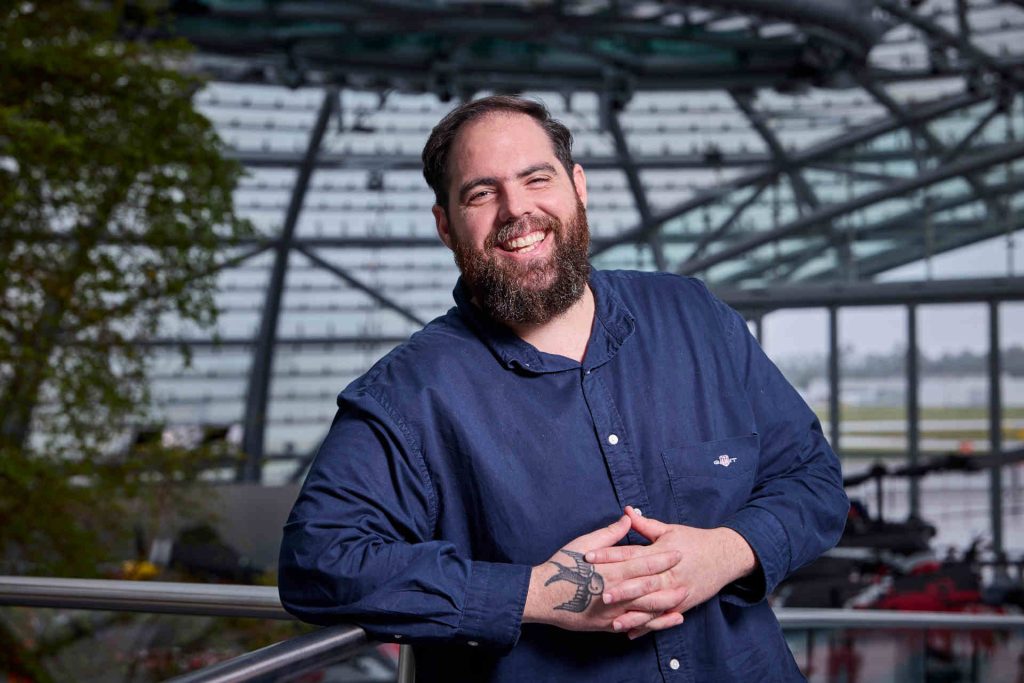

A delta forms where currents meet.
Freshwater and sea, movement and sediment, origin and future. This image captures George Papazacharias perfectly. The Athenian chef embodies a style of cooking that does not preserve Greek produce as if in a museum, but sets it in motion. His dishes tell of tomatoes, mastic, sea urchins, bergamot, sea buckthorn, fennel, figs and brown butter – but never in the sense of a folkloric narrative about Greece. Rather, it is about a new interpretation of Greek flavours: precise, minimalist, exploratory and, at the same time, deeply emotional.
In July 2026, Papazacharias will be the guest chef at the Ikarus restaurant in Hangar-7 in Salzburg. For over two decades, Ikarus has been regarded as an international stage for top chefs from all over the world; each month, a different guest chef takes charge of the menu and brings their culinary signature to Salzburg.
Athens, Norway, world cuisine: the story behind the culinary style
George Papazacharias grew up in Athens, surrounded by the ingredients, flavours and family culinary memories that continue to shape his cooking to this day. However, he honed his professional skills in some of the world’s most progressive kitchens. In Norway, he worked at Maaemo in Oslo and later at Under, the world’s first underwater restaurant. Further stops on his journey included Alinea in Chicago, The Fat Duck in Berkshire and Quique Dacosta near Valencia.
When he returned to Greece in 2021, he didn’t simply bring international techniques back home with him. He brought a new question with him: what happens when you combine Greek ingredients with Nordic precision, fermentation, preservation and a radical focus on produce? The answer is Delta.
The restaurant is located in the Stavros Niarchos Foundation Cultural Centre in Athens, a cultural complex that houses, amongst other things, the Greek National Opera and the National Library of Greece. Delta combines fine dining with art, architecture, sustainability and a contemporary understanding of Greek identity.
Shortly after opening, Delta was awarded two Michelin stars and a Green Michelin Star. According to official sources, it is one of Greece’s leading fine-dining destinations; the restaurant’s website describes Delta as the country’s only two-Michelin-starred restaurant.
“We’re not a moussaka nation”
It quickly becomes clear in conversation that Papazacharias does not want to embellish Greek cuisine, but to liberate it – from clichés, from tourist stereotypes, from the expectation that Greece must always taste the same. “We need to make it clear that we are not a moussaka nation”, he says. “Many people’s culinary knowledge of Greece is limited to this image. We chefs need to break free from that.”
For him, however, this does not mean denying tradition. On the contrary. Papazacharias draws a very clear distinction between memories and restaurant cuisine. Moussaka, he says in essence, is something he wants to eat as his mother makes it, not as a technically altered fine-dining dish. For him, modern Greek cuisine begins where chefs travel, learn, return home and then work with the finest produce their country has to offer. “I don’t think we simply have to cook Greek cuisine. We eat Greek cuisine at our mothers’ and grandmothers’ homes. In a restaurant, it’s about working with the flavours and produce of Greece.” This statement is key because it dispels the misconception surrounding many modern national cuisines. Contemporary does not mean overwriting one’s heritage. Contemporary means making that heritage legible in a new way.
The tomato as an umami powerhouse
Anyone who asks Papazacharias about a Greek ingredient that’s worth getting to know better might expect olive oil, lamb, fish, feta or oregano. His answer: the tomato.
Not as an ingredient in a salad. Not as a garnish on souvlaki. But as an aromatic foundation. “For us, the tomato has helped shape the flavour profile of many dishes”, he explains. “That could be tomato vinegar, fermented tomato, pickled tomato, oil from roasted tomatoes or matured tomato paste. Together, we call this our ‘umami bomb’ in the restaurant.” Herein lies one of the greatest strengths of his cuisine: Papazacharias does not work with the exotic, but with depth. A seemingly simple ingredient is transformed, through technique, time and precision, into various states of flavour. Acidity, sweetness, ripeness, fermentation, roasted notes and umami are drawn out of a single product until the everyday suddenly becomes something with its own identity.
The menu at Restaurant Ikarus: Greece as a work of precision
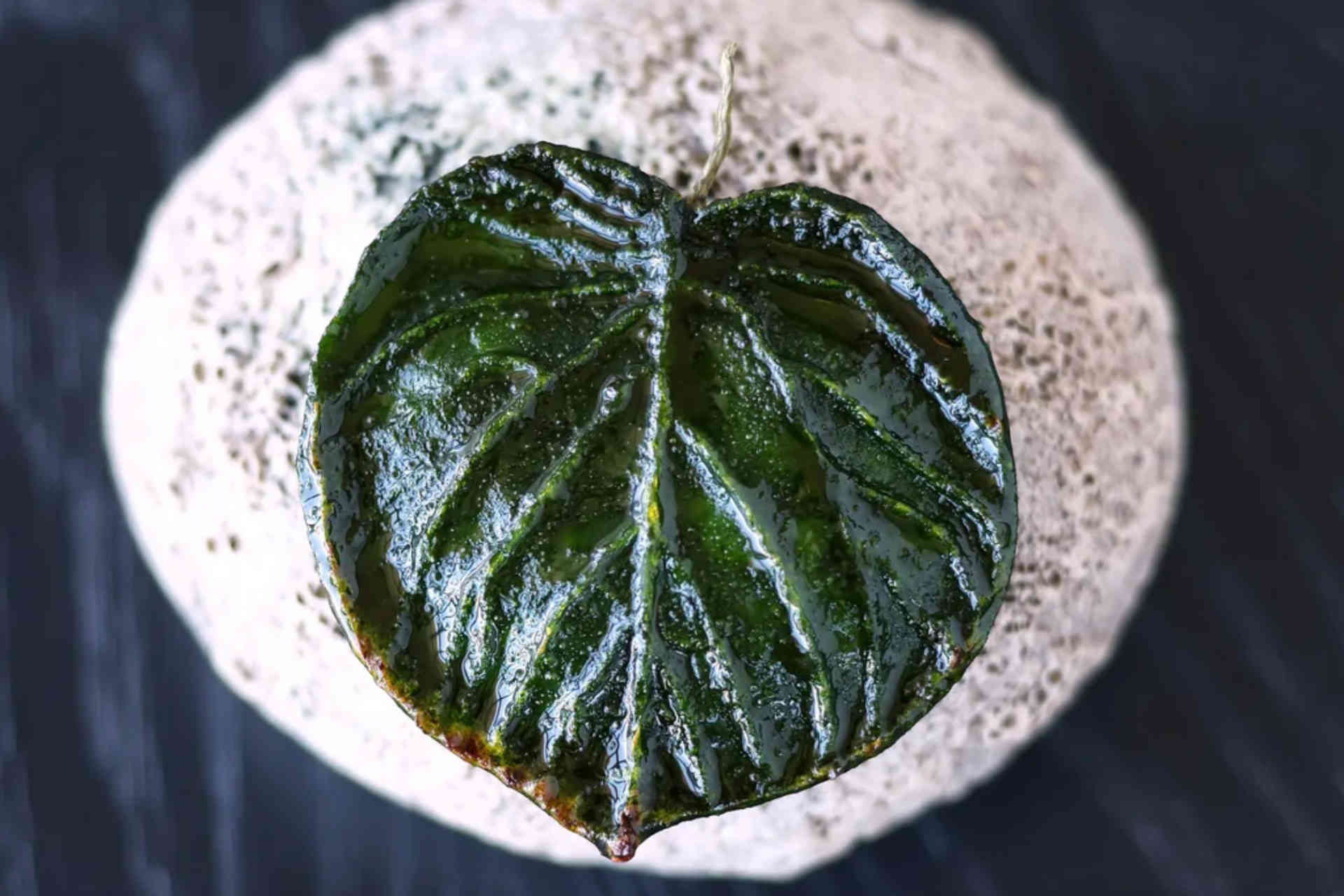
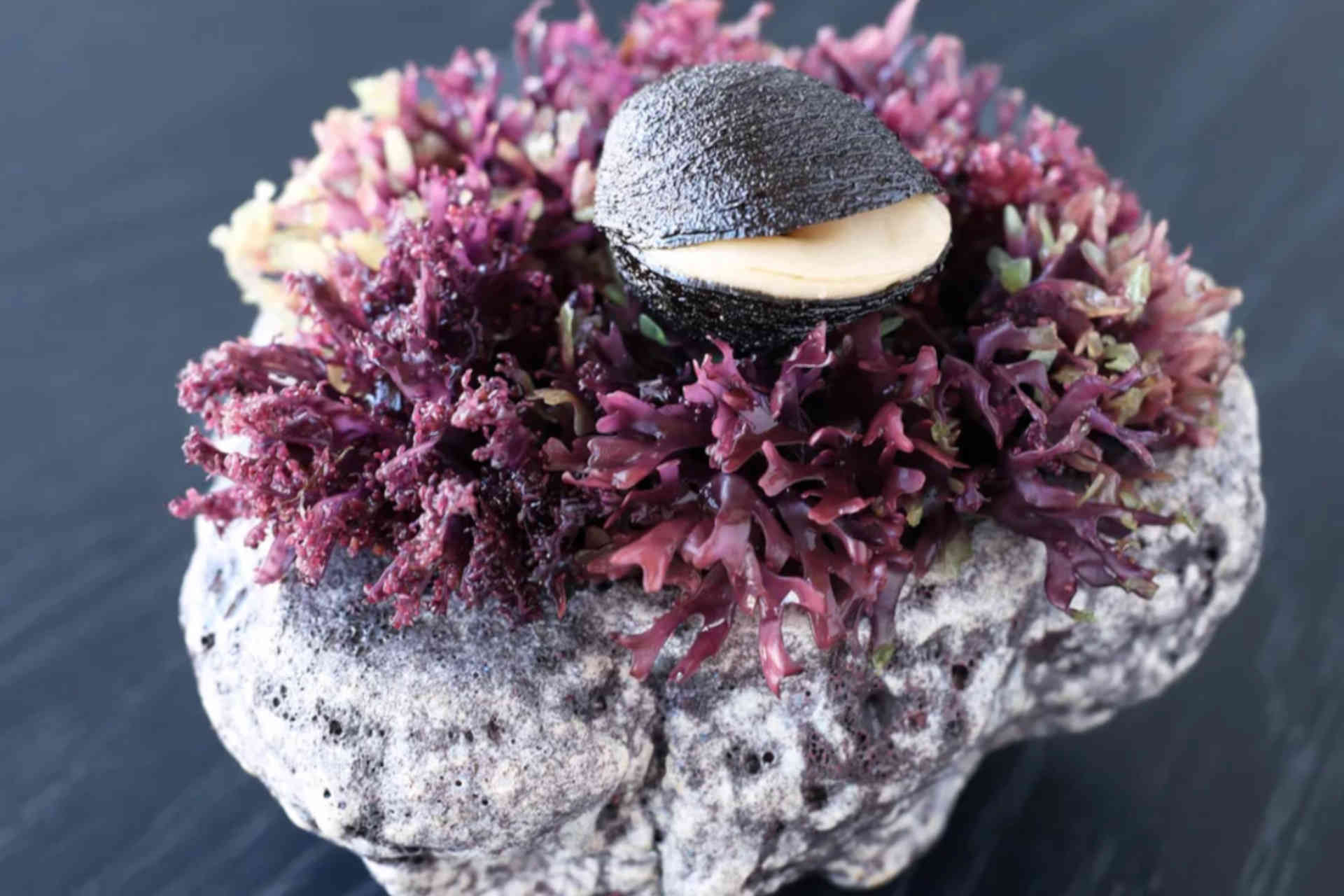
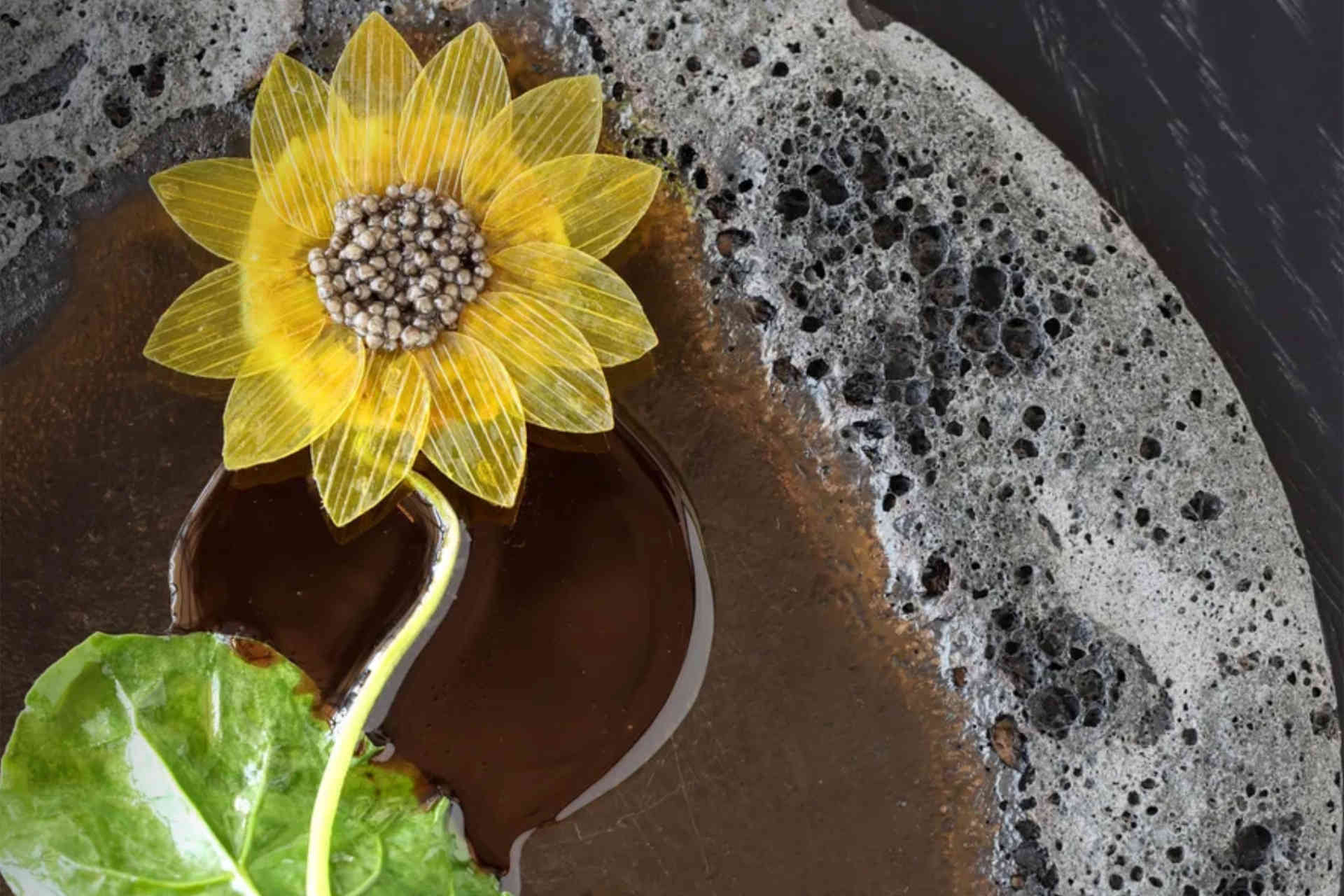
The July menu at Restaurant Ikarus reads like a journey through Greece – a journey through textures, flavours and contrasts. The opening course, ‘Grilled Leaf’, featuring courgette, pear and tree tops, almost resembles a still life. This is followed by squid with koji, daikon and brown butter; a ‘calla lily’ made from red prawns and bergamot; and crispy sea urchin with bottarga and sea buckthorn. The underlying structure of his cuisine is already evident here: seafood meets acidity, bitterness, fermentation and fat. Nothing remains one-dimensional. Particularly striking is the course featuring pickled tomatoes, lobster, kefir and wild herbs. It serves as a key to the chef’s philosophy: the tomato as a Greek memory, kefir as a tangy, creamy counterpoint, lobster as a luxury ingredient, and wild herbs as the landscape.
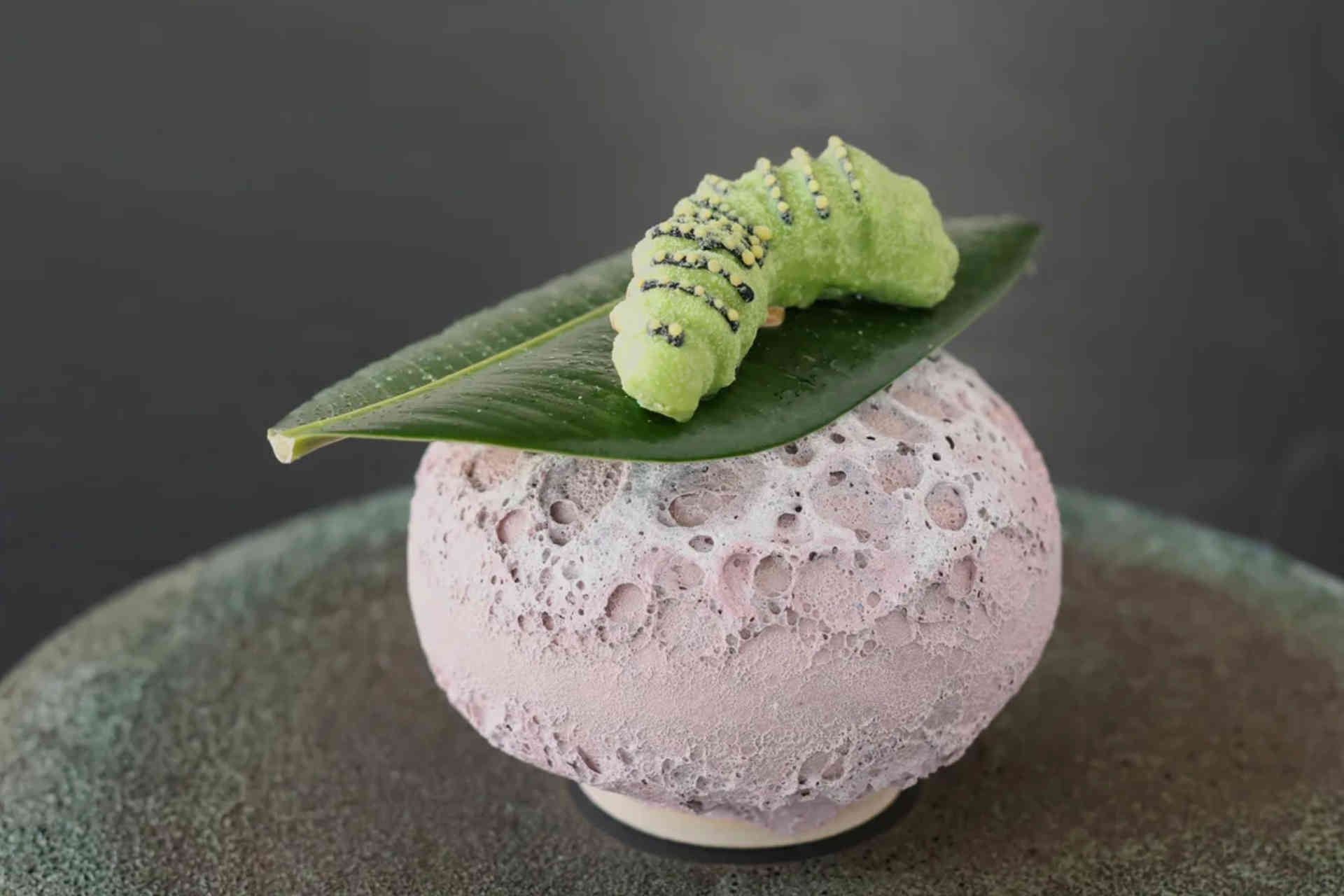
The scorpion fish with masticha, champagne sauce and Kaluga Reserve caviar adds another typically Greek element to the menu. Masticha, the resin from the island of Chios, lends dishes a resinous, fresh and slightly balsamic depth. When combined with the fish, sauce and caviar, the result is not a folkloric touch, but an aromatic signature: Greece, but interpreted differently. This is followed by cod with pickled plum and tangerine, Pluma Ibérico with shio koji and eucalyptus vinaigrette, and Wagyu picanha with Swiss chard, Osietra caviar, fennel and fig. To finish: ‘caterpillar’ with chervil sorbet, biscuit and Nobilis fir, as well as poppy seeds, brown butter, sea buckthorn caramel and hazelnut.
The wine pairing also reflects the Greek origins: including a Blanc de Côteaux ‘Cuvée Amphora’ by Apostolos Thymiopoulos from Macedonia, Assyrtiko ‘Ammonite’ by Gaia Wines from the Peloponnese, and Vinsanto by Hatzidakis from Santorini. This means Greece is brought to life not only on the plate, but also in the glass.
When ceramics take shape before the dish
Papazacharias’ approach to creating a dish is particularly fascinating. Many chefs start with the ingredients, technique or flavour. He often starts with the vessel. “I work differently”, he says. “First I create the ceramics. Then the dish takes on a conceptual form.” This is more than just a love of design. For Papazacharias, the tableware is part of the narrative. The dish should not simply look beautiful, but generate intellectual intrigue. It should have Greek roots, yet at the same time unsettle, challenge and intrigue the guests. “When people try a new dish and cannot immediately identify what they are eating – yet it is both delicious and conceptual – then, for me, it is complete.” Therein lies an important distinction: the visual element may be striking, but it is not the goal. It is the gateway to a deeper exploration of flavour.
“Edible inedible”: Edible, but not as expected
Papazacharias describes his cuisine using a paradoxical term: “edible inedible”. Something looks like one thing, but is actually something else. Something seems familiar, yet defies immediate categorisation. “I don’t want guests to focus solely on the visual aspect”, he says. “I want them to sense the work that goes into combining the flavours.” That is precisely what makes his cuisine so contemporary. In an era where fine dining is often conveyed through images, videos and visual effects, Papazacharias insists that taste is the intellectual and emotional core. The dish isn’t just meant to look good on Instagram. It should spark questions as you eat: Why do these flavours go together? Where does this depth come from? How was this flavour profile built up?
Sustainability starts with people
Delta has been awarded a Green Michelin Star, yet Papazacharias does not define sustainability solely in terms of product cycles, resource conservation or zero-waste techniques. Of course, making full use of ingredients plays a part. Many ingredients reappear in several dishes, not for lack of ideas, but out of respect for the product. Yet his most important definition is a more human one. “For me, sustainability is also about how much we, as people, look after one another”, he says. “It’s not just about respect for products, but also about respect for the people we work with.” He sees the fact that many team members have stayed with him for years as a success. In an industry often characterised by staff turnover, pressure and burnout, that is a remarkable statement. Here, sustainability is not just a label, but about nurturing relationships. It is not a purely ecological concept, but a matter of culture.
Tradition respects innovation, and vice versa
How does one strike a balance between tradition and innovation without veering into nostalgia or sensationalism? Papazacharias answers this question with a guiding principle from his restaurant: “Tradition respects innovation. And innovation must respect tradition.” This sentence perhaps best sums up his cuisine. It allows for technical freedom, but not arbitrariness. It allows for fermentation, shio koji, Nordic precision and conceptual ceramics, but always with an inner compass: flavour, produce, provenance. When asked to choose between tradition and innovation in a quick ‘either/or’ scenario, he opts for innovation. But he immediately adds: innovation only with respect for tradition. Olive oil, for instance, is not merely a restaurant ingredient for him. It is linked to childhood memories: bread, raw unfiltered olive oil, Sunday dinners, family. Some memories, he says in essence, he does not want to destroy by compulsively modernising them. This, too, is a strength of his cuisine: it knows when it is allowed to intervene and when it must leave something untouched.
What young chefs can learn from George Papazacharias
His advice to young chefs is direct, almost simple, and powerful precisely because of that: “You have to be stubborn. And you mustn’t let anyone bring you down. Even if others say you can’t achieve anything great: there is always greatness in your own life. You will find it in what you do.” This statement is fitting for a chef who doesn’t sell Greece through clichés, but through precision, depth and attitude. Papazacharias is not a flamboyant figure. He comes across as focused, clear-headed, friendly, almost reserved. Yet his cuisine possesses an enormous inner tension.
Greece: the cuisine of the future
The guest chef’s menu at Restaurant Ikarus does not simply showcase what George Papazacharias cooks. It demonstrates the direction in which Greek haute cuisine can evolve. Away from the predictable. Away from mere references to tradition. Towards a cuisine that works with fermentation, acidity, fat, resin, smoke, maturation, herbs, marine flavours and precise technique. A cuisine that does not diminish Greece, but rather elevates it. The true ‘Delta effect’ therefore lies not merely in the convergence of different trends. It lies in the fact that this creates fertile ground. For new ideas. For new flavour profiles. For a modern Greek cuisine that does not need to be explained by comparing it to old stereotypes. At Hangar-7, George Papazacharias shows that Greece doesn’t just taste of memories. Greece tastes of the future.
About Alexandra Gorsche
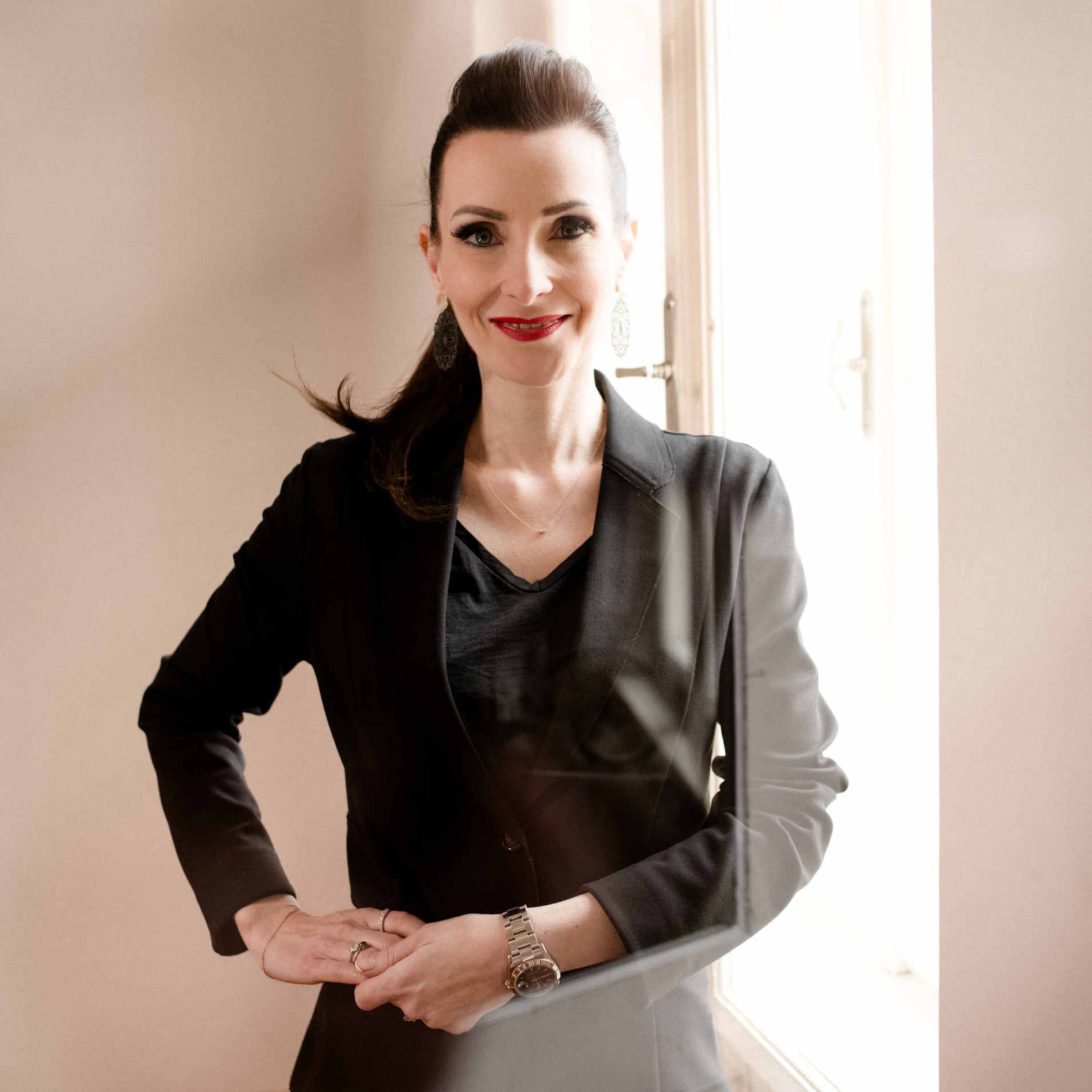
Alexandra Gorsche is an Austrian food journalist, moderator, speaker, consultant and culinary voice with a strong focus on fine dining, hospitality and contemporary restaurant culture. She is editor-in-chief of Genusspunkt, responsible for the culinary direction of stayinart and contributes to renowned publishers and media brands such as Callwey Verlag. Her work explores the intersection of gastronomy, culture, design, travel and entrepreneurship from Michelin-starred restaurants to emerging food trends, chefs and hospitality concepts.