
Sustainability is a term frequently used in haute cuisine.
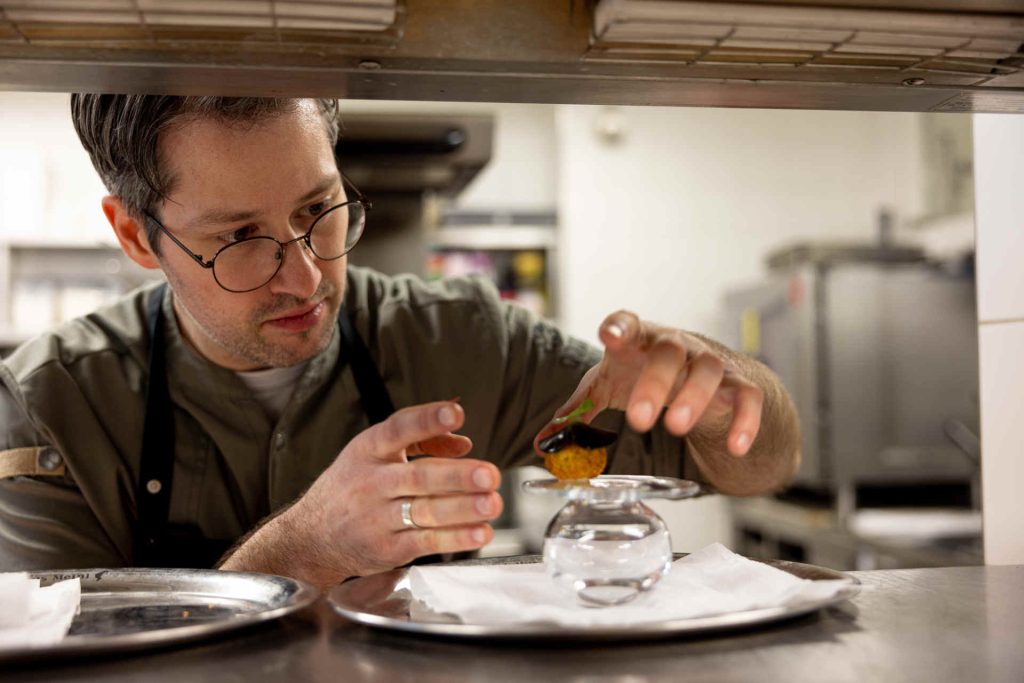
For Paul Gamauf, however, it is not merely a marketing message, but a commitment he lives by. As head chef at the Michelin-starred restaurant EDVARD at the Anantara Palais Hansen Vienna, he combines precise craftsmanship with a deep connection to nature and an uncompromising respect for food.
He forages, ferments and preserves many of the ingredients himself. Working with small-scale producers from Austria and neighbouring countries, he creates menus that blend regional origins, international techniques and extraordinary flavours. The result is a cuisine that is technically precise, emotionally moving and, at the same time, deeply rooted in nature.
In conversation with Genusspunkt, Paul Gamauf explains why fermentation is far more than just a trend, how non-alcoholic pairings open up new horizons of flavour, and why guests at EDVARD not only experience an extraordinary menu but also take home a new understanding of food and its value.
Paul Gamauf on sustainability, fermentation and the future of haute cuisine
ALEXANDRA GORSCHE: Your cuisine is often described as modern, nature-inspired and sustainable. What does respect for the ingredient mean to you?
PAUL GAMAUF: I prefer to talk about food rather than products. These days, many people have lost touch with food. Eating is often reduced to mere nutrient intake. Yet nature provides us with everything we need and much more besides. We should become more mindful of food again, and ideally this understanding should be taught in schools.
You forage, ferment and preserve your own produce. Why is this ancient craft so important for modern haute cuisine?
These techniques open up a fascinating world of flavour possibilities. Fermentation and preservation are primal and essential. They have been part of human life for centuries. It is precisely there that we continually discover flavours and combinations that are now coming back into the spotlight.
Many of your ingredients come from small producers. What do you look for in them?
Quality always comes first. Equally important is the concept of sustainability. We work with people who share our values. Austria and its neighbouring countries offer exceptional produce. Short supply chains and wild-foraged ingredients make our dishes authentic and give them a signature style all of their own.
Your cuisine combines international techniques with regional produce. How does this result in something unique?
Digitalisation has made the world a smaller place, and we are shaped by many different influences. That is precisely why it is so exciting to combine local ingredients with modern techniques. Our team brings a variety of cultural backgrounds and ideas to the table. This gives rise to a culinary language that can only be experienced here.
Sustainability is a big buzzword. When do you find it credible?
Sustainability mustn’t remain just a statement. It has to be put into practice. Every day, we think about how we can make full use of food and integrate it sensibly into menus and non-alcoholic accompaniments. That’s why we store, ferment and preserve a lot. Food is precious and deserves the utmost respect.
You work with fermented juices and non-alcoholic pairings. What makes them so exciting?
I often find non-alcoholic accompaniments that I’ve developed myself particularly fascinating. Whilst wine is bought in, we can develop a completely unique signature style for our drinks. This results in pairings with great depth and individuality that complement the menu in a unique way.
EDVARD has been awarded a Michelin star. How do you manage to combine precision with a love of nature?
It was a great honour for me to take over this restaurant. In nature, as in the kitchen, time, temperature and precision play a crucial role. Nature inspires us; we translate these processes into culinary experiences on the plate.
What do you want guests to have understood after your menu?
Our main aim is for guests to enjoy an exceptional evening. If, in the process, they also gain a deeper understanding of food, their surroundings and the beauty of transience, that makes us particularly happy.
Infobox: Paul Gamauf at a glance
- Position: Head Chef at EDVARD
- Location: Anantara Palais Hansen Vienna
- Award: One Michelin star
- Culinary style: Nature-inspired, modern, sustainable
- Focus: Fermentation, foraging, zero waste, non-alcoholic pairings
- Career highlights: TIAN, Palais Coburg Residenz, Kelsen Parliament Restaurant
- Philosophy: Using food holistically and consistently valuing resources
About EDVARD
EDVARD Restaurant is one of Austria’s most innovative fine-dining destinations. Under the direction of Paul Gamauf, the restaurant combines sustainable haute cuisine with regional ingredients, artisanal precision and exceptional beverage pairings. The menus reflect nature, the seasons and the diversity of Austrian produce at the very highest level.
Our conclusion
Our conversation with Paul Gamauf provides a striking illustration of the direction in which modern haute cuisine is heading. Sustainability, fermentation and provenance are not viewed as mere trends, but as central components of culinary excellence. At EDVARD, this results in a cuisine that is technically precise, emotionally moving and deeply rooted in nature. Anyone who wishes to understand fine dining not merely as a pleasure but also as a philosophy will find in Paul Gamauf one of Austria’s most exciting chefs.
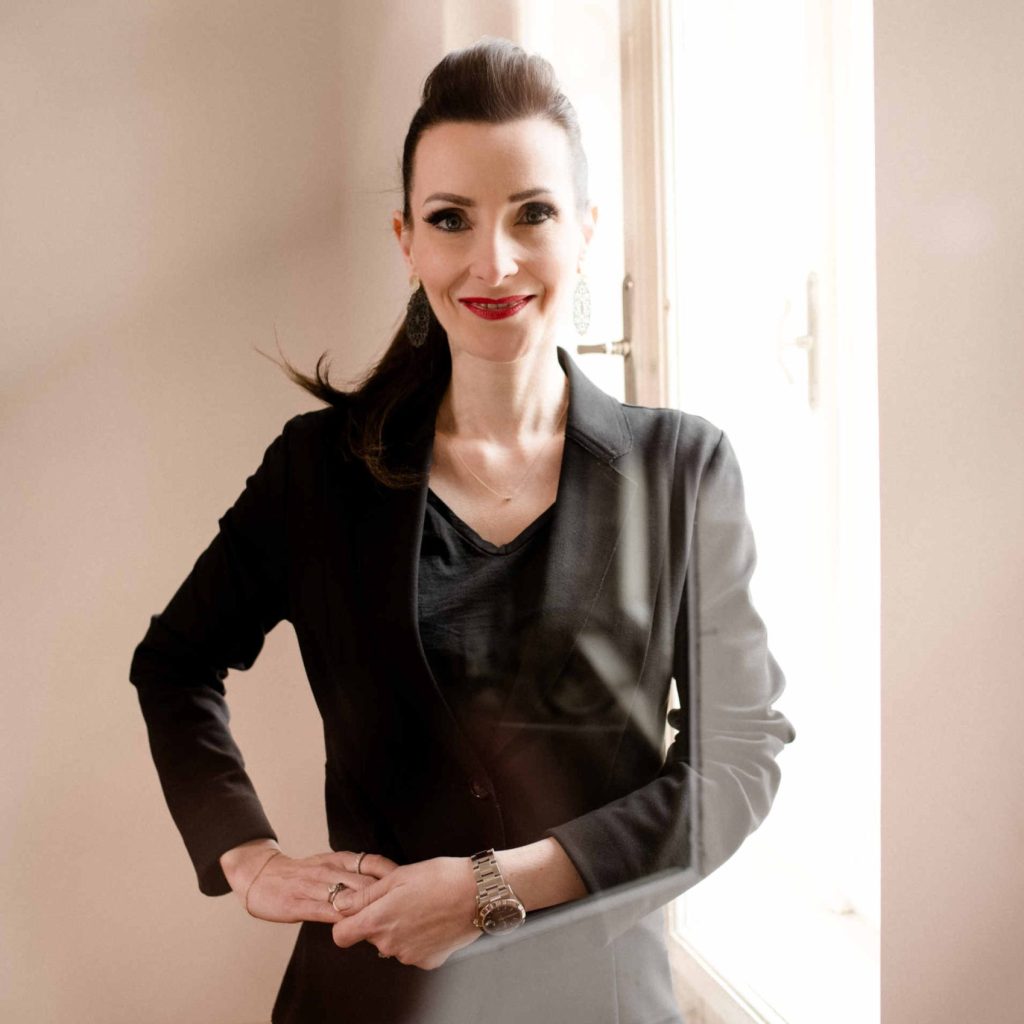
About Alexandra Gorsche
Alexandra Gorsche is an Austrian food journalist, moderator, speaker, consultant and culinary voice with a strong focus on fine dining, hospitality and contemporary restaurant culture. She is editor-in-chief of Genusspunkt, responsible for the culinary direction of stayinart and contributes to renowned publishers and media brands such as Callwey Verlag. Her work explores the intersection of gastronomy, culture, design, travel and entrepreneurship from Michelin-starred restaurants to emerging food trends, chefs and hospitality concepts.