
Campaign for coffee culture
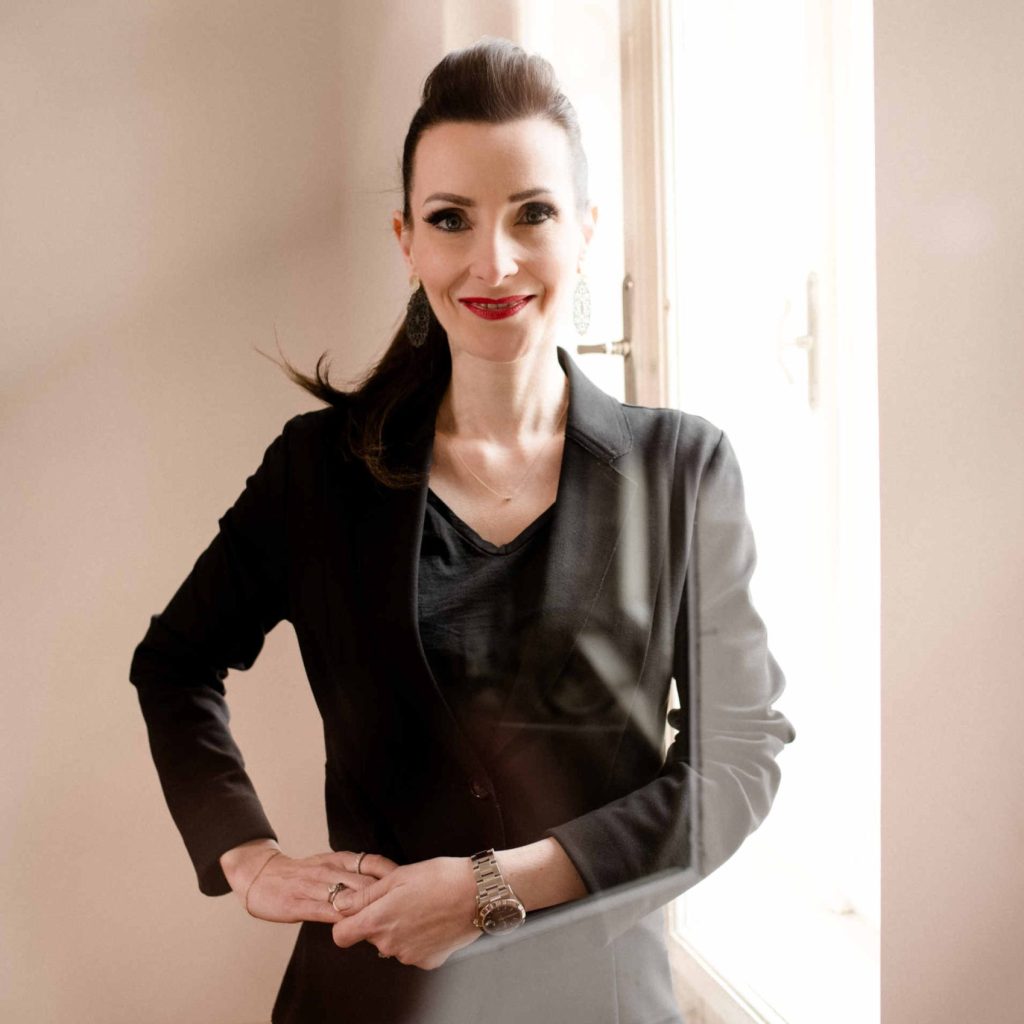
How can tradition be preserved without losing touch with modern processes? As part of SumUp's Coffee Culture 2.0 campaign, co-owner Theresia Bayer talks about changing guest expectations, saying goodbye to “cash only,” and why stable structures in the background are crucial to creating space for what matters most: the personal moment with the guest.
Coffee in a modern setting
ALEXANDRA GORSCHE: The Balthasar Café is often cited as an example of how to combine tradition and modern processes. What makes this business a particularly exciting case study in your opinion?
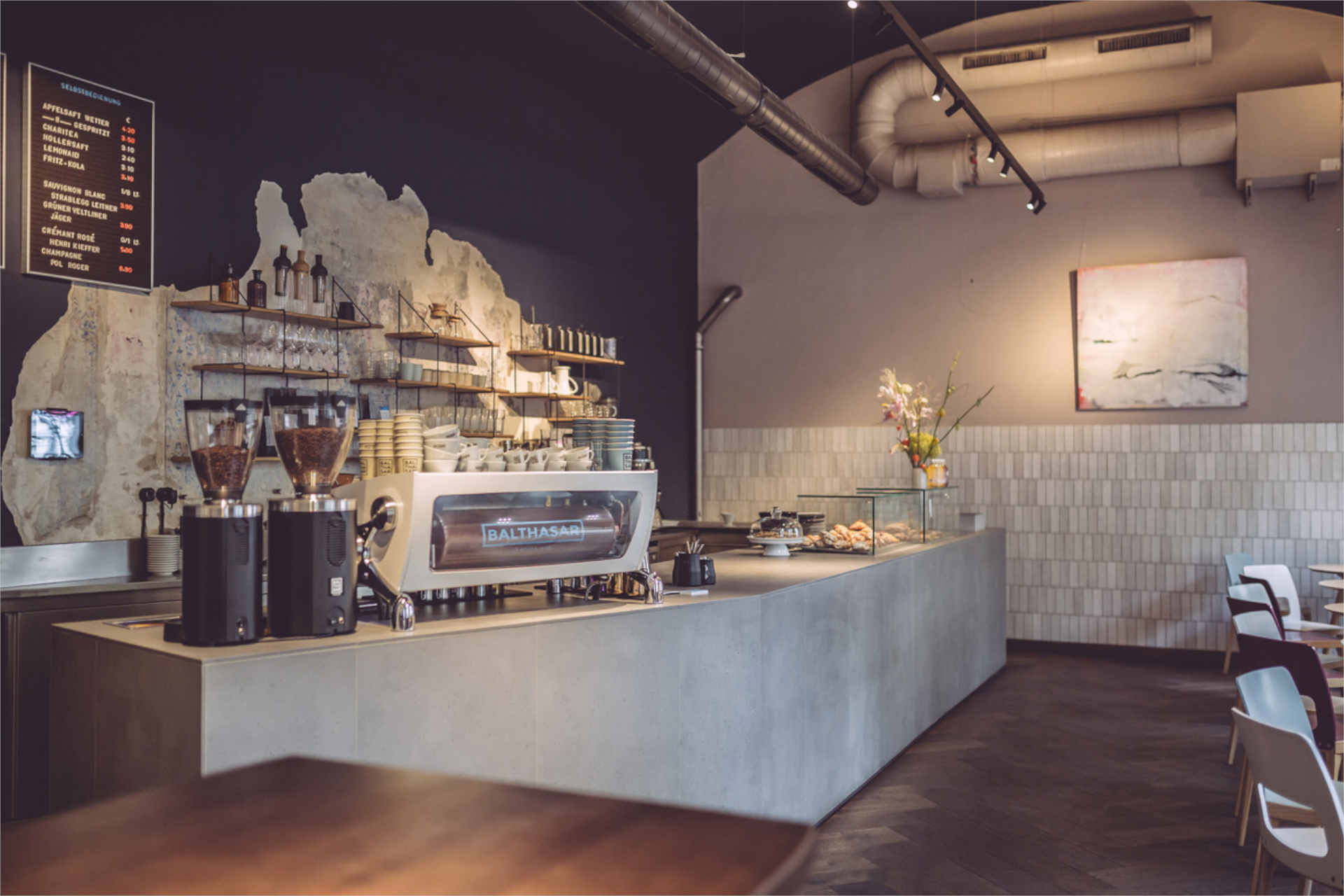
THERESIA BAYER: From the very beginning, we set ourselves the goal of creating a place where people could enjoy the best quality coffee in a pleasant, sustainable, and modern atmosphere. Our philosophy is to consistently practice sustainability at all levels—from the coffee we prepare to the food and coffee beans we use to the interior design. At the same time, we are very happy to be part of the modern Viennese coffee house scene and to actively shape it.
Many coffee house operators fear that digital tools will change the atmosphere. Why does digitalization work at Balthasar without diluting Viennese coffee house culture?
We are open to new technologies, but we also believe that certain traditions have their absolute justification. We think it always comes down to a good mix: moving with the times without forgetting your own values.
Was the move away from cash only inevitable at some point? What does this example reveal about changing guest expectations, particularly in Vienna?
Yes, the move was simply overdue, especially after the pandemic. Cash still plays an important role in Austria, but Vienna is an international metropolis. For many guests, especially tourists, “cash only” is often irritating. We wouldn't want to do without this flexibility today and see it as part of moving with the times.
At Balthasar, duty rosters are digital, orders are paperless, and check-out is stable. Which of these changes do you think has the greatest effect on daily operations?
We always look at where we can optimize processes in a meaningful and convenient way. These procedures have developed organically from this. It is not so much a single measure as the mix that makes our daily work easier.
A common argument in favor of digital processes is time savings. Where does this gain manifest itself specifically at Balthasar—in service, in the team, or in guest contact?
Smooth processes are essential, especially when it comes to payment and the cash register system: that's where we save the most time. We can invest this time in what's important: personal customer contact and interaction with our guests – even when things get hectic.
The café deliberately avoids many trends, but remains modern in terms of organization. Is it precisely this separation—attitude at the front, structure at the back—that is a model for success for cafés?
You could definitely say that. We concentrate on what we do best and what we have set ourselves as our goal: coffee of the highest quality in a harmonious environment. In doing so, we deliberately keep our line lean. That is part of our philosophy. Whether this is suitable for other businesses is ultimately something everyone has to decide for themselves.
What can classic Viennese coffee houses learn from Balthasar without losing their identity?
We don't want to presume anything here; that wouldn't be our job. The diversity of Viennese coffee houses is something very special – just as diverse as the city itself. And that's a good thing.
Many businesses are experiencing increasing pressure from staffing, costs, and frequency. What role does technology play in keeping businesses like Balthasar stable in the long term?
Above all, technology helps to optimize processes in the background. This leaves more time and energy for the activities “at the front” – in other words, for the guest. We are very interested in new developments, but we always make sure to stay true to ourselves.
Balthasar is not a chain, but a deliberately small business. Why are cafés like this particularly well suited to pragmatic digital solutions?
In smaller businesses in particular, we know how much time organization and background work can take up. That's why we make a special effort to optimize these areas. This frees up capacity for our core business and our passion: good coffee.
Looking ahead to the next few years, how will everyday café life continue to change—and what should definitely remain human?
There will certainly continue to be exciting trends in the product world and more digitalization—such as ordering via tablet. But for us, one thing is clear: the personal, interpersonal moment is indispensable. That's why we are very grateful for our great team, who live our philosophy and strive every day to make even better coffee—face to face with the guest.
The SumUp Barista Guide is available for download HERE.