
Technique, products, attitude
ALEXANDRA GORSCHE: You have already had an impressive career – from imon Taxacher, Rasmus Kofoed and Jonny Boer to top international establishments. What has influenced you the most? Is there one stage that stands out?
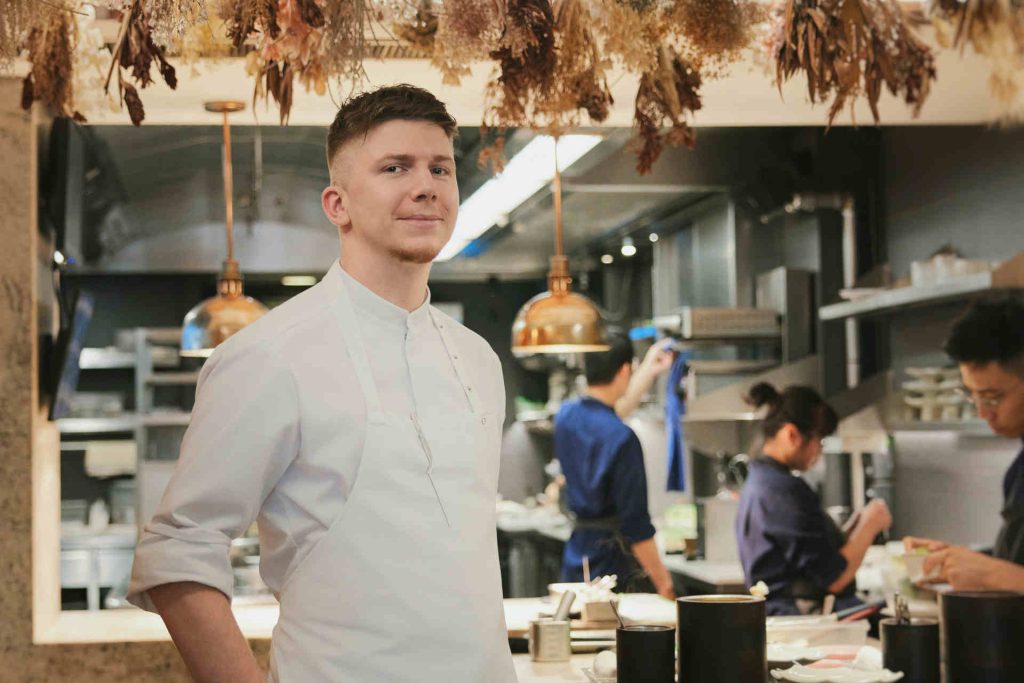
MARTIN ÖFNER: For me, it wasn't so much a single stage that shaped me, but rather the journey. Chefs are almost like artists: when they see something they like, they incorporate elements of it into their style. It's similar for me. Each stage has contributed certain building blocks to how I cook and express myself culinarily today.
Björn Frantzén: You say you cook “on his stage.” How much of Martin Öfner is still in this DNA—and how do you contribute specifically?
People often ask if there is a lot of Austria in the program. The answer is—to put it bluntly—no, not really. I left Austria when I was young. After my time with Taxacher, I could have stayed in Alpine cuisine. I was driven by ambition and the desire to work for the best of the best worldwide.
How do I contribute? Over time, I have built up a lot of trust with Björn Frantzén. We have a relationship that has to work, given that there are many thousands of kilometers between us. My contribution is primarily my knowledge of Japanese micro-seasons, fresh fish in Tokyo and Osaka, and direct exchanges with Japanese producers. I bring a depth of seasonality that you don't have in Sweden. That's a big difference—and a clear distinguishing feature.
You talk about Japanese micro-seasons. What does that really mean in everyday life?
We work with six to seven Japanese suppliers. We have someone on the team who speaks Japanese—and there are producers who don't speak English. That's how deeply we are involved in the subject. These micro-seasons and Japanese products really set us apart from others.
For me, Japanese micro-seasons in everyday life mean above all mindfulness and precision. It's less about big, obvious seasonal changes and more about subtle shifts—in climate, in produce, in taste, in texture. This sensitivity shapes how we think, how we shop, and how we cook. And what that means specifically in Singapore: We work very closely with Japanese producers, often on a weekly basis, and adapt dishes not only seasonally, but also micro-seasonally. The same fish, the same vegetable, or the same citrus fruit is treated differently depending on the time of year—sometimes only minimally, but very consciously. A few days earlier or later often make the difference between freshness, sweetness, bitterness, or tension.
Let's take a small step back: How long have you been living in Singapore now, and how has this time affected you as a chef?
I've been here for two years, and it's always been clear to me that I look for restaurants, not countries – the environment then follows. Singapore is extremely structured and very clearly organized in many ways. Sometimes this makes social interactions seem a little more reserved or formal, especially compared to Europe, where conversations over a beer after work are often more spontaneous and open. This is less a criticism than a cultural observation: people here simply converse differently, even about social or political issues. At the same time, Singapore is an incredibly precise system, a well-oiled machine. Trains are punctual, suppliers are reliable, and safety is always guaranteed. For me as a chef, this is a huge advantage because it allows me to focus 100% on the restaurant and my work instead of constantly having to deal with organizational or structural issues. In many parts of Europe—depending on the country—things are much more fragmented. This clarity and reliability create the space to work at the highest level.
Your grandmother had a strong influence on you. Even if Austrian cuisine doesn't “end up on your plate” – what from your childhood is still present today?
What guides me is the heart component. Many grandmothers inspire their grandchildren through food—and they know what has “heart.” I try to integrate this heart component into my style. Cooking at such a high level personally, with character, rough edges, and yet maintaining precision—that's challenging. I can't simply reproduce the ingredients of my childhood here. Back then, we didn't eat bluefin tuna or white truffles in the Tyrolean valley. But the principle remains the same: seasonality, respect, and cooking with love. When guests say afterwards that it was one of the most moving experiences of their lives, then you know that this heart component has been achieved.
Is there a childhood dish that has stayed with you to this day?
Zillertal doughnuts with very strong gray cheese—that pungent, intense flavor. My sister never liked it, but for me it was an early sign: even back then, my taste buds were geared toward adventure.
In your opinion, what makes “three-star cuisine”: technique, products, attitude?
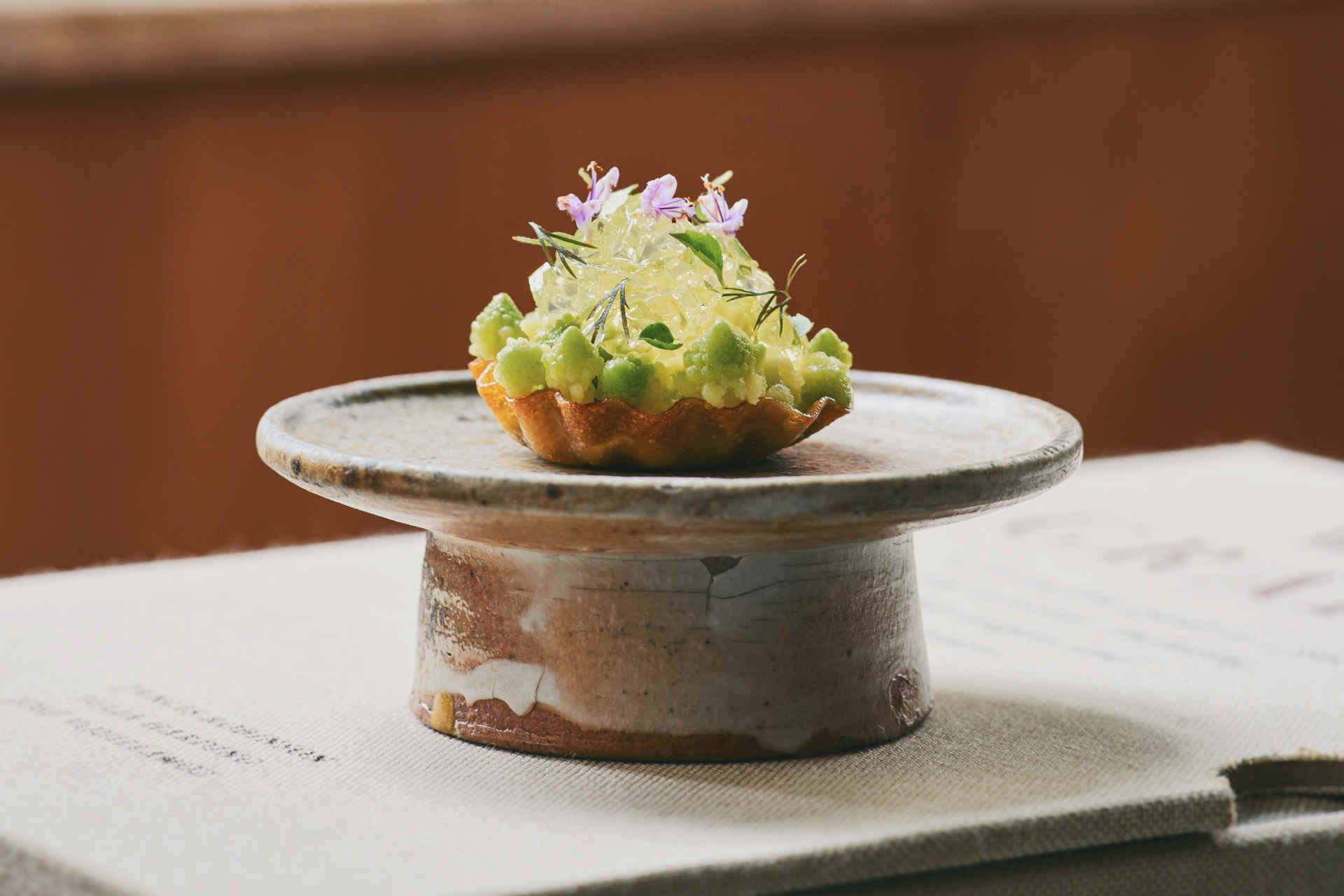
Techniques per se are important—you look at what others are doing, you're constantly learning. But in the end, it's the sum of techniques. And you have to know when to stop. Omitting is just as important as adding: recognizing when a dish is ready.
Fermentation is everywhere—you even talk about a hype that bores you. Why? And how do you use fermentation at Zén?
The fermentation hype has been going on for six or seven years. Every other Michelin-starred restaurant in Europe has preserving jars lying around, sometimes just for decoration. And that's not the point. With every creation, I ask myself soberly: Does it make sense? Is there a reason for it? If so, you do it—if not, you leave it out. We also have garums and koji, of course. But it's about the purpose. In our non-alcoholic pairing, however, fermentation is essential: kombucha, jun, Vietnamese fermentations, many tea-based. It's not decoration, but foundation. Nevertheless, the question remains: Do you need it – or don't you?
How is the demand for alcoholic vs. non-alcoholic accompaniments changing for you?
A lot is changing in Singapore. Generational change, health consciousness—people are riding the green wave. And it must also be said that many people here are drinking less. When you experience a multisensory menu, you don't want to spoil it with a heavy wine pairing. That's why we offer non-alcoholic pairings, mixed pairings (wine and sake combined with juice), and classic wine pairings.
How do you develop these non-alcoholic pairings—and who is responsible for them?
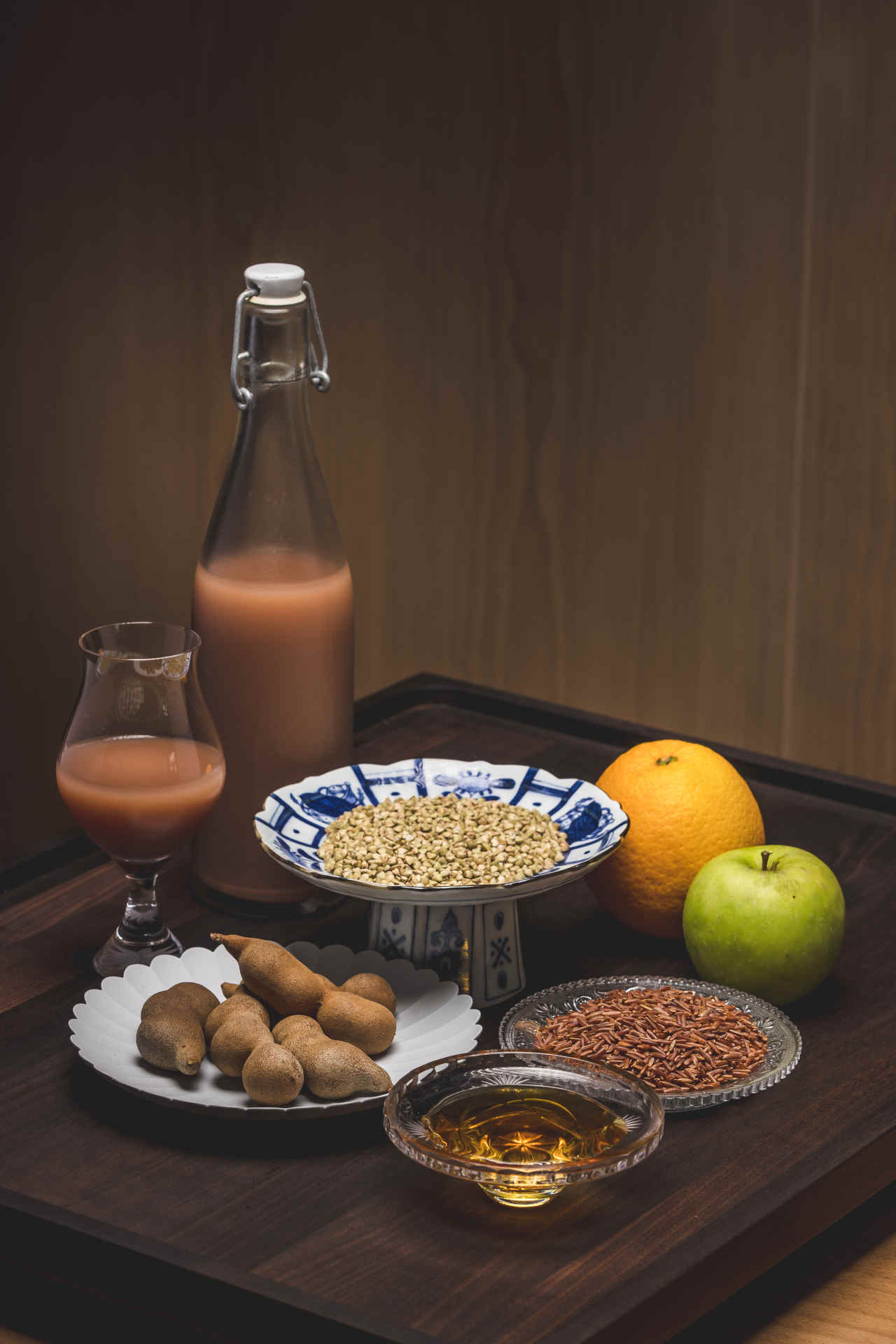
During development, we generally work in three clearly defined phases. In the primary phase, we first create a base. This can be based on stone fruit, infusions, or whey and is inoculated early on with Scoby or Backslop. The aim is to achieve a light primary fermentation in order to develop structure and initial aromatic depth. This is followed by the secondary phase, in which we work specifically with sugar. By adding syrups, citrus reductions, or other saccharides, we increase the sugar content and provide the Scoby with additional nutrients. This deliberately drives the fermentation further and ensures more excitement, complexity, and natural effervescence. In this phase, we often work with a second flavor course and continue the layering—for example, with fat, nuts, or grains. In other words, deliberately created contrasts. Depending on the product and the desired result, this phase can last a few days or several weeks.
In the final phase, the texture is defined: how much carbon dioxide we want, how much pressure is built up, and how fine or subtle the perlage should be. This phase takes place under controlled closure and at a slightly reduced temperature to ensure stability and precision. It usually takes about three to four days, so it's a little shorter. It's easy to hear that the entire process is correspondingly complex and quite sensitive. That's why we have two chefs who are exclusively responsible for the non-alcoholic drinks. They continuously monitor the fermentation process, feed and maintain the cultures, and supervise the processes daily – seven days a week, around the clock. This consistency is crucial in order to be able to work at this level and serve a drink every day that has the same complexity and precision as the day before.
An interesting point: at your restaurant, this is done by chefs – not sommeliers. Why is that?
Because chefs have better access to the goods and because the program is technically extremely closely linked to the dishes. Of course, it's a collaboration – also with the beverage director – but the daily implementation and control requires this proximity to the kitchen.
You talk about “casual luxury.” How much casualness can a three-star establishment tolerate?
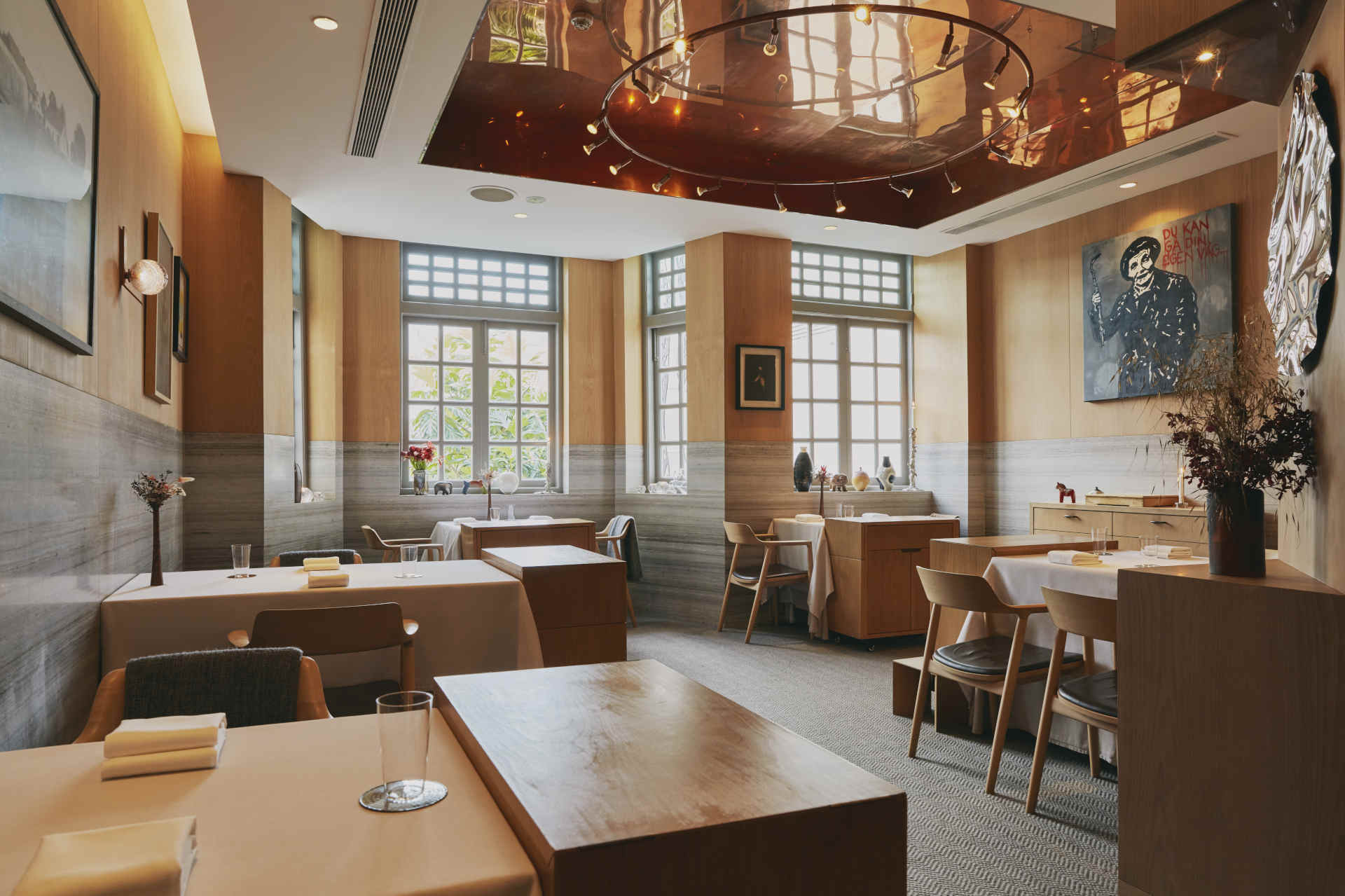
I always say: the atmosphere should be smooth as butter, but the execution razor sharp. One guest described it beautifully: Zén feels like visiting your rich, cool uncle who invites you to his house, shows you his art collection—and your aunt cooks perfectly. We want that living room feeling: a house party where you can come as you are. Birkenstocks? No problem. The main thing is that you come.
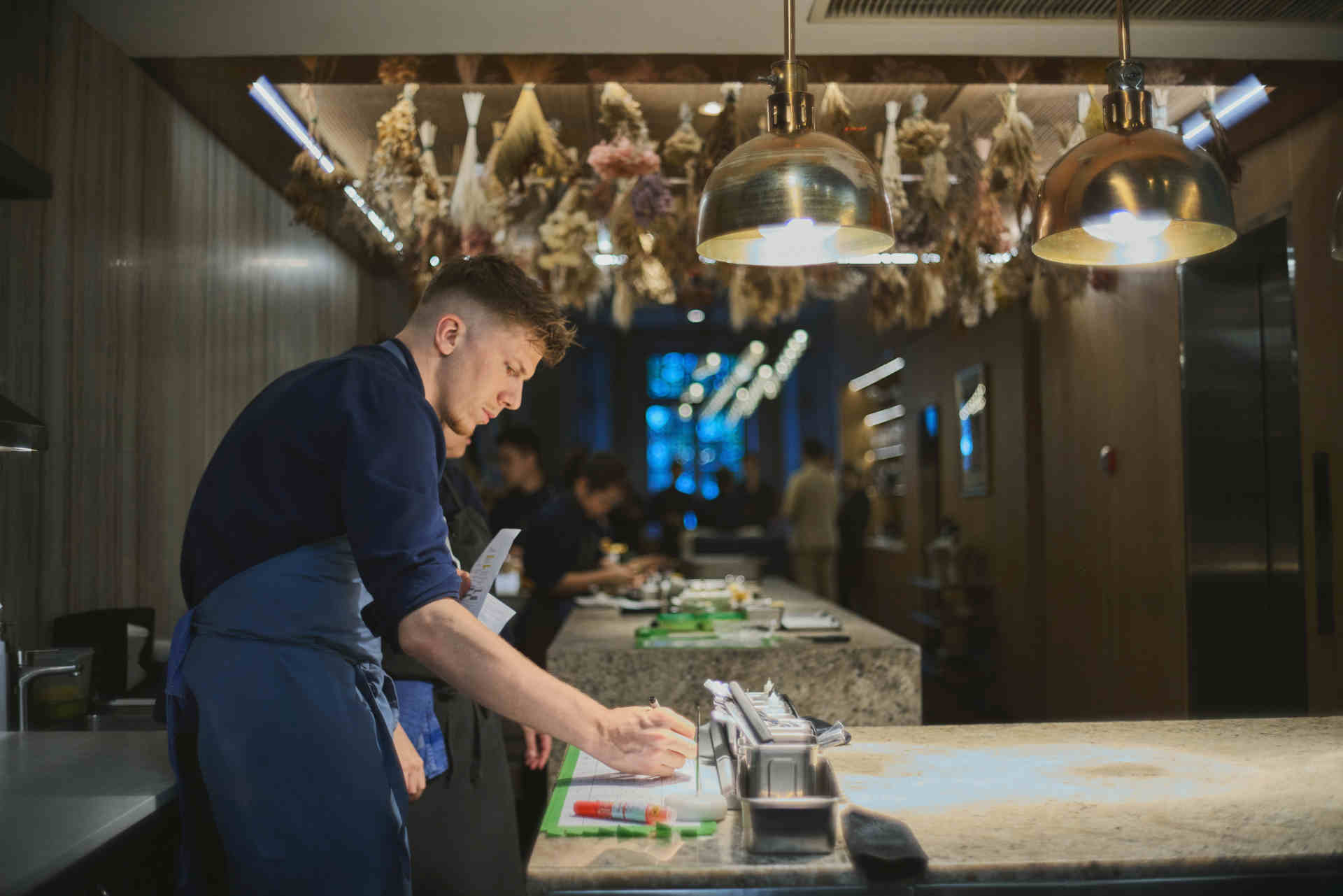
At Zén, the kitchen and service staff wear the same uniform – and you finalize dishes at the guest's table. What's the idea behind this?
We are an interactive concept: we finalize at the table – sauce, maybe a little grilling. The idea is that the sommelier or captain needs to know as much about the food as the chef knows about wine.
Wearing the same uniform makes this message clearer: we are a team. The sommelier might bring the wine – and talk about the saddle of venison. Or the chef might put down his knife and talk about Pinot Noir from New Zealand. We want to move away from the old image of service and kitchen as separate worlds. Instead: "We are a team. We are here for you. Let's have a party."
Nose to tail, leaf to root, zero waste
Nose to tail, leaf to root, zero waste: How important is this to you—even under the conditions in Singapore?
It's difficult in Singapore. Our carbon footprint is high – a lot is imported, 85 to 90 percent. There are no lambs here, no caviar, a lot of things simply don't exist locally. We'll be honest: we're not a “green star.” We make sure that it fits, that the taste is right, and that the journey isn't too long. But especially when it comes to prestigious ingredients, such as those from Japan, I think it's essential to teach young chefs humility and respect. To understand what such a product deserves. And I'm behind that when it comes to cutting and handling goods. My Tyrolean roots help me with that.
Is there a dish that is “totally you” – that bears your signature?
I am now responsible for about 75 percent of the menu. But I can't reduce myself to a single dish. That wouldn't be fair. It's more the common thread, the line, the style throughout the entire menu.
What is your favorite food to eat at home—your comfort food?
During the week, eating is often a means to an end: fueling the body. We have staff meals—once a day, a chef de partie is responsible for them, and they have to be just right. On the weekend, I'm open to anything: French, Indonesian, Japanese, Korean barbecue, casual French, Italian. Anything goes, really—it just has to be good.
How much of your work is research and development – and how do you organize creativity at this level?
R&D is omnipresent. We change the menu constantly, so you have to stay on top of things. It's very demanding. I've gotten into a rhythm: I switch between service and test kitchen on a weekly basis. One week development – the next week service-focused, completely with the guest, taking in inspiration, but creatively “letting go.” That's how balance is created.
When I'm tinkering, the days can be very long. Fifteen attempts, a week and a half, two months, three months – and you don't get there until that moment when the chef looks at you, you see the sparkle, the relief – and then you know: “Next week we'll be online.”
How do you handle vegetarian and vegan requests?
Vegetarian: yes, we do that—and we go the extra mile when it comes to sourcing. For example, we make tempeh for vegetarian guests and make sure that the experience is just as good.
Vegan: no. I'll be honest – I'm a sworn enemy of it because it limits us creatively to such an extent that we can't guarantee that three-star level. And I need butter. It doesn't work without butter. Every three-star restaurant has salted French butter – and as soon as that's no longer available, I'm out.
Bread and butter are often a great love – do you have a bread course?
No, deliberately not. We don't want to “fatten” people up. In the heat of Singapore, this heaviness doesn't work. We focus more on Japanese lightness: vegetable-driven, seafood-focused, light sauces, a little butter here and there, but without the heavy components. We work a lot with acidity, with an acidity curve and clear salting – to keep guests awake. That's why we don't serve carbohydrates or brioche with the main course. If anyone still wants some afterwards, there are waffles, madeleines, and petit fours upstairs in the “Living Room.” No one goes home hungry here.
About Martin Öfner
Position: Executive Chef, Zén (Singapore)
Born: Innsbruck, Austria
Grew up: Stans, Karwendel Alpine Park (Tyrol)
Culinary training: Traditional Austrian cuisine with a classic French teaching approach; practical experience in 4- and 5-star hotel restaurants
Key milestones (excerpt):
- Restaurant Parkhuus (Park Hyatt Zurich) – Alpine Swiss produce, freshwater fish, open-fire/asado approach (1 Michelin star)
- Rosengarten (Kirchberg/Kitzbühel) under Simon Taxacher (2 Michelin stars) – regional, heritage products, fermentation & preserving
- St Hubertus / Hotel Rosa Alpina (San Cassiano) under Norbert Niederkofler (then 2 Michelin stars) – sourcing & preserving
- Geranium (Copenhagen) under Rasmus Kofoed (3 Michelin stars) – New Nordic, sea & coast, herbs, fermentation
- De Librije (Zwolle) under Jonnie Boer (3 Michelin stars) – Pastry, fermentation, R&D; kombucha, kefir, tepache, koji, jun
- Frantzén (Stockholm) under Björn Frantzén (3 Michelin stars) – promoted to senior sous chef (2023)
Asia phase: 1 year in China (R&D/pre-opening); then moved to Singapore
At Zén: In Singapore since 2024; 2025 lead executive chef, working closely with Björn Frantzén
Culinary signature: Japanese-French fusion with New Nordic elements. Precision and reduction (“omission”), heart component, Japanese micro-seasons, strong non-alcoholic pairing culture with fermentation as a tool – not as decoration