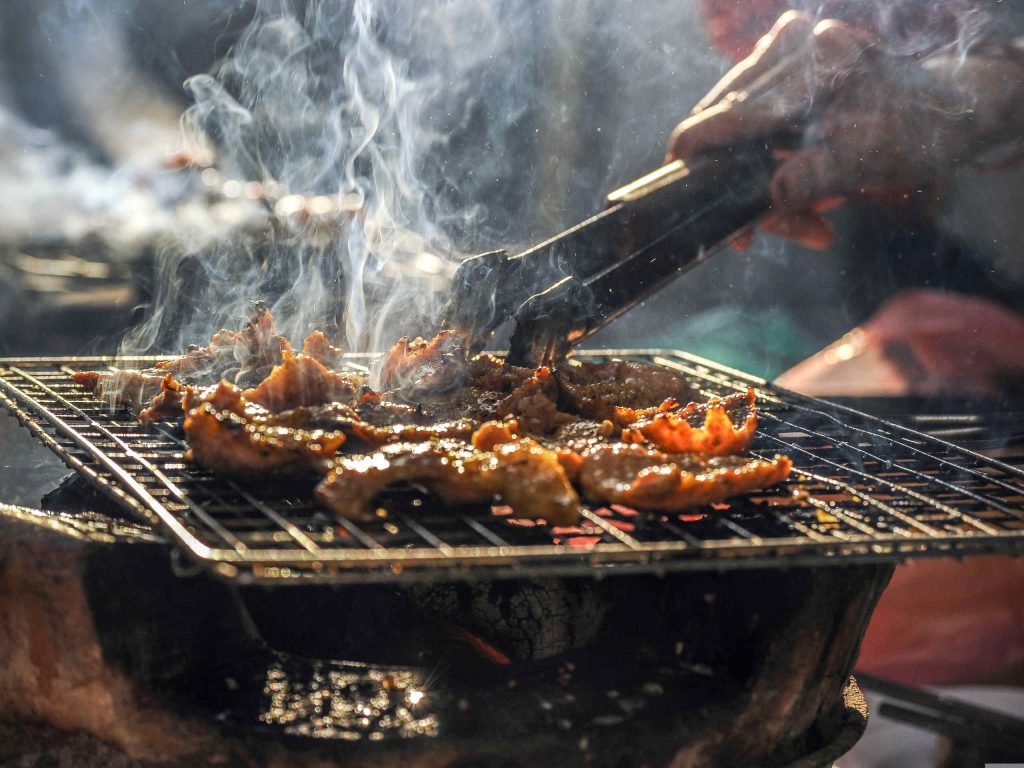
Roasted and smoky flavors bring momentum to the menus of upscale gastronomy. Oysters, scallops and langoustines end up on the grill – but it’s not just premium products and cuts that are becoming delicacies, but also cuts such as flat iron (shoulder centerpiece) and brisket (boneless beef brisket). One trend is whole grill menus, which are no longer only on the menu in summer, but also in winter.
Vegetables on the grill, spices and other ways of preparing products are strong themes. Smoking vegetables and then processing them into purees, spreads, spice or dip sauces is in. It is also exciting to serve smoked vegetables as gazpacho - the possibilities are endless. The basic requirements are high-quality basic products, know-how and an understanding of indirect and direct grilling and how to deal with the core temperature (resting phase). Tip: Especially for the winter months, spices such as cinnamon, cloves, juniper berries, star anise and allspice are recommended to enhance the winter flavors of curing solutions, sauces and rubs.
The professionals agree. The show effect must remain, at least in part. Guests identify with the process of grilling, which is why the live act creates special emotional moments.

To delight guests even in the colder seasons, a perfect base should be guaranteed, as well as the right cast-iron barbecue utensils. Hot sauces and stews or even waffles. Without cast iron, the outdoor fun won't last long. For fire baskets and that campfire feeling, a Kindling Cracking is ideal. With this fixed upside-down log splitter, you can determine exactly where the wood is split. Experience gastronomy through and through with a table grill, where guests can also lend a hand. Tip: Big Green Egg.

In 2025, Italy was officially designated a UNESCO World Heritage Site – for its cuisine. Not a single dish. Not a single product. An entire cuisine. As a “system of social practices, regional traditions, and collective rituals”. The initiative for this historic recognition was largely spearheaded by the long-established culinary magazine La Cucina Italiana, whose editor-in-chief, Maddalena Fossati Dondero, has been actively driving the international push for the UNESCO listing of Italian culinary culture since 2020.
And now, of all times, pasta is being reinvented. What sounds like a contradiction is, in truth, a logical consequence: if a cuisine is cultural heritage, it must not become stagnant. It must continue to evolve. Pasta is not merely a side dish in this context. It is the stage.
Vegan cuisine works in the restaurant industry when it’s approached not as an ideology but as a practical solution – economically viable, delicious, and suitable for everyday dining.
Artisanal gelato has evolved. It is no longer merely an accompaniment but is becoming one of the most significant areas of innovation in the international hospitality industry. What we are seeing now is not a short-term trend. It is a structural shift.
Roasted and smoky flavors bring momentum to the menus of upscale gastronomy. Oysters, scallops and langoustines end up on the grill – but it’s not just premium products and cuts that are becoming delicacies, but also cuts such as flat iron (shoulder centerpiece) and brisket (boneless beef brisket). One trend is whole grill menus, which are no longer only on the menu in summer, but also in winter.