
Between Indulgence and Function
Gelato is being reimagined! Not just as a moment of indulgence, but as a response to changing consumer attitudes. Plant-based, “free-from,” and reduced-sugar varieties are no longer just alternatives. They are the new standard. This positions gelato exactly where the future lies: between indulgence and conscious choice.
Origin becomes a signature
With the rise of botanical gelato, the focus is shifting. Regionality is no longer just about origin; it becomes a story on the plate. The combination of fruits, herbs, and flowers within a single origin creates depth, identity, and an emotional connection. This is more than just taste. It is brand building through cuisine.
Gelato becomes a discipline of haute cuisine
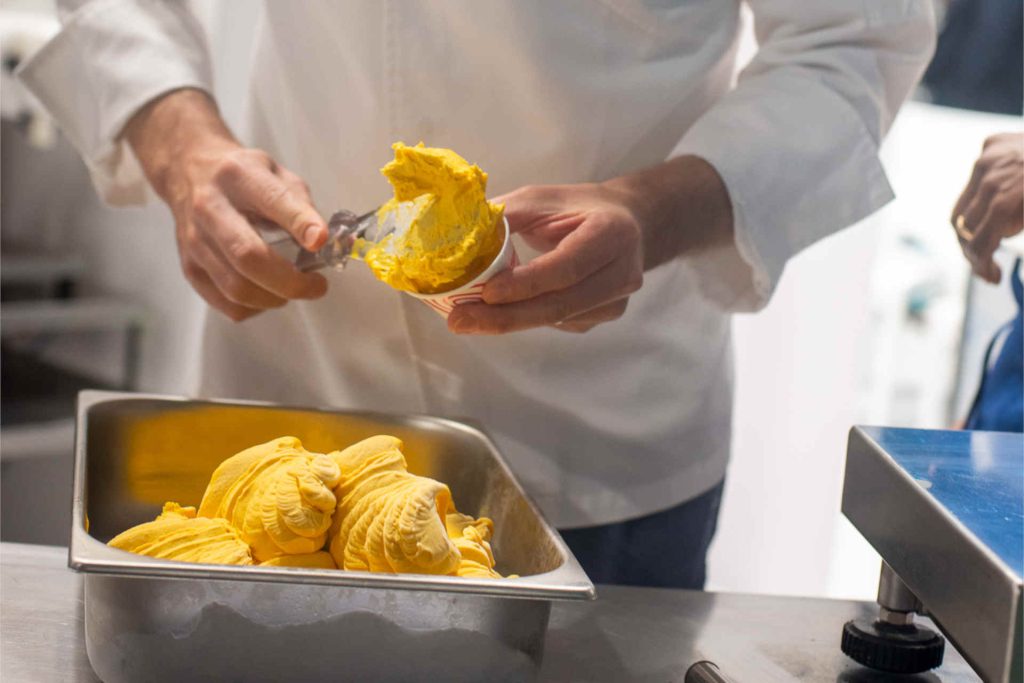
The most exciting development is taking place within the culinary world itself. Gelato is no longer simply served; it is composed. Techniques such as fermentation bring new dimensions. To name a few examples: miso, koji, or even fermented milk. They create complexity, umami, and depth. The consequence – or rather, the transformation: the gelato maker becomes a chef.
33 billion euros speak for themselves
With a global market volume of over 33 billion euros, the industry is one of the most dynamic in the entire hospitality sector. This growth is no coincidence. It is driven by technological advancements, new consumer formats, and rising guest expectations.
From Product to Platform
The boundaries between gelato, patisserie, coffee, and mixology are increasingly blurring. And this is precisely where the real evolution lies: gelato is becoming a platform for innovation, storytelling, and differentiation. Anyone who still views gelato as merely a dessert is thinking too small. Those who see it as a strategic tool are actively shaping the future of hospitality. Looking ahead to the upcoming Host Milano 2027, it becomes clear where the industry is headed: Gelato exemplifies a new generation of hospitality – more connected, creative, and economically relevant than ever before.