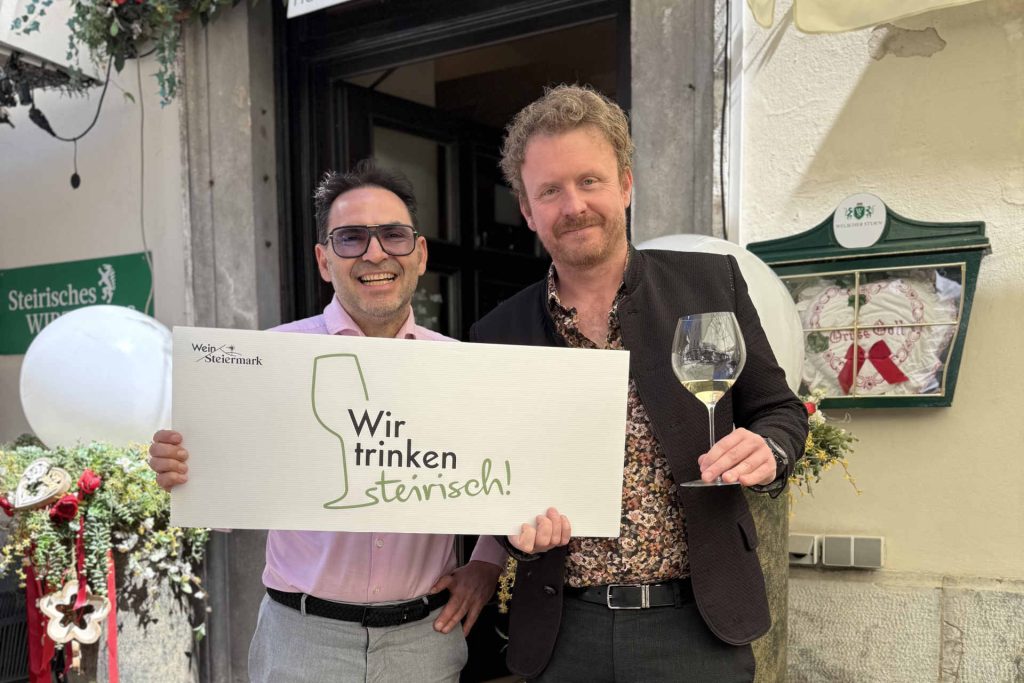

We Drink Styrian
There are phrases that, at first glance, sound almost too simple to spark a movement. ‘We drink Styrian’ is one such phrase. Short, direct, almost self-evident. And yet it holds a remarkable power: a commitment to origin, to the region, to value creation and to that culture of pouring, recommending and enjoying together, which often makes the decisive difference in the hospitality industry.
With the ‘We drink Styrian’ campaign, Wein Steiermark is launching an initiative that aims to be more than just a logo on the menu or a sticker on the front door. It sees itself as an invitation to Styrian hosts: not just to offer local wine, but to live it consciously. For where Styrian wine is visibly recommended, served with conviction and accompanied by culinary expertise, more than just turnover is created. An identity is forged.
And it is precisely this identity that is a real asset at a time when menus are becoming more global, guest needs more complex and establishments more interchangeable. Fancy joining in? Then sign up NOW!
Origin is not a trend. Origin is an attitude.
In the restaurant industry, regionality has long since ceased to be a mere buzzword. It has become a promise of quality. Today, guests don’t just ask what’s in their glass; increasingly, they also ask where it comes from, who’s behind it, and why it’s being served here in particular. A wine is then no longer merely a drink, but a topic of conversation. It tells a story of soils, vineyards, craftsmanship, climate, people and ethos.
Styrian wine is particularly well-suited to this. It stands for freshness, precision, vibrancy and an unmistakable signature. Whether Sauvignon Blanc, Welschriesling, Morillon, Gelber Muskateller, Schilcher or other varieties typical of the region: Over the past decades, Styria has carved out a profile that is recognised internationally whilst remaining deeply rooted in the region’s culture of enjoyment.
This is precisely where ‘We Drink Styrian’ comes in. The initiative focuses not only on the wine itself, but on the entire cycle surrounding it: winegrowers, hosts and connoisseurs. It is about a synergy that is often underestimated in practice. For a good wine does not reveal its full potential through origin and quality alone, but through the moment in which it is recommended, poured and appreciated.
The underestimated power of a recommendation
In many establishments, it is not the wine list alone that determines the success of a regional offering, but what is said at the table. A personal recommendation can have a greater impact than even the most elegant description on the menu. When service staff can explain why a particular Styrian Sauvignon Blanc pairs well with a starter, why a Schilcher can be more than just an aperitif but also a meal companion, or why a Welschriesling shines precisely because of its lightness, a sense of expertise emerges that guests can feel.
This visible wine expertise is one of the initiative’s guiding principles. And it is central to the industry. After all, the hospitality sector thrives not only on the product, but on how it is presented. Those who can explain wine do not sell more aggressively, but with greater confidence. Those who make the origin understandable build trust. And those who build trust not only increase appreciation, but also the willingness to pay.
This is particularly relevant for establishments that wish to position themselves on the basis of regionality. A Styrian wine served by the glass can be an accessible entry point. A curated Styrian wine pairing can become a signature feature. Close collaboration with regional winemakers, in turn, can fuel events, tastings, themed evenings and social media content.
Or to put it another way: a glass of wine can be much more than just a glass of wine. It can become a strategic communication tool.
From a compulsory offering to an experience
The initiative sets out four guiding principles: culinary roots, an understanding of the cycle, experience and conviviality, and visible wine expertise. Crucially, ‘We drink Styrian’ does not sound like a compulsory programme. It is not about meeting a quota on the menu. It is about presenting provenance in such a way that it becomes relevant to guests.
That is an important distinction. Because regionality only works if it does not come across as didactic. Nobody wants to be served a lecture on agricultural policy over dinner. But many guests love stories, provided they are well told. They want to know why this particular wine is on the menu, why the restaurant works with this specific winery, or what makes Styria’s flavours so special.
This is precisely where an opportunity lies for hosts: they can convey regional wine culture in a sensory, charming and accessible way. Not with a wagging finger, but with a good glass of wine, a clever remark and a genuine moment at the table.
Why the industry needs such initiatives
From a personal perspective, initiatives like these are more important than ever. Not because regionality is a new concept, but because it needs to be highlighted time and again. In an industry caught between cost pressures, staff shortages, price sensitivity and rising customer expectations, clear points of reference are needed. Origin can be one such point of reference.
For businesses, this means: those who operate credibly on a regional basis sharpen their profile. Those who know their suppliers and producers tell better stories. Those who highlight local products strengthen not only the region but also their own concept.
For winemakers, it means: their wines are not placed anonymously, but can be experienced within a gastronomic context. For guests, it means: they get guidance, quality and a taste of Styrian joie de vivre in their glass. And for the region, it means: added value stays where it is created.
This connection is economically relevant, but also culturally so. After all, gastronomy has always been a place where identity is negotiated. What we eat and drink says a lot about who we are, what we value and which stories we wish to pass on.
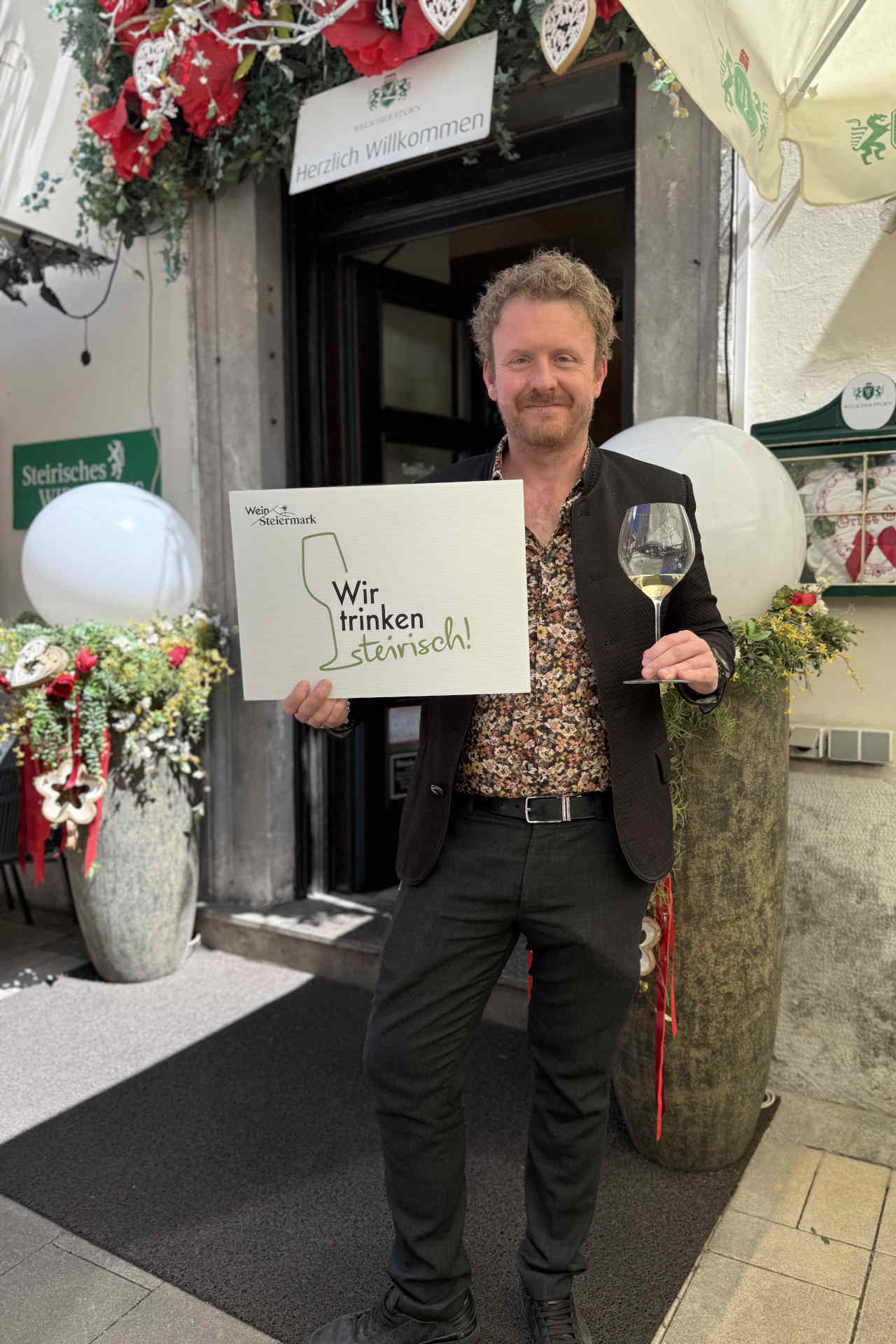
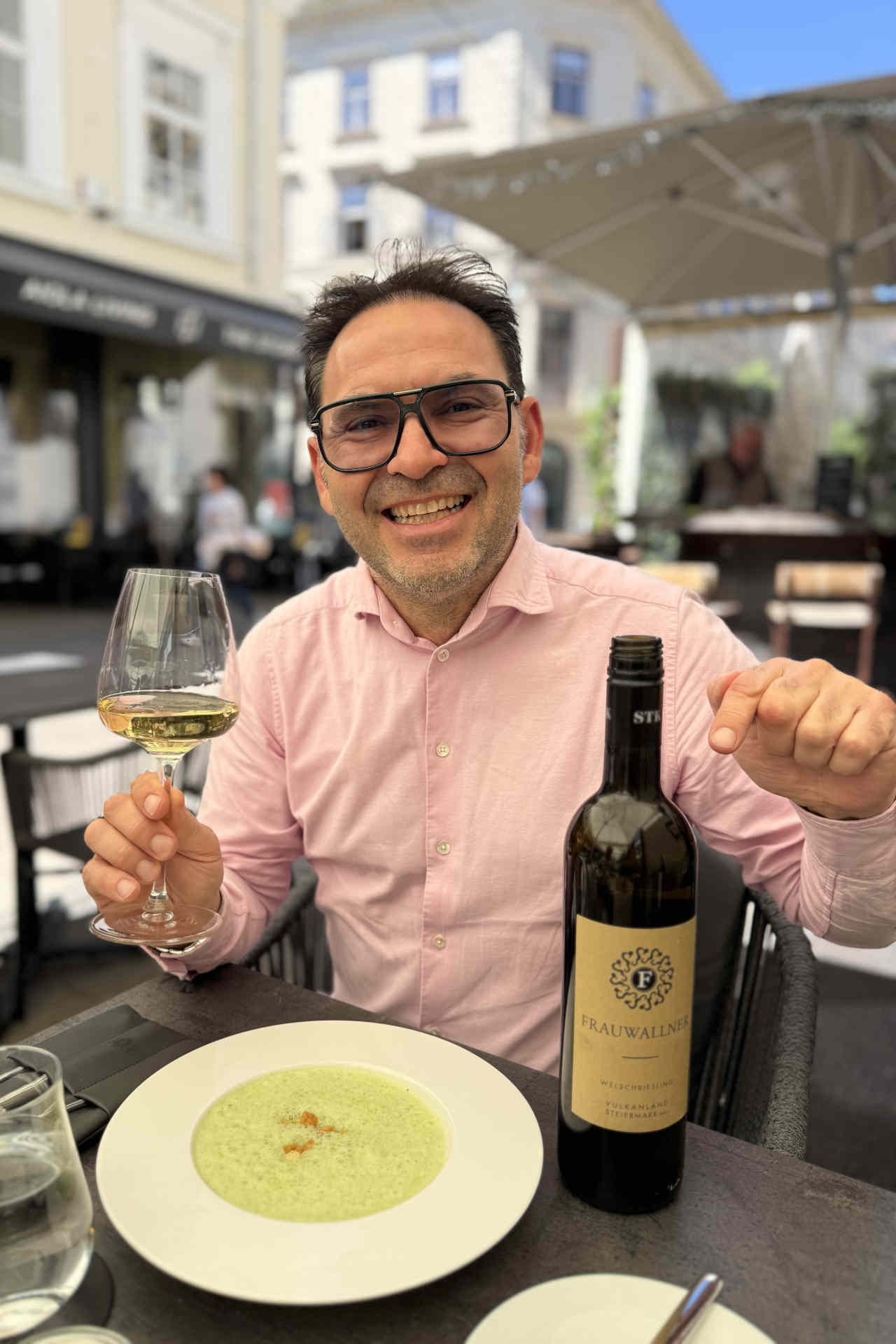
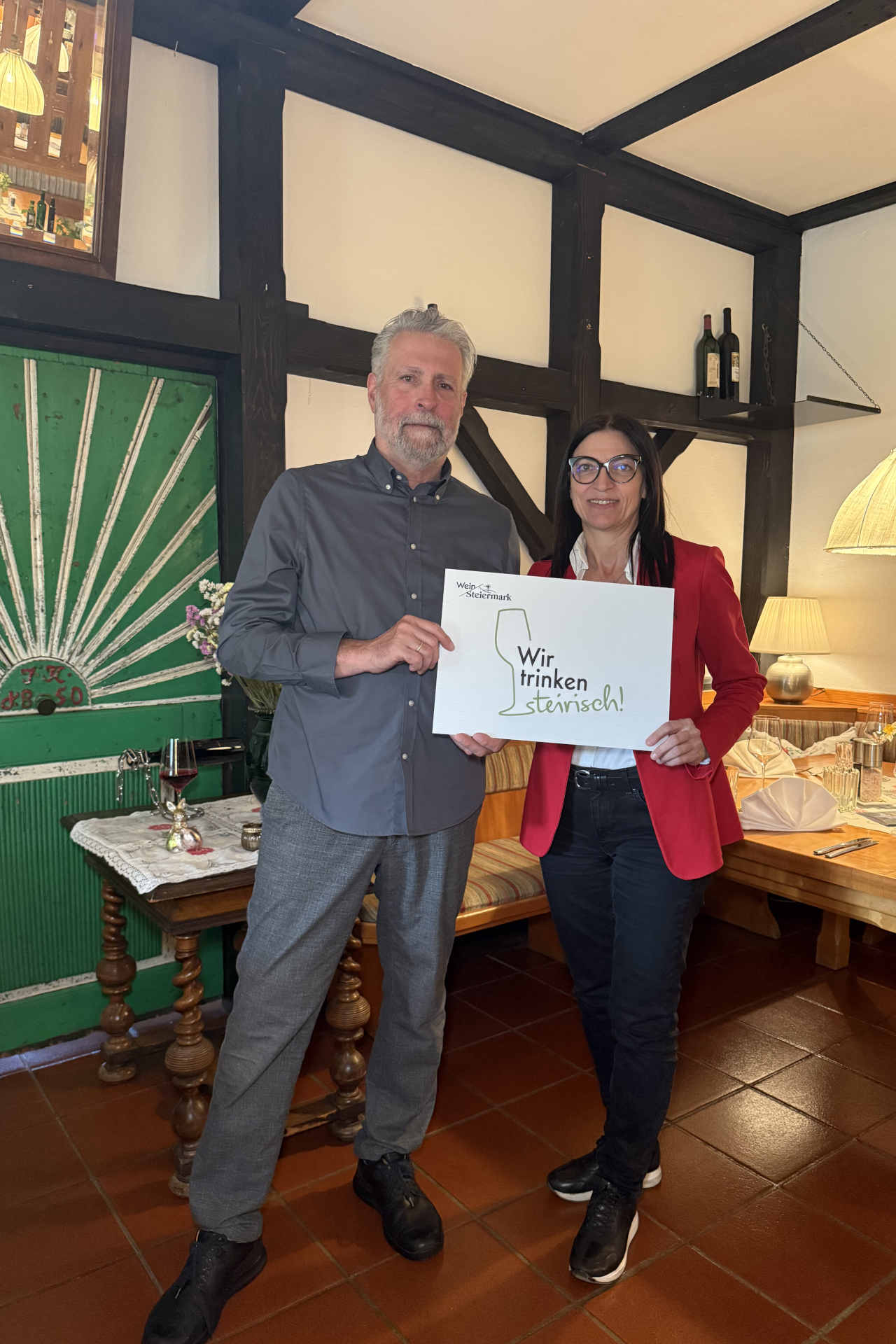
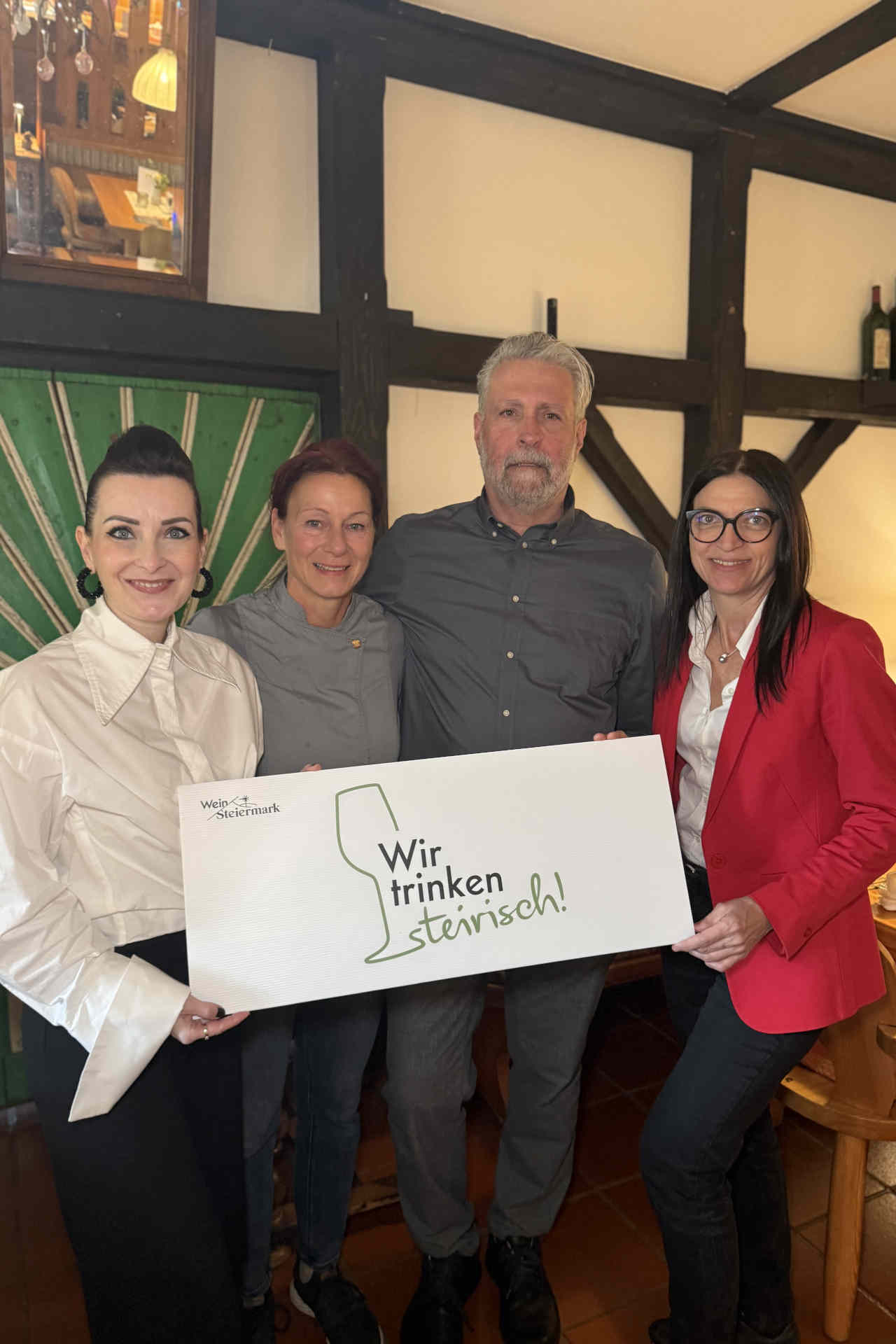
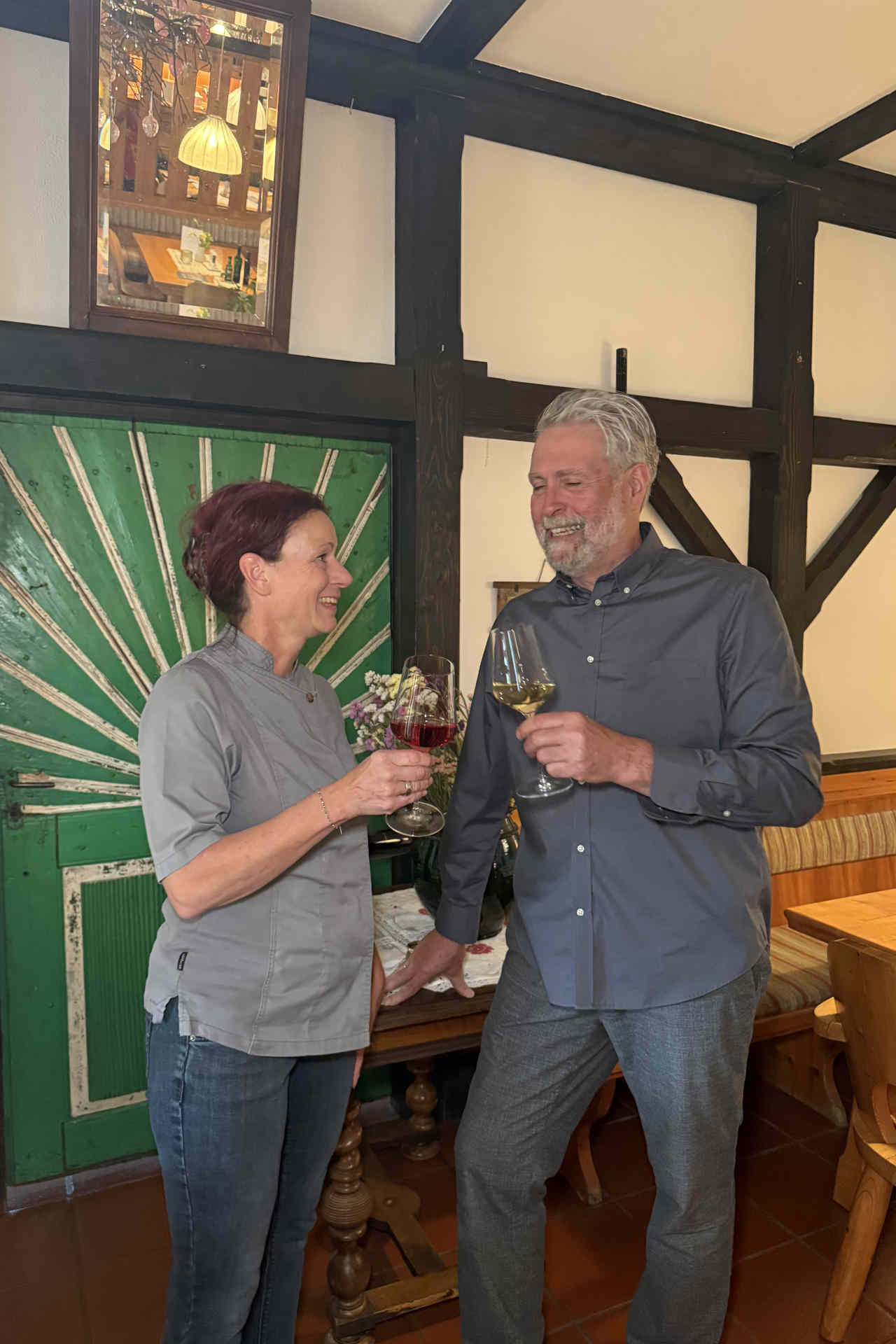
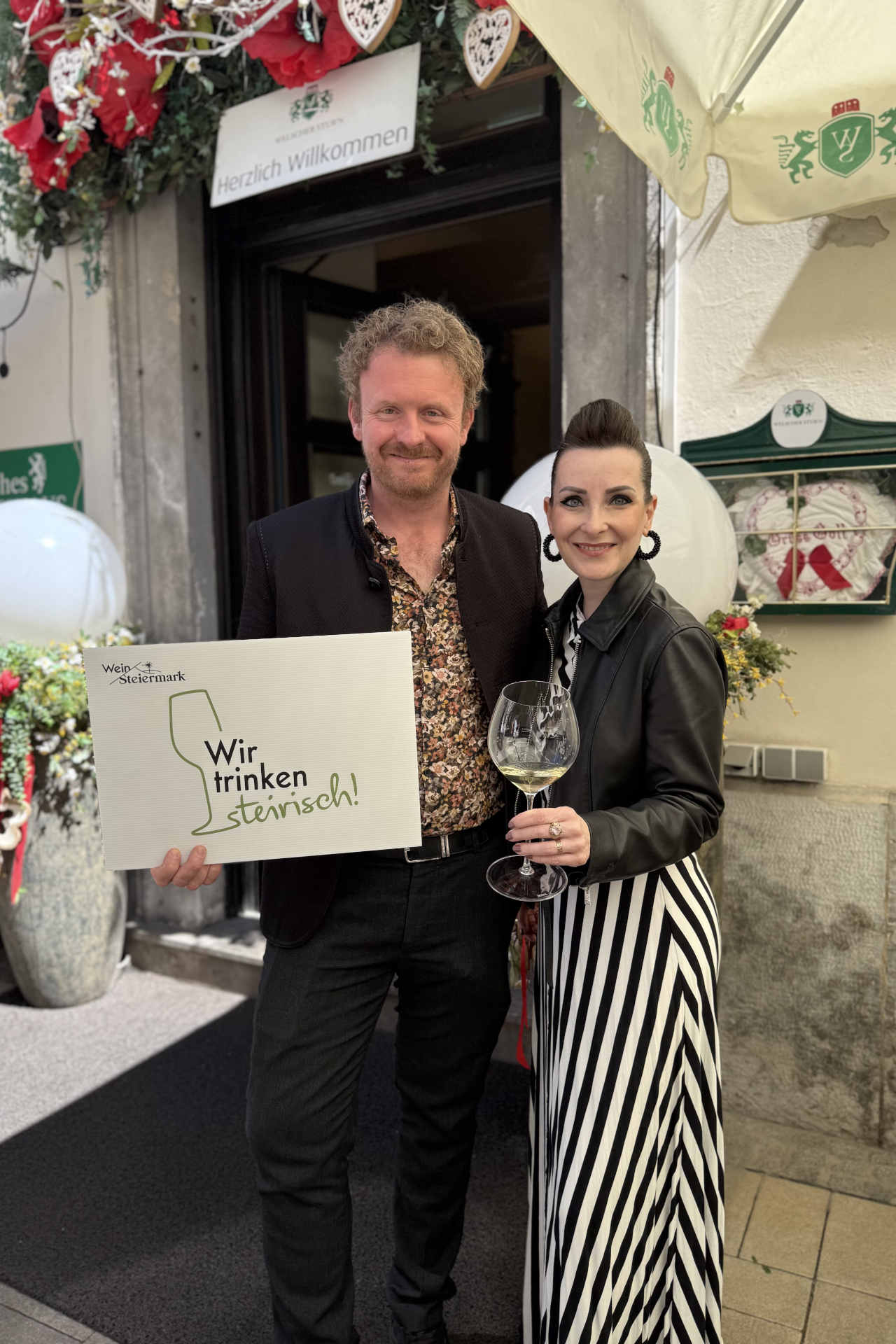
Two prime examples illustrate just how vibrant the initiative is already in practice: Karin and Willi Rauch from the Rauch Hof, and Georg Leitner from the Welscher Stub’n in Graz, are prime examples of how Styrian wine can be showcased through genuine passion, a culture of hospitality and a personal touch. In accompanying video interviews, they offer an insight into why Styrian wine is more than just an item on the menu for their establishments; it is a living expression of origin, a symbol of regional connection and an enjoyable dialogue between winemakers, hosts and guests.
Click HERE for the Rauch Hof.
Click HERE for the Welscher Stub’n.
The wine list as a showcase for the region
An establishment that makes a conscious effort to feature Styrian wine can benefit in several ways. The wine list becomes a showcase. The service staff act as ambassadors. The menu becomes a regional dialogue. And the establishment itself positions itself as part of a wider movement celebrating fine dining.
This offers enormous opportunities, particularly in terms of communication. Today, guests don’t just photograph plates, but experiences. They share moments, stories and recommendations. A well-told regional wine moment can thus have an impact far beyond the dining table. It becomes content, a memory and, in the best case, a reason to return.
For participating establishments, the initiative offers additional visibility through the channels of Wein Steiermark, integration into communication and marketing activities, access to training, further education and a network of more than 500 Styrian wine-growing businesses. This is particularly valuable for the industry, as visibility and expertise are among the most valuable assets today.
What hosts can actually do with this
To ensure that ‘We drink Styrian’ doesn’t just remain a nice slogan in the business, it needs to be put into practice. Some approaches are obvious: Styrian wines shouldn’t be relegated to the back of the wine list, but should be carefully curated. A small, well-explained selection can have a greater impact than a long list lacking in character. Clear pairings are particularly recommended: Which wine goes with which dish? Which wine is suitable as an aperitif? Which wine will surprise guests who usually order the same thing?
The team also plays a key role. Training doesn’t have to be complicated, but it should instil confidence. Three key points per wine are often enough, provided they’re spot on: origin, taste, recommendation. Those who master these basics aren’t just reciting from memory, but selling with conviction.
Furthermore, establishments can make their collaboration with winemakers more visible. A winemaker’s evening, a ‘Wine of the Month’, a brief note on the menu, a reel from the vineyard or a joint pairing menu create a sense of connection. Guests love the feeling of not just consuming a product, but of being part of a network of people, craftsmanship and enjoyment.
Drinking Styrian wine means savouring it mindfully
The charm of ‘We Drink Styrian’ lies in the fact that the initiative is not complicated. It requires no artificial staging, but rather a conscious decision. Anyone who serves Styrian wine automatically tells a story of the landscape, craftsmanship and hospitality. Anyone who recommends it strengthens the bond between producer and guest. Those who enjoy it become part of a cycle that extends far beyond the moment.
Of course, not every wine list will be exclusively Styrian. Nor does it need to be. Diversity is part of the dining experience. But it is precisely the conscious inclusion of regional wines that can send a strong signal: we know where we are. We know our region. We don’t just pour a glass; we also tell a story.
And perhaps that is precisely the real message of this campaign: origin doesn’t have to be loud to make an impact. It just needs to be visible, tangible and lived honestly.
Conclusion: A glass with character
‘We drink Styrian’ is more than just a catchy campaign slogan. It is a call to the industry not to treat regional wine culture as a side issue, but as an integral part of its own identity. For restaurateurs and hosts, this presents a great opportunity: with Styrian wine, they can not only create moments of enjoyment, but also add value, foster identity and stand out from the crowd.
In times when many businesses are seeking clarity, recognisability and emotional connection, this is perhaps one of the most elegant answers of all: a glass of wine with provenance. Poured with expertise. Recommended with conviction. Drunk with joy.
Or to put it more succinctly: Why not go Styrian more often?
Fancy joining in too?
Then sign up NOW!
About Alexandra Gorsche
Alexandra Gorsche is an Austrian food journalist, moderator, speaker, consultant and culinary voice with a strong focus on fine dining, hospitality and contemporary restaurant culture. She is editor-in-chief of Genusspunkt, responsible for the culinary direction of stayinart and contributes to renowned publishers and media brands such as Callwey Verlag. Her work explores the intersection of gastronomy, culture, design, travel and entrepreneurship from Michelin-starred restaurants to emerging food trends, chefs and hospitality concepts.