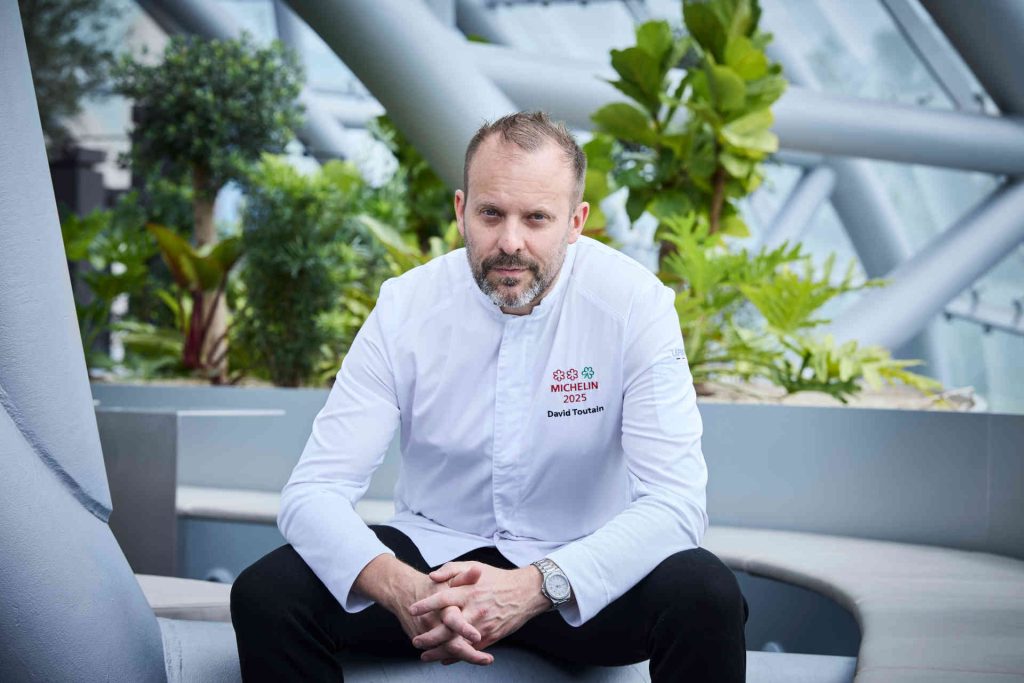

When a chef calls peas his caviar, fine dining is redefined
David Toutain is one of those chefs who defines luxury not by rarity, price or prestige, but by provenance, ethos and precision. His cuisine impressively demonstrates that roots, herbs, vegetables, flowers, acidity, smoke and fermentation can deliver more drama, depth and elegance than any classic luxury product.
Toutain is not a chef who uses nature as a decorative narrative. For him, it is source, method and language all at once. Born in 1981 in Flers, Normandy, he grew up on a farm. As a child, he spent his weekends in his grandparents’ kitchen garden, surrounded by herbs, flowers and root vegetables. He actually wanted to become a farmer. In the end, he became a chef, but the soil of Normandy has never let him go.
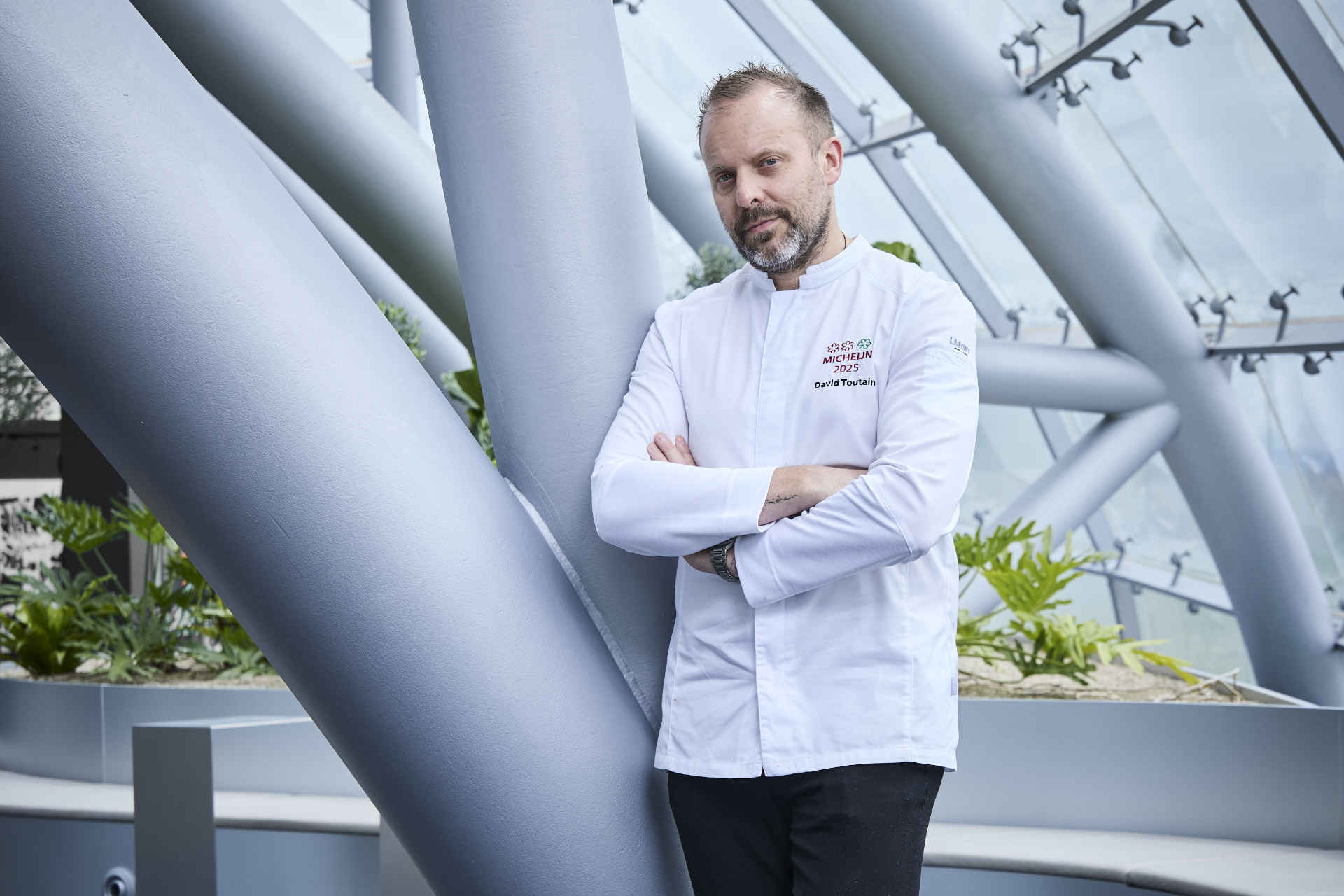
Today, Toutain runs his eponymous restaurant on a quiet street in Paris’s 7th arrondissement. Awarded two Michelin stars and a Green Star, it stands for a cuisine that begins quietly and lingers long in the memory. It is not loud, not flashy, not built on the quick ‘wow’ effect. Rather, it works with nuances: with bitterness, acidity, aroma, texture and the question of how much expression can be found in a seemingly simple product.
From Normandy to Paris: a cuisine with deep roots
Toutain’s career reads like a journey through some of Europe’s most influential kitchens. After training at the hotel management school in Granville, he found his calling during an internship at the Manoir du Lys under Franck Quinton. This was followed by stints with Bernard Loiseau, Marc Veyrat and Alain Passard at L’Arpège, where he was already working as a sous-chef in his early twenties.
Passard’s radical shift towards vegetables is likely to have been a decisive moment for Toutain. At a time when fine dining was still heavily centred on meat, fish, caviar and truffles, Passard began to treat vegetables as the main protagonists. Toutain took up this impulse but developed it in his own direction: less classically French, more nature-driven, fermented, sometimes tart, often floral, always precise.
Further stints at Mugaritz in Spain and Corton in New York broadened his horizons. Back in Paris, he made a name for himself as executive chef at the avant-garde Agapé Substance before opening his own restaurant in December 2013.
Vegetables as the narrative, not as a side dish
What Toutain presents at Ikarus is not plant-based cuisine in the strict sense. Fish, meat and caviar do feature. But they are not the stars of the show. They are part of a larger composition in which vegetables, herbs, acidity, textures and aromas take centre stage.
This begins with the snacks: seaweed, avocado and buckwheat open the menu with a blend of iodine, creaminess and nutty depth. Corn, caraway and miso focus on warmth, umami and an almost rustic earthiness. Beetroot, raspberry and yellowfin mackerel combine fruit, sweetness, acidity and maritime precision. The Gillardeau oyster with kiwi and crème fraîche brings that tension which makes Toutain’s cuisine so interesting: familiar luxury ingredients are not reverently staged, but placed in a new context.
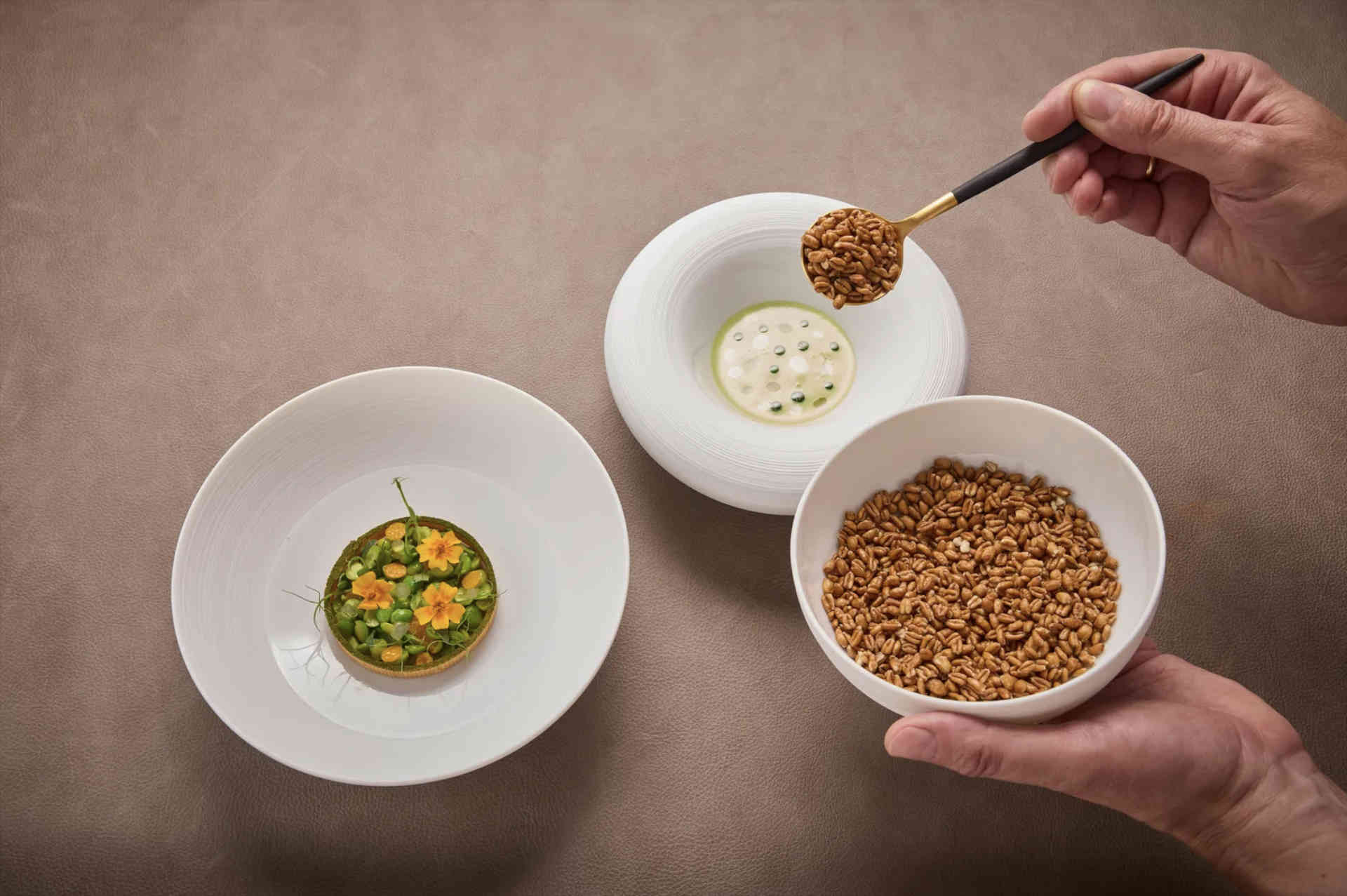
Then comes the course that, for me, sums up the menu: green peas, orange and pine tips. Toutain calls peas the caviar of vegetables, and after this dish, you believe every word he says. The pea does not appear as a modest side dish, but as a concentrated expression of freshness, sweetness, chlorophyll and elegance. Orange brings luminosity, fir tips a resinous, alpine, almost ethereal note. It is a dish that shows just how much luxury can lie in transience. In a product that is at its best precisely when it is not over-styled.
Sustainability as a creative driving force
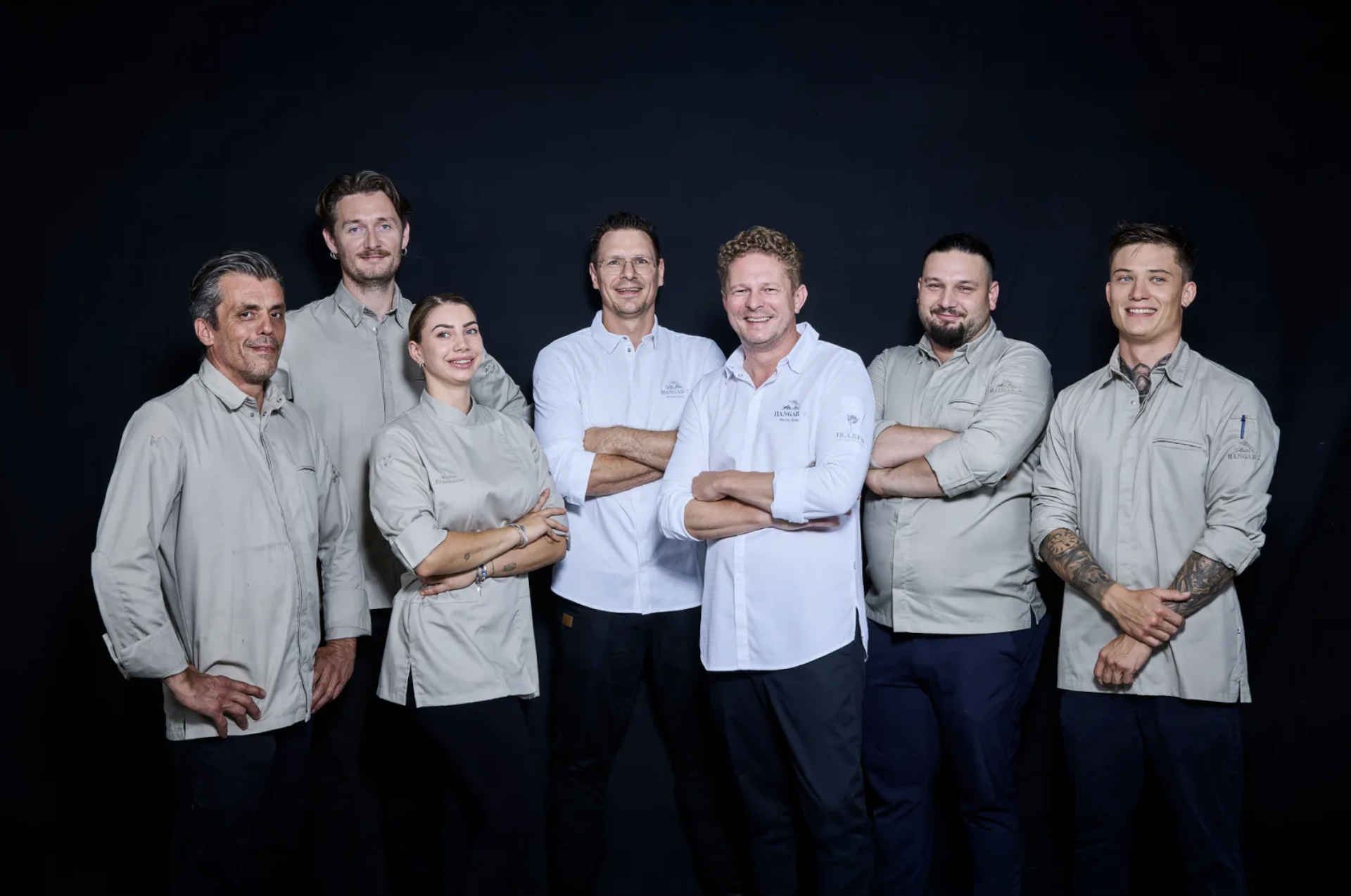
The great added value of this menu lies not only in the way the flavours are crafted, but in the philosophy behind it. Toutain works with small-scale producers, short supply chains, its own permaculture garden in Normandy, heirloom grains and artisanal businesses. This isn’t just a ‘green’ label for the menu, but a way of thinking.
And that is precisely what makes it so exciting: at Toutain, sustainability is not presented as a moral sacrifice, but as a creative framework. Working in a more seasonal, regional and conscious way does not mean thinking on a smaller scale. On the contrary. Restriction can breed precision. Doing without interchangeable luxuries forces a deeper engagement with the product, timing, origin and preparation.
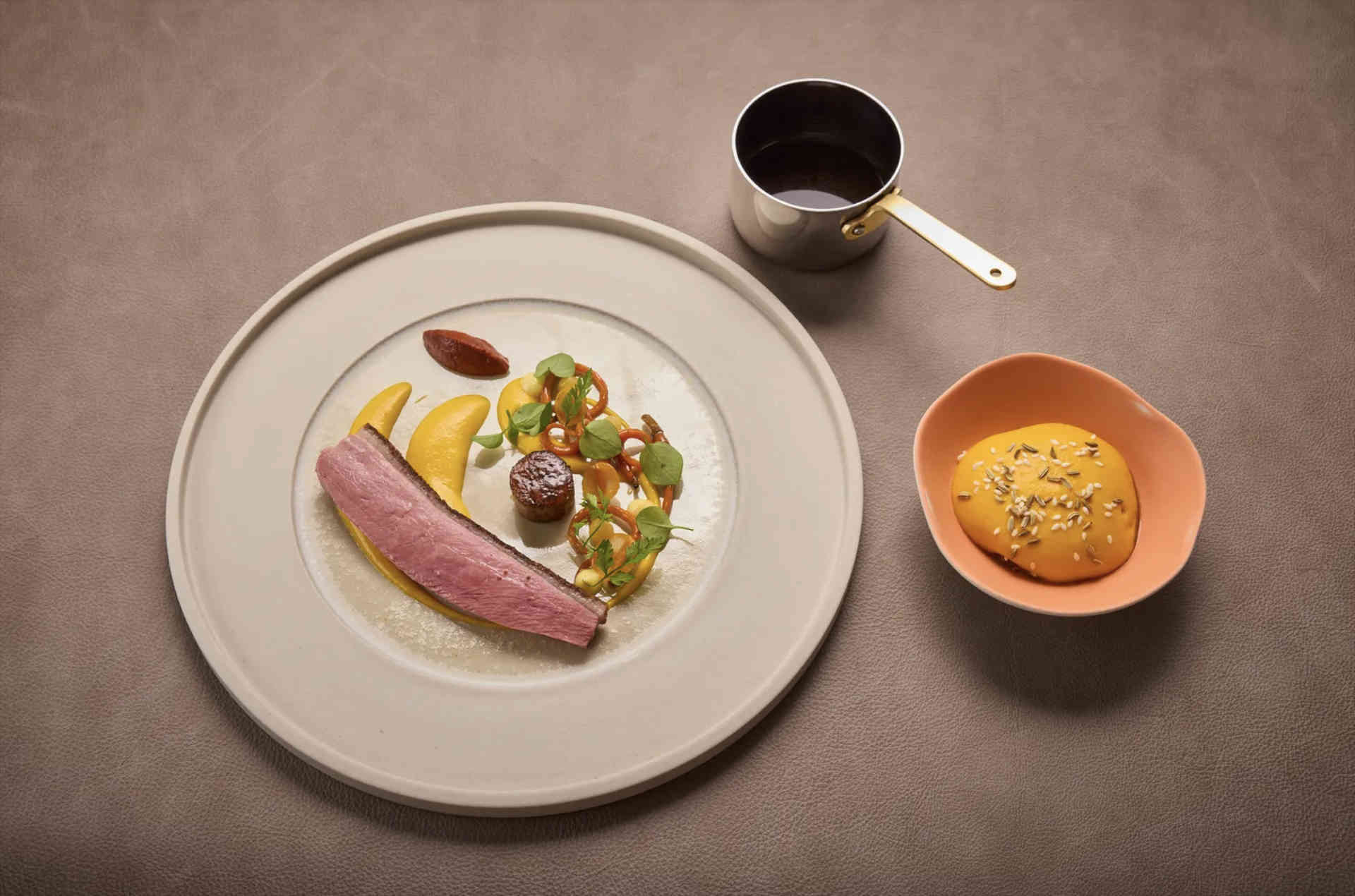
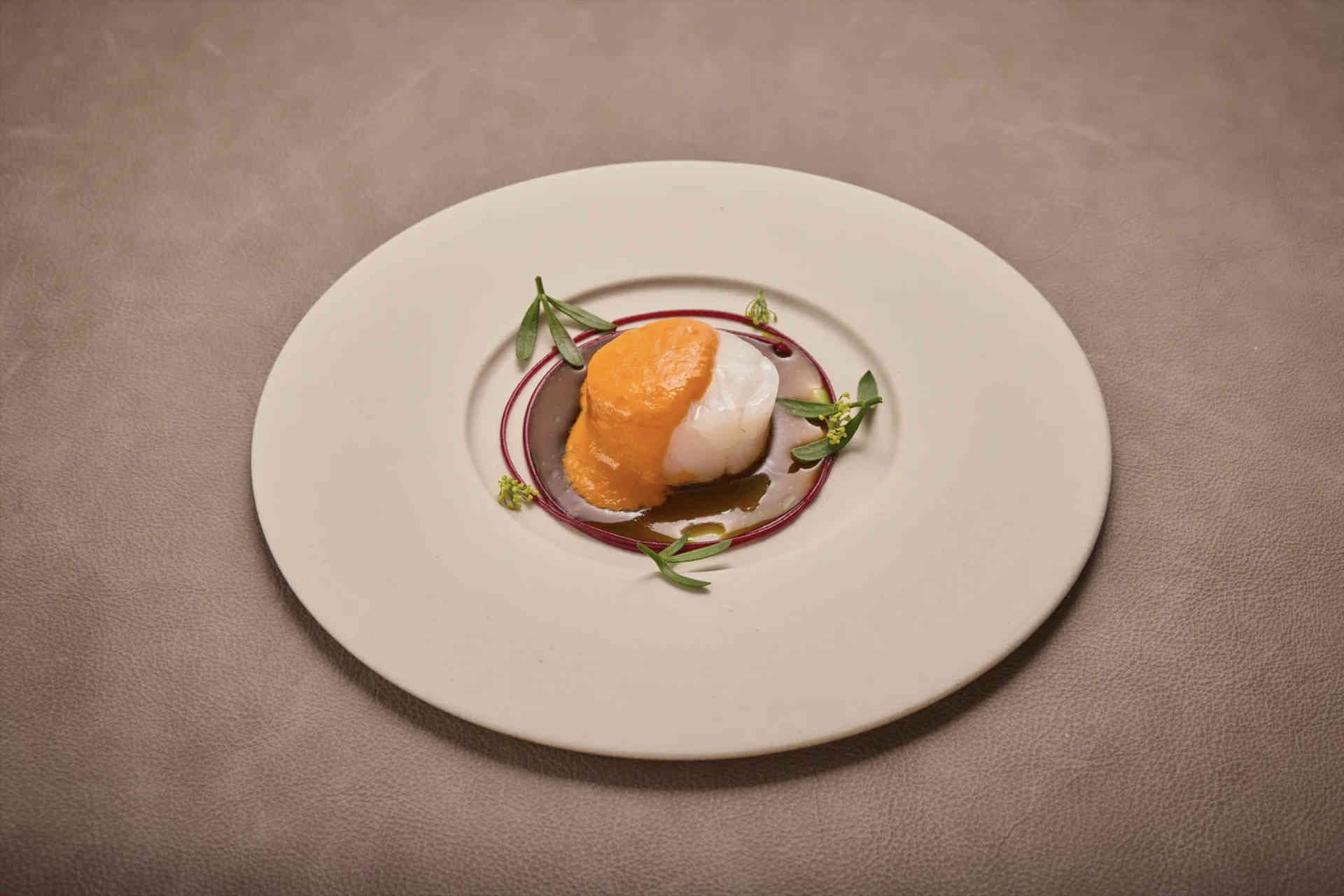
This is particularly evident in the main courses. Courgette, lemon balm and cuttlefish play with freshness, herbal aromas and a marine texture. Cod with fennel and blackcurrant combines notes of aniseed, fruit and a delicate acidity. BBQ lobster with spinach, grapefruit and juniper does not rely on opulent heaviness, but on smoke, bitterness and citrus tension. Even the Burgaud duck with carrot and kumquat follows this logic: meat, yes, but embedded in fruit, vegetables and balance.
Toutain’s cuisine cannot be applied wholesale to every restaurant, nor does it need to be. But it provides important inspiration for an industry caught between rising costs, pressure to be sustainable and changing customer expectations.
Firstly: vegetables need to take centre stage. Not as a stopgap for vegetarian menus, but as a quality promise in their own right. A vegetable prepared with precision can today have a more emotional, modern and surprising impact than the next interchangeable premium product.
Secondly: origin must be tasteable. Storytelling only works if it is delivered on the plate. Toutain doesn’t talk about Normandy simply because it sounds romantic. You can taste the roots, the herbs, the fermentation, the down-to-earth quality and the sensitivity to the season.
Thirdly: acidity, bitterness and aroma are underrated tools. Many menus remain within comfort zones of fat, sweetness and umami. Toutain demonstrates how modern a menu can appear when floral, tart and fresh elements take the lead.
Fourthly: sustainability requires elegance. Guests do not want to be lectured. They want to experience that responsible cuisine offers not less, but more: more character, more precision, more narrative.
Wine pairing: France as the common thread
The menu is accompanied almost exclusively by French wines, complemented by one exceptional German Mosel wine. This, too, fits in with the theme of the evening. The wines do not feel like a loud commentary, but rather an extension of the menu: precise, terroir-driven, structured. Particularly with a cuisine that makes extensive use of acidity, herbs, bitterness and floral notes, an accompaniment is needed that does not overpower, but maintains a sense of tension.
A finale without heaviness
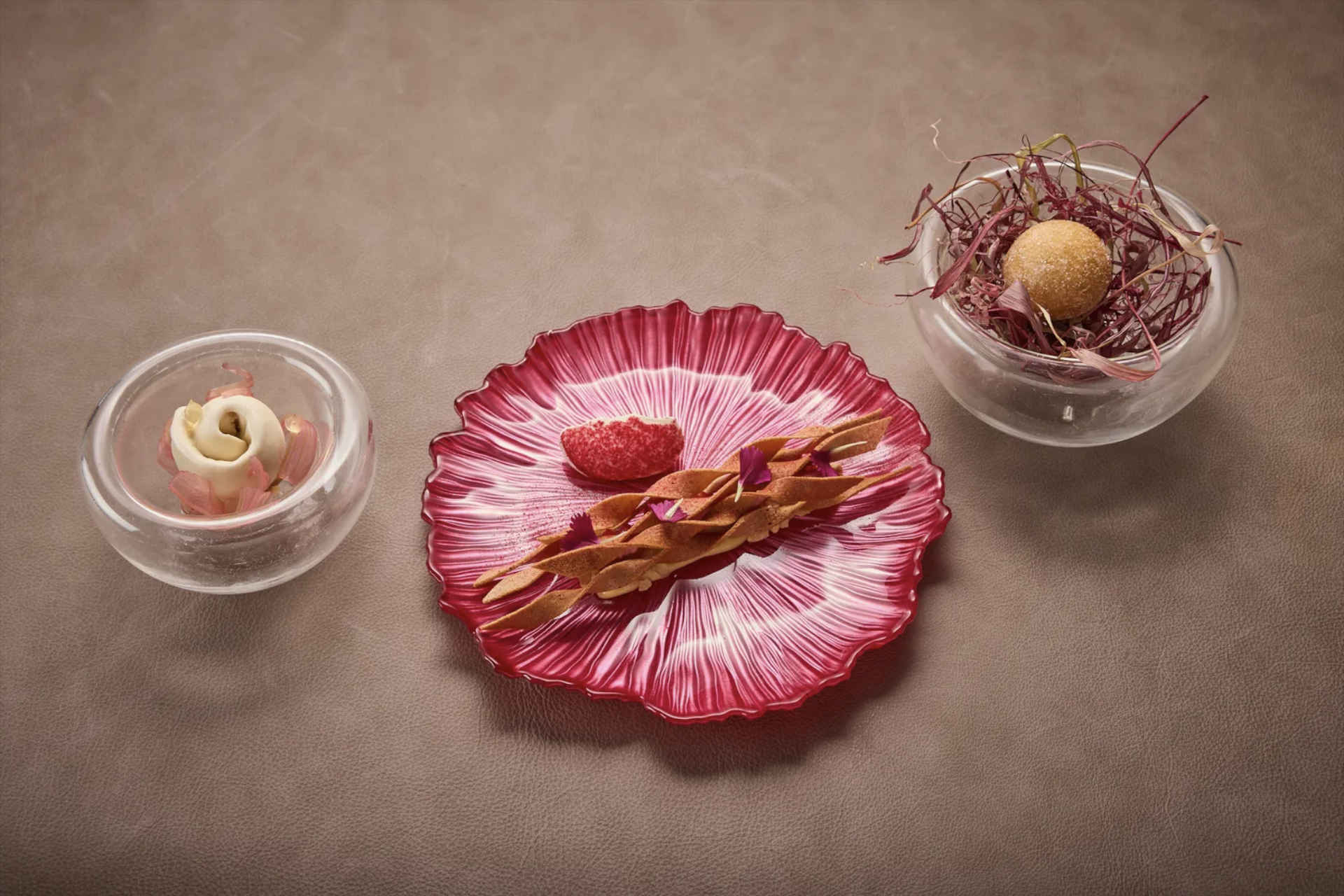
The conclusion is also remarkable. After vanilla, milk and Kaluga Reserve caviar comes rhubarb with meadowsweet. For me, a brilliant final touch. No heavy, sweet finale, no classic dessert extravaganza, but rather acidity, florals and a subtle bitterness. Meadowsweet, a plant with almond-like, honeyed notes, lends the rhubarb an elegant depth. It is a conclusion that does not leave you feeling full, but lingers on the palate.
This is precisely where the strength of Toutain’s cuisine lies: it remains in motion. It challenges without overwhelming. It is intellectual, but not cold. It is sustainable, but not dogmatic. It is simply close to nature.
Our conclusion: The new question of luxury
At Restaurant Ikarus, David Toutain demonstrates that the future of fine dining does not necessarily have to be louder, more expensive or more exclusive. Perhaps it will be more precise. More grounded. More daring in its use of vegetables, herbs, fermentation and acidity. The new question of luxury is no longer: What is rare? But: What really tells a story? And if a green pea with orange and pine tips leaves a greater impression than many a prestige product, then David Toutain has not merely cooked a menu. He has served up an attitude.
David Toutain’s menu at Restaurant Ikarus, June 2026
Seaweed – Avocado – Buckwheat
Corn – Caraway – Miso
Beetroot – Raspberry – Yellowfin mackerel
Gillardeau oyster – Kiwi – Crème fraîche
Green pea – Orange – Fir tips
Courgette – Lemon balm – Cuttlefish
Cod – Fennel – Blackcurrant
BBQ lobster – Spinach – Grapefruit – Juniper
Burgaud duck – carrot – kumquat
Vanilla – milk – Kaluga Reserve caviar
Rhubarb – meadowsweet
Full menu: 285 euros
Shortened menu: 245 euros, excluding courgette and vanilla
About Alexandra Gorsche
Alexandra Gorsche is an Austrian food journalist, moderator, speaker, consultant and culinary voice with a strong focus on fine dining, hospitality and contemporary restaurant culture. She is editor-in-chief of Genusspunkt, responsible for the culinary direction of stayinart and contributes to renowned publishers and media brands such as Callwey Verlag. Her work explores the intersection of gastronomy, culture, design, travel and entrepreneurship from Michelin-starred restaurants to emerging food trends, chefs and hospitality concepts.