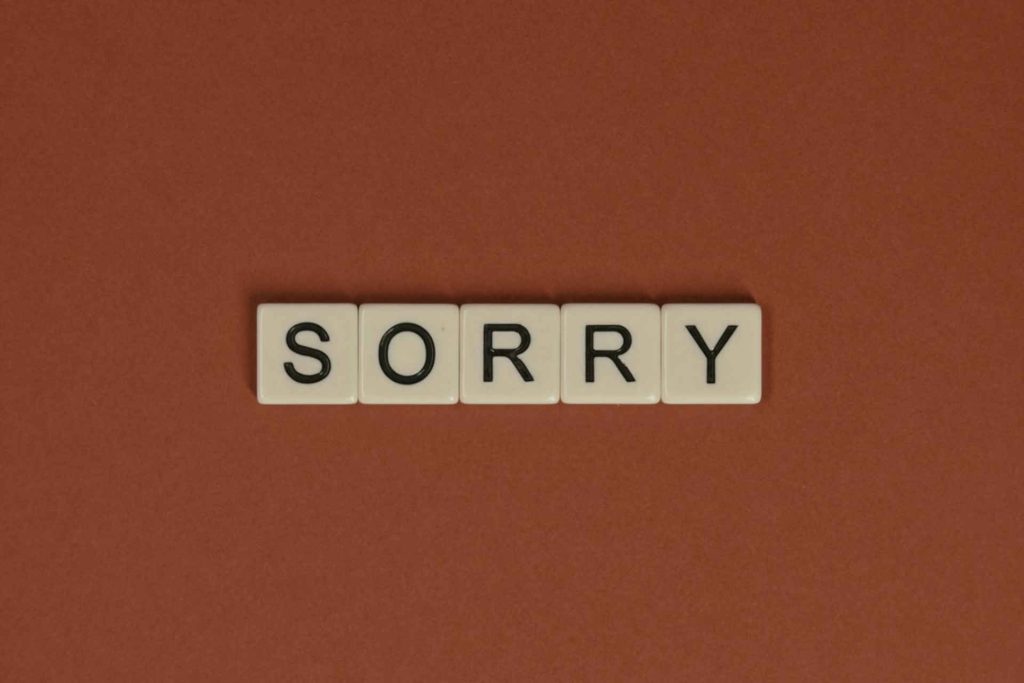
“Sorry” or “I didn’t mean it that way” – really? Or rather, as people often apologize today: “Sorry, it’s fine.” Or the official politician and manager statement: “If you felt offended, I apologize formally”.
This often sounds like a hedge: you apologize in case the other person felt that way. Some people hear it as, “I don't know if I did anything wrong – but if that's how you felt...”
But it could be so simple. A useful apology consists of three elements: first, a clear statement such as “I hurt you” or “I'm sorry”; second, an admission of responsibility such as “It was my fault” or “I didn't mean to”; and third, perhaps the question that hurts because it is honest: “What do you need now?”
Of course, there is a risk involved. If you apologize properly, you briefly lose control of the narrative. You can't bow down and be right at the same time. That's exactly why alibi apologies are so popular: they reassure the other person without leaving your comfort zone.
Perhaps that's where credibility is strongest: not in perfection, but in the willingness to truly stand up for your own imperfection.
In just two and a half years, Ben Schütz worked his way up step by step from demi chef to chef de partie to sous chef before taking on the role of head chef in 2025. In this interview, he explains how he achieved this extraordinary success, what makes working on board so special for him, and why he recommends that young chefs take the plunge and join the crew.
The international culinary scene is once again opening its doors to the next generation: The World’s 50 Best Restaurants has launched the application phase for the 2026 “50 Best Restaurants Scholarship”. In cooperation with Parmigiano Reggiano, the program is aimed at young chefs who are just starting their careers.
Amsterdam has many sides: loud, lively, touristy. But above all, the city can surprise you. From Michelin-starred restaurants to hidden gems and true classics, we’ve compiled our personal highlights, ranging from fine dining to the humble fries stand.
“Sorry” or “I didn’t mean it that way” – really? Or rather, as people often apologize today: “Sorry, it’s fine.” Or the official politician and manager statement: “If you felt offended, I apologize formally”.