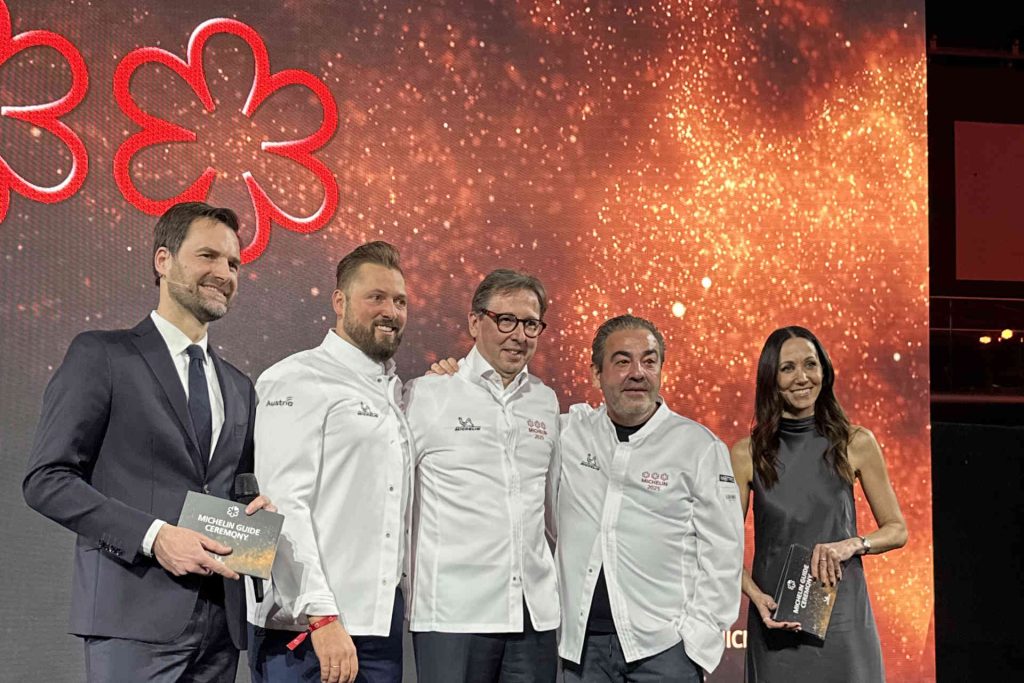

A Milestone in Culinary History
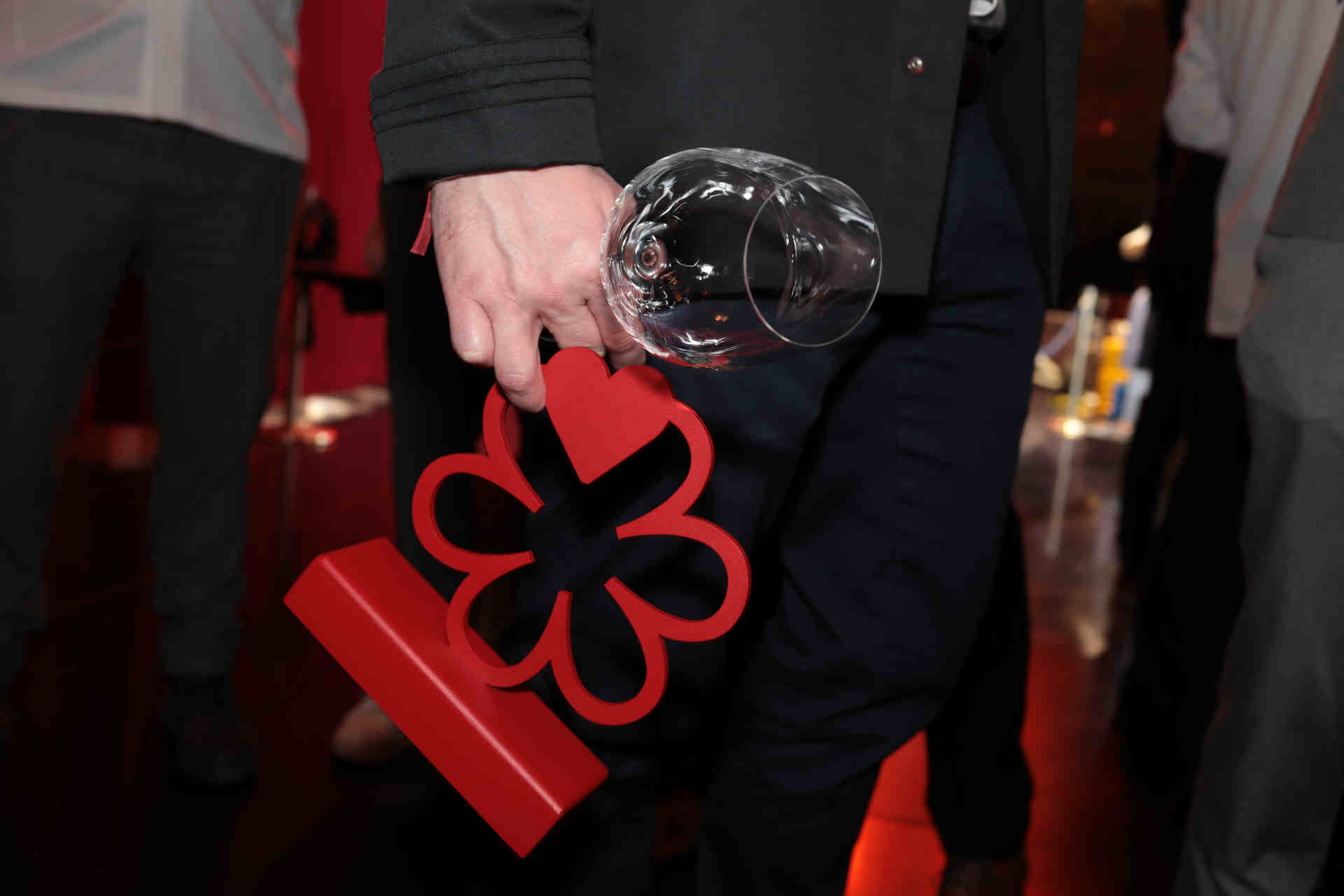
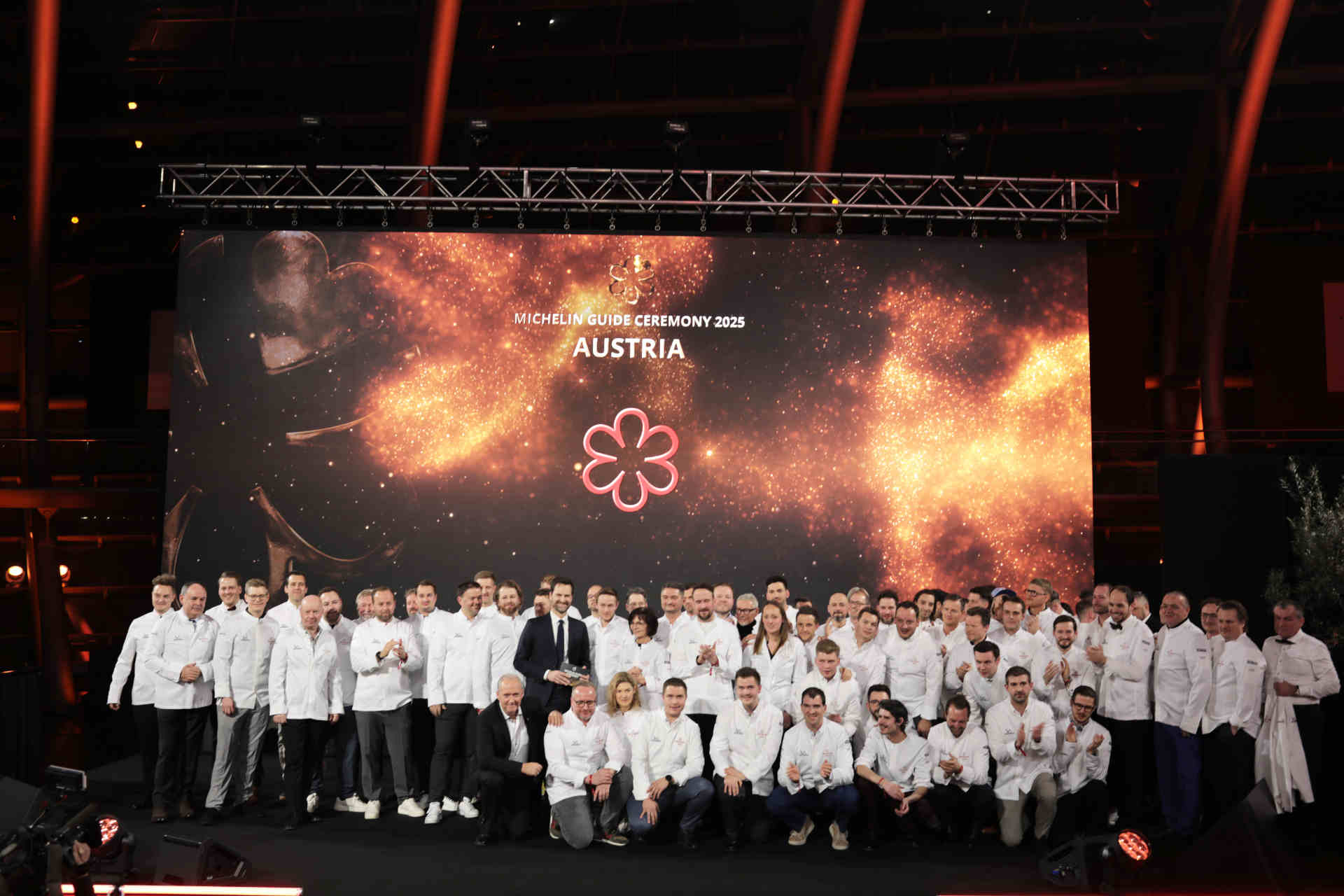
The Guide MICHELIN Austria 2025 celebrates Austria’s culinary excellence with an impressive lineup of 82 starred restaurants. From regionally inspired cuisine to innovative fine dining concepts and sustainable gastronomy projects, here is an overview of the most notable winners and their unique culinary highlights.
Highlights of the Awards:
- 2 restaurants with three MICHELIN stars (1 new)
- 18 restaurants with two stars (13 new)
- 62 restaurants with one star (53 new)
- 33 restaurants with Green Stars (31 new)
- 43 Bib Gourmands (38 new)
- Special awards for Service, Young Chef, and Sommelier
Three Stars: Austria’s Culinary Pinnacle
- Steirereck im Stadtpark (Wien)
- Amador (Wien)
Two Stars: 18 Restaurants
- Stüva (Ischgl, Tirol)
- Ois im Mühltalhof (Neufelden, Oberösterreich)
- Schwarzer Adler (Hall, Tirol)
- Griggeler Stuba im Burg Vital Resort (Lech am Arlberg, Vorarlberg)
- Obauer (Werfen, Salzburg)
- Kräuterreich by Vitus Winkler (Sankt Veit im Pongau, Salzburg)
- Doubek (Wien)
- Silvio Nickol Gourmet Restaurant (Wien)
- Mraz & Sohn (Wien)
- Konstantin Filippou (Wien)
- Döllerer (Salzburg)
- Rote Wand Chef´s Table (Vorarlberg)
- Landhaus Bacher (Niederösterreich)
- Restaurant 141 by Joachim Jaud (Tirol)
- Ikarus (Salzburg)
- Senns.Restaurant (Salzburg)
- Gourmetrestaurant Tannenhof (Tirol)
- Taubenkobel (Burgenland)
One Star: 62 Restaurants
- Aend
- Alpin Gourmet Stube
- Apron
- Artis
- Atelier Fischer
- Austria Stuben
- Beef Club
- Berggericht
- Bootshaus
- Bruderherz Fine Dine
- Dahoam
- Die Forelle
- Die Genießerstube im Alpenhof in Tux
- Die Weinbank
- Edvard
- Esslokal
- Esszimmer
- Esszimmer Everybody‘s Darling
- Gannerhof
- Geiger Alm
- Geschwister Rauch
- Gründler's Gourmetstüberl
- Guat'z Essen
- Guth
- Harald Irka am Pfarrhof
- Herzig
- Hubert Wallner
- Hubertusstube
- Interalpen Chefs Table
- Kilian Stuba
- Kirchenwirt
- Les Deux Kitzbühel
- Lieperts
- Lukas Kapeller
- Lukas Restaurant
- Mangold
- Mayer's Restaurant
- Mesnerhaus
- Moritz
- Mörwald Toni M.
- Ötztaler Stube
- Paula
- Paznauerstube
- Pfefferschiff
- Pramerl & the Wolf
- RAU Nature Based Cuisine
- Rossbarth
- Rouge Noir
- Sattlerhof
- Saziani Stubn
- Schlossherrnstube
- Schlosskeller Gourmetstube
- Sigwart‘s
- Tanglberg
- Gasthaus Restaurant Thaller
- The Glass Garden
- Tian
- Verdi
- Waldschänke
- Restaurant Wörgötter Ligist
- Z‘som
- Zeit.RAUM
Green Stars: 33 Restaurants
- Am Mahrbach
- Bär & Schaf Wirtschaft
- Bärenwirt
- Bootshaus
- Dahoam
- Die Forelle
- Ernele
- Floh
- Gannerhof
- Gourmetrestaurant Gaumenkitzel
- Guatz Essen
- Gut Purbach
- Hirschen
- Kräuterreich Vitus Winkler
- Krone
- Lurgbauer
- Mast
- Rau Nature Based Cuisine
- Rauchkuchl
- Restaurant Krainer
- Restaurant Moritz
- Rote Wand
- S‘Morentq
- Schwanen
- Sicher
- Gasthaus Restaurant Thaller
- Tian
- Walserstuba
- Weitmoser Schlössl
- Wirtshaus Steirereck am Pogusch
- Zeitraum
- Ziegelwerk Gasthaus
Bib Gourmand: 43 Restaurants
- Zum fröhlichen Arbeiter (Apetlon, Burgenland)
- Malerwinkl (Fehring, Steiermark)
- Freigeist (Lustenau, Vorarlberg)
- Göttfried (Linz, Oberösterreich)
- Hueber der Wirt in Bründl (Sankt Georgen an der Leys, Niederösterreich)
- Meierei im Stadtpark (Wien)
- Mochi (Wien)
- Woracziczky (Wien)
- Carnozet (Hirschegg, Kleinwalsertal)
- 34 additional restaurants across Austria
Special Awards
- Service Award: Barbara Eselböck (Taubenkobel, Schützen am Gebirge, Burgenland)
- Young Chef Award: Julian Stieger (Rote Wand Chef’s Table, Lech am Arlberg, Vorarlberg)
- Sommelier Award: Alexander Koblinger (Döllerers Genießerrestaurant, Golling an der Salzach, Salzburg)
The MICHELIN Austria 2025 Guide sets new standards with its ratings and underlines the importance of Austrian gastronomy on the international culinary stage.
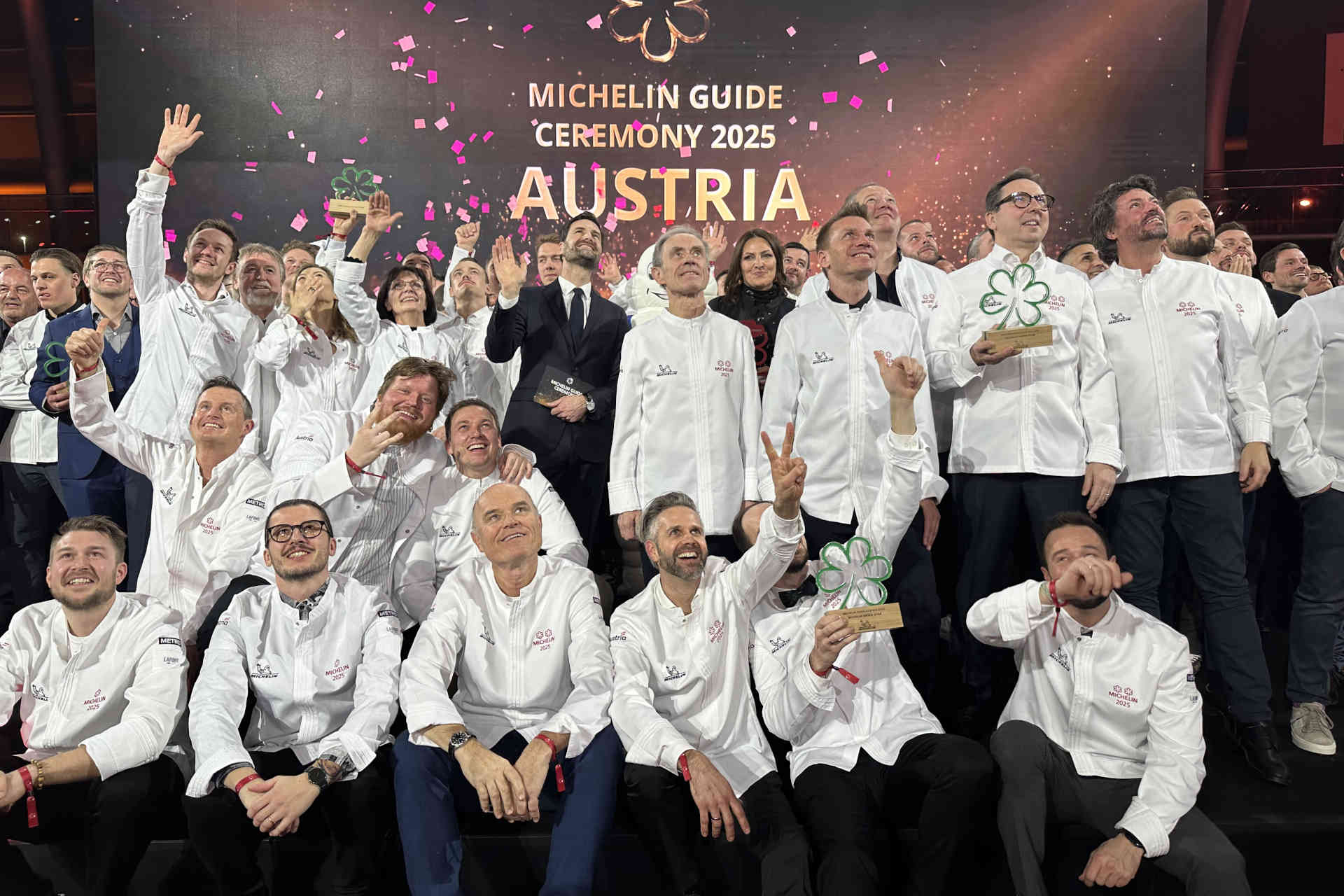
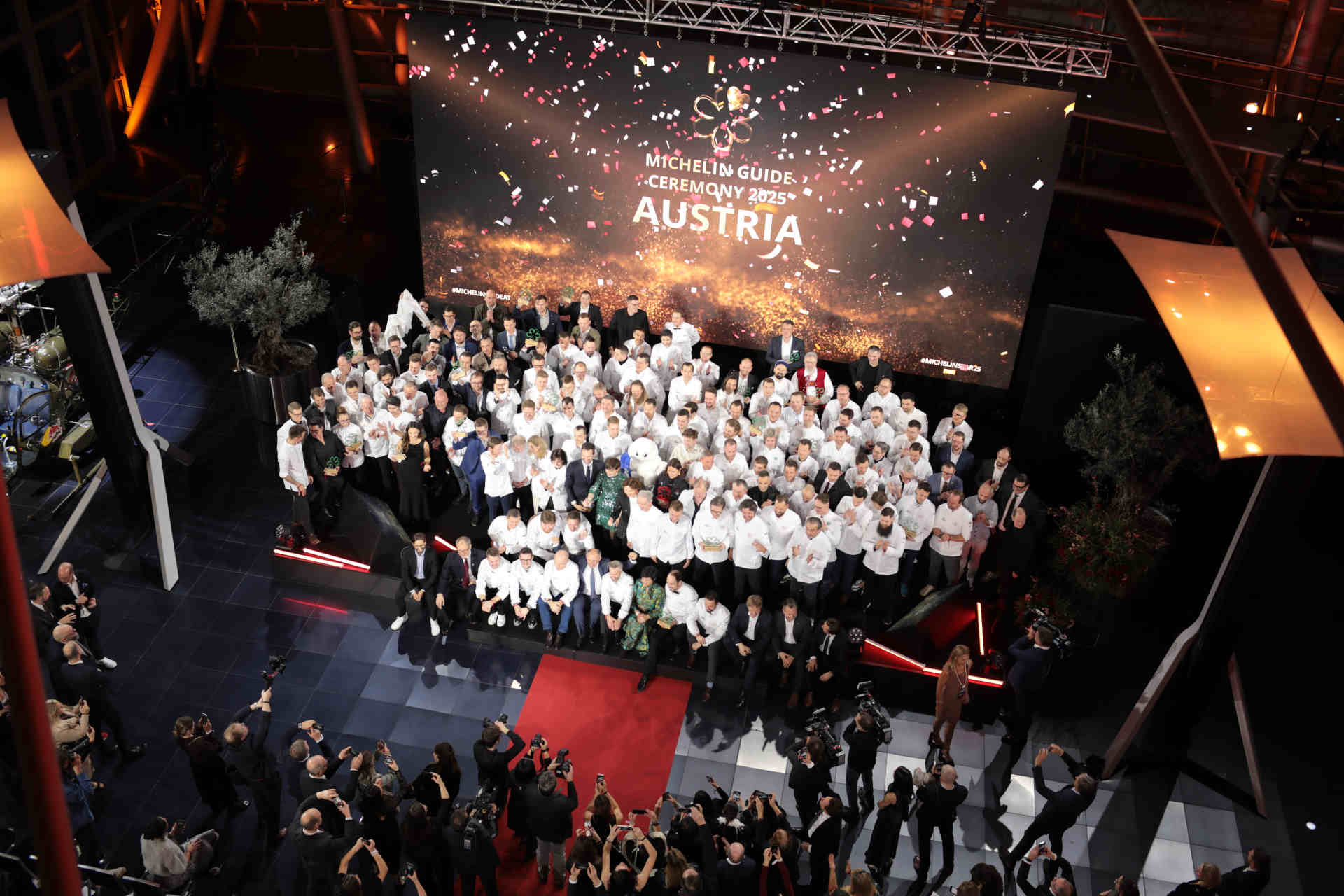

Our conclusion for the future: A signpost for the future of tourism
The 2025 edition of the Guide MICHELIN not only highlights Austria’s culinary richness but also establishes it as a premier travel and gourmet destination. These diverse awards enhance the Alpine Republic’s international visibility and make it an essential stop for gourmets worldwide. The focus on sustainability, regional products, and innovative gastronomy proves Austria’s ability to harmoniously blend tradition with modernity. The Guide MICHELIN remains an indispensable tool to celebrate and promote the quality and diversity of global gastronomy.