
Clarity that defines the cuisine
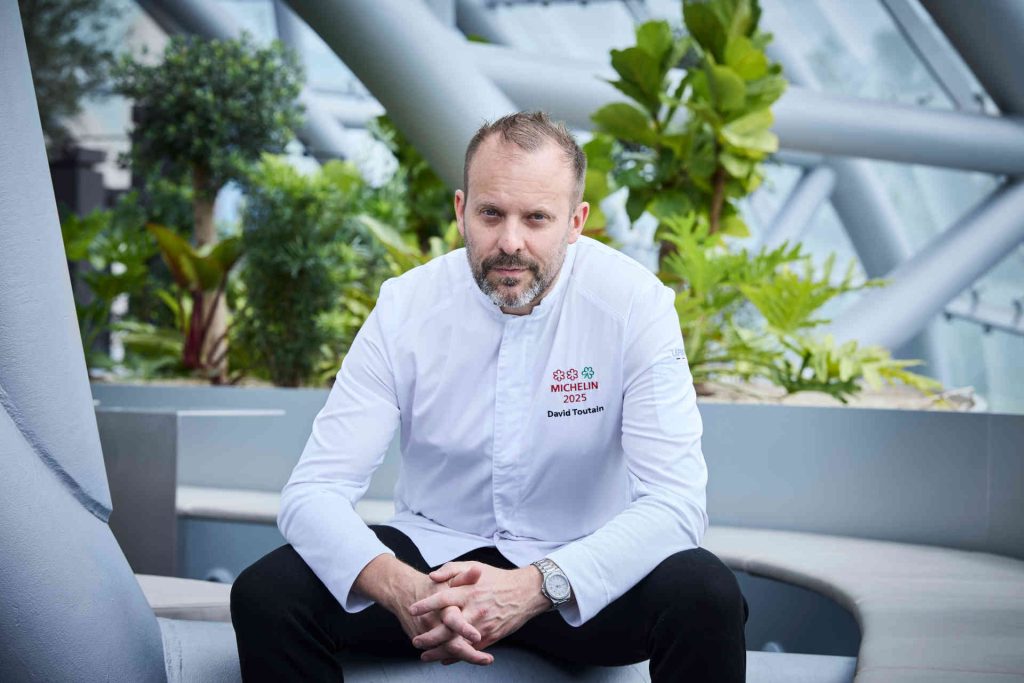
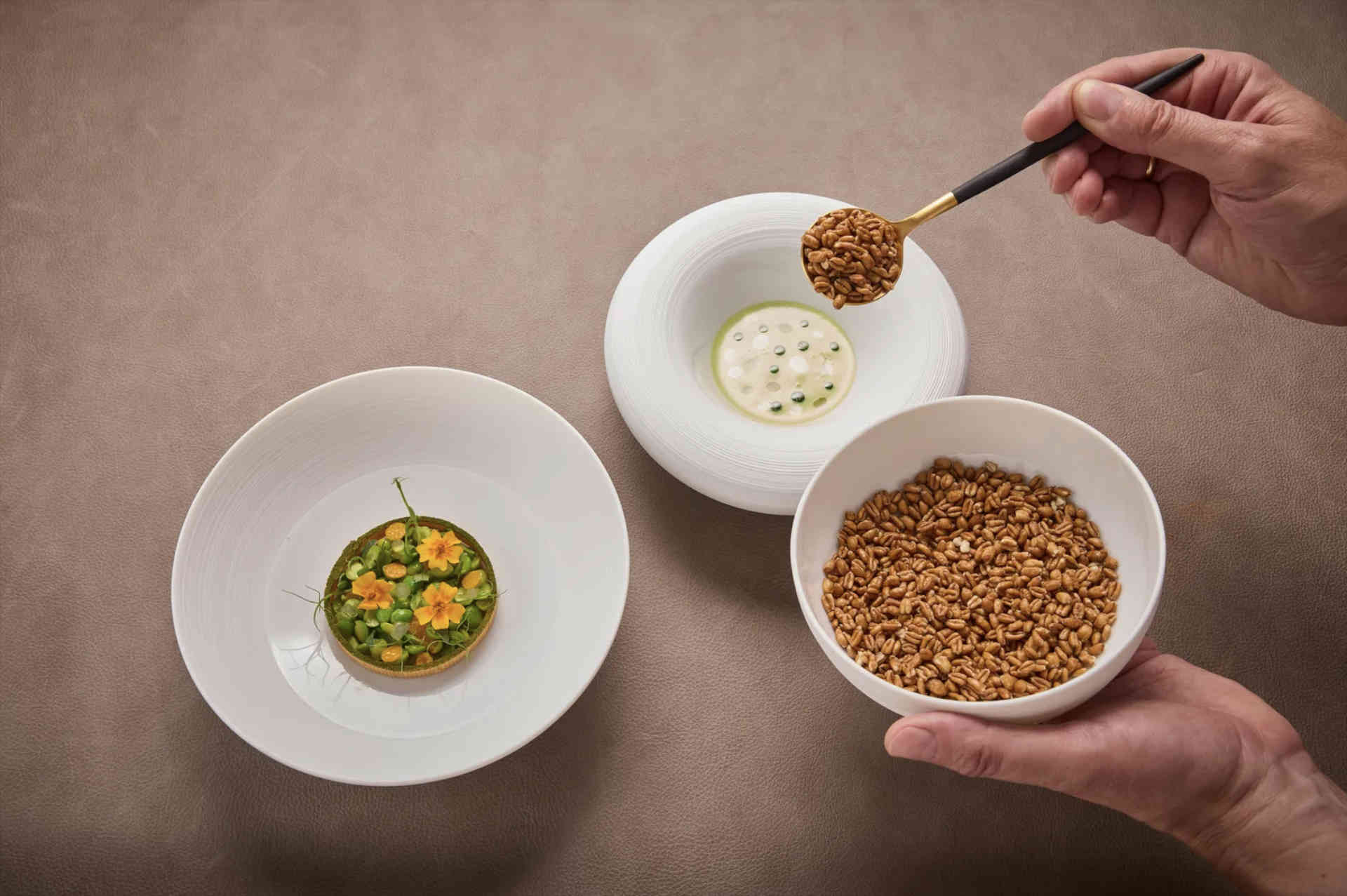
Two Michelin stars, a Green Star and peas served as caviar. David Toutain is one of the most distinctive voices in contemporary French cuisine. In June 2026, the Parisian master chef will bring his cuisine, deeply rooted in nature, to the Ikarus restaurant at Red Bull Hangar-7 in Salzburg. His menu tells a story of Normandy, seasonality, vegetables, herbs, fermentation and quiet precision.
Toutain’s cuisine does not seek luxury in the price tag or in prestigious ingredients alone. It begins with the soil, the season, the producer and the precise moment of harvest. As a result, a pea can become more impressive than caviar. A mackerel, often regarded as a humble fish, can become one of the finest products in the world – if it is caught at the right time, handled correctly and cooked with precision.
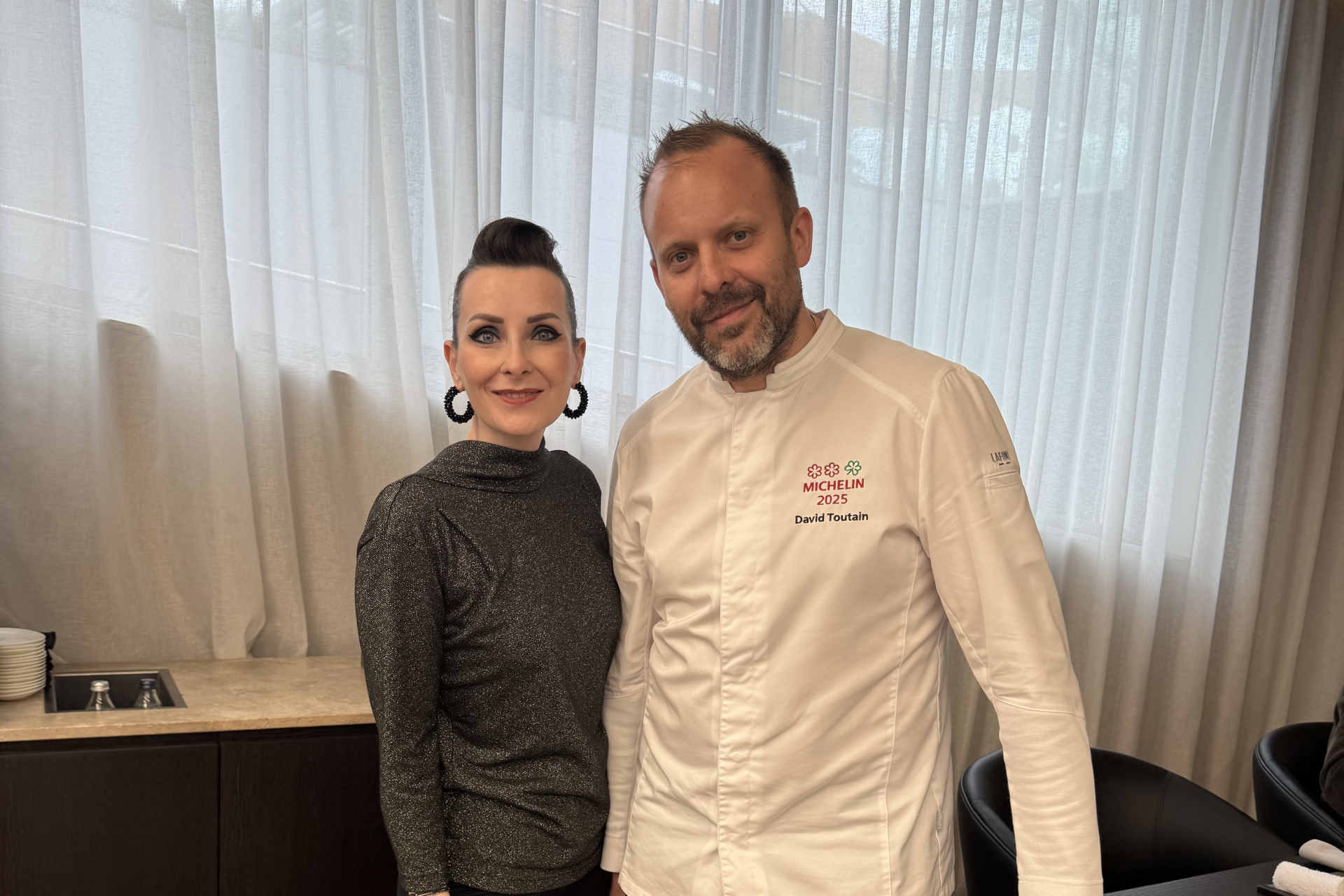
In conversation, David Toutain speaks with the same clarity that characterises his cuisine: understated, precise and deeply connected to nature.
Interview with David Toutain
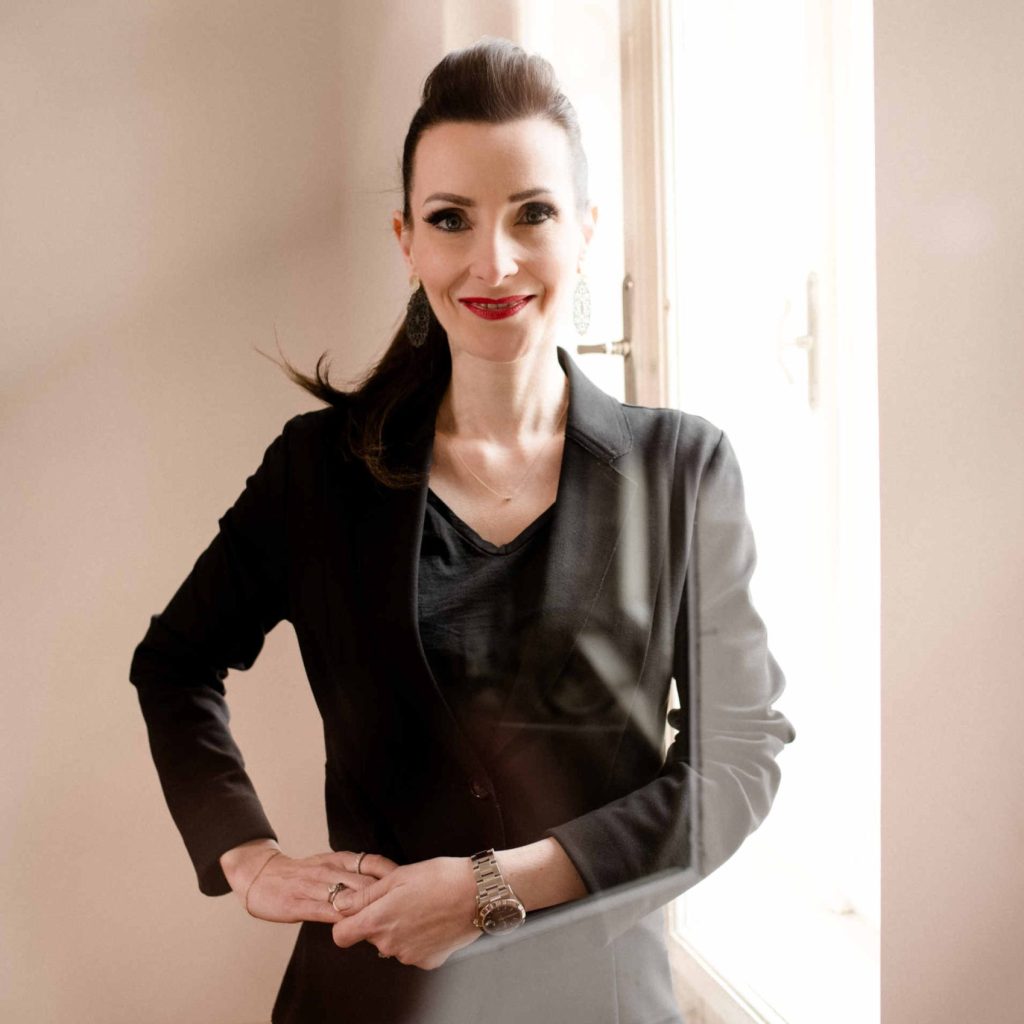
ALEXANDRA GORSCHE: Two Michelin stars, a Green Star and peas are your caviar. What makes a simple product luxurious?
DAVID TOUTAIN: For me, it starts with where a product comes from. You need to know at what time of year to use it, respect the right season and work with the right producers.
The flavour depends on how a product grows, what’s in the soil, when it’s harvested and how it’s delivered. Our work as chefs begins after that. We have to cook very simply and preserve the texture.
It could be a pea, it could be asparagus or a lovely fish like mackerel. Mackerel is often seen as an inexpensive fish, but when the timing is right – when it’s very fresh and cooked properly – it can be the most wonderful fish in the world.
You’ve had a strong connection with nature from an early age. What has nature taught you?
Nature has taught me to be humble and simple. If nature doesn’t provide us with the right produce, it’s very difficult for us as chefs to cook beautifully. We must remain humble, because nature is already beautiful. Nature gives us four wonderful seasons. If you respect what it gives you, the result will be beautiful.
Do you have any advice for young chefs?
Try to keep an open mind. Work with the seasons and with the right people behind the produce. I think it’s important to support these people. Be creative, let yourselves be inspired, and think about where you come from. Let’s rock. Let’s do it. And don’t be afraid.
Our conclusion for the future
What makes David Toutain so relevant today is not only his culinary precision, but the way in which he redefines the concept of luxury. At a time when fine dining is often intended to impress through rarity, complexity or extravagance, Toutain directs our attention back to the origins of food. His cuisine poses a different question: what if the most luxurious ingredient is not the rarest, but the one treated with the greatest understanding? His statement about peas is not a provocation. It is a philosophy. A pea, harvested at the right moment, grown in the right soil and treated with restraint, can convey more emotion than a prestigious ingredient devoid of meaning.
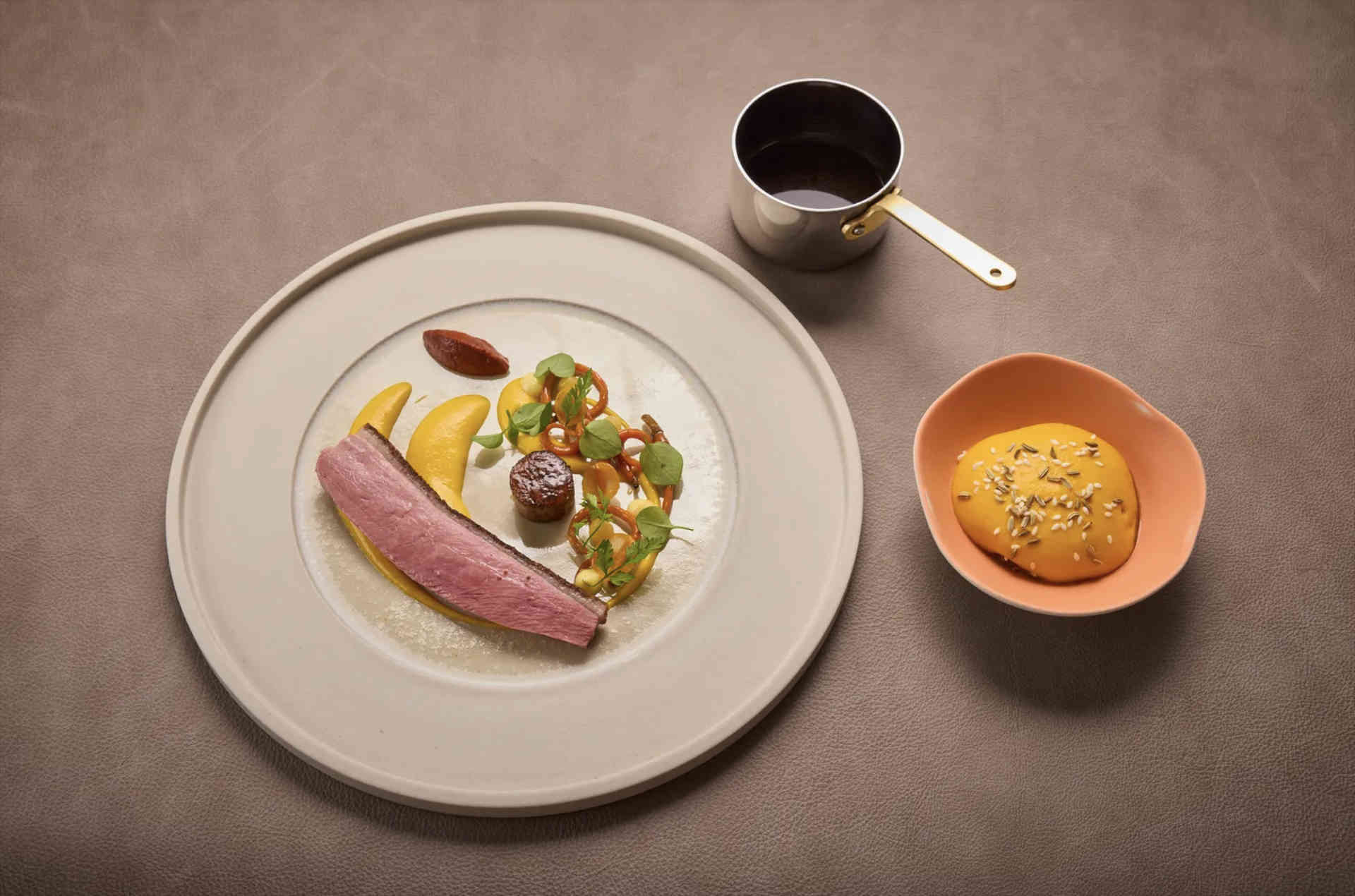
At Restaurant Ikarus in Hangar-7, this approach is evident throughout the menu: green peas with orange and fir tips, cod with fennel and blackcurrants, BBQ lobster with spinach, grapefruit and juniper, rhubarb with meadowsweet. Fish and meat feature, but they do not dominate. They form part of a larger composition in which vegetables, herbs, acidity, bitterness, aroma and texture take centre stage.
Toutain’s approach provides a significant impetus for the catering and hospitality sectors. Sustainability need not be presented as a constraint. At its best, it becomes a catalyst for creativity. Those who work with seasonal produce, small-scale producers, short supply chains and precise product knowledge do not make their dishes any less ambitious, but rather more distinctive.
David Toutain demonstrates that the future of haute cuisine does not necessarily have to become louder, more expensive or more complicated. Perhaps it will become more precise. More mindful. More grounded. And, as a result, more in keeping with the times. This offers a valuable insight, particularly for establishments currently grappling with rising costs, a shortage of skilled staff, pressure to be sustainable and changing guest expectations: not every dish needs even more luxury. Sometimes, what’s needed is greater understanding. Vegetables can take centre stage. Provenance doesn’t just need to be explained – it needs to be tasted. Acidity, bitterness and aroma can create more excitement than heaviness and opulence. And sustainability is most convincing when it inspires rather than lectures.
About David Toutain
David Toutain was born in Flers, Normandy, in 1981 and grew up with a strong connection to the countryside. As a child, he spent a great deal of time in his grandparents’ kitchen garden, surrounded by herbs, flowers and root vegetables. This early closeness to nature continues to shape his cuisine to this day.
After training at the hotel management school in Granville, Toutain worked in some of Europe’s most influential kitchens, including those of Bernard Loiseau, Marc Veyrat and Alain Passard at L’Arpège in Paris. His time with Passard, whose vegetable-centred cuisine had a decisive influence on contemporary French gastronomy, proved to be a particularly significant influence on Toutain. Further stints at Mugaritz in Spain and Corton in New York broadened his culinary horizons.
In 2013, he opened the restaurant David Toutain in Paris’s 7th arrondissement. The restaurant was awarded two Michelin stars as well as a Green Star for its commitment to sustainability. Toutain’s cuisine is based on seasonality, vegetables, herbs, fermentation, direct collaboration with producers and a deep respect for nature.
In June 2026, David Toutain will be a guest chef at the Ikarus restaurant in the Red Bull Hangar-7 in Salzburg, bringing with him a style of cooking that is at once refined, natural, precise and deeply personal.