
From the foodie community to international recruitment
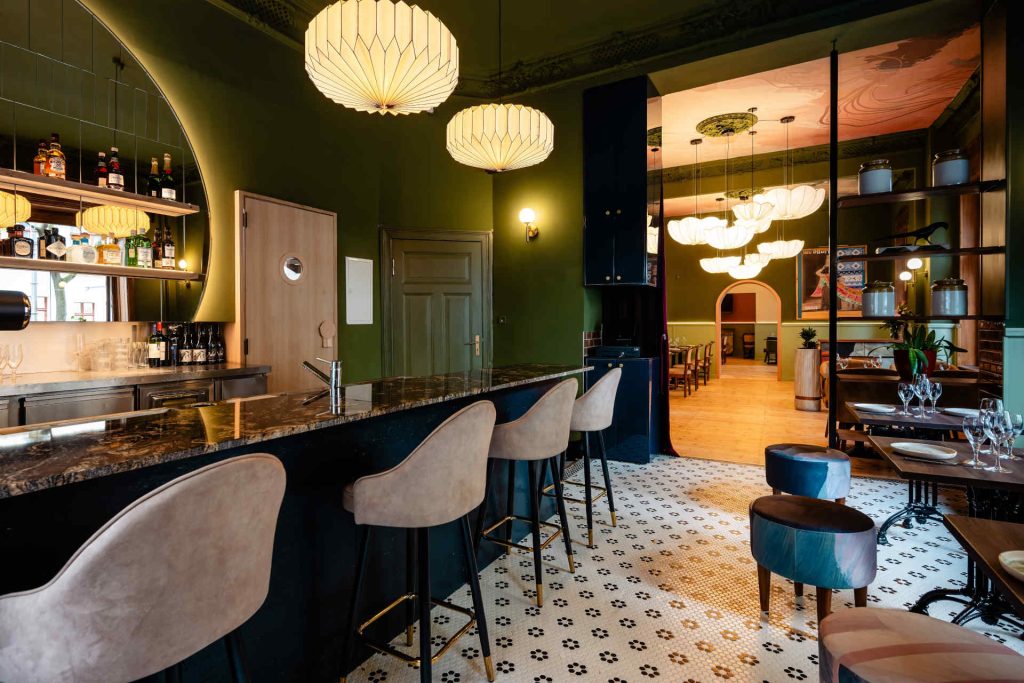
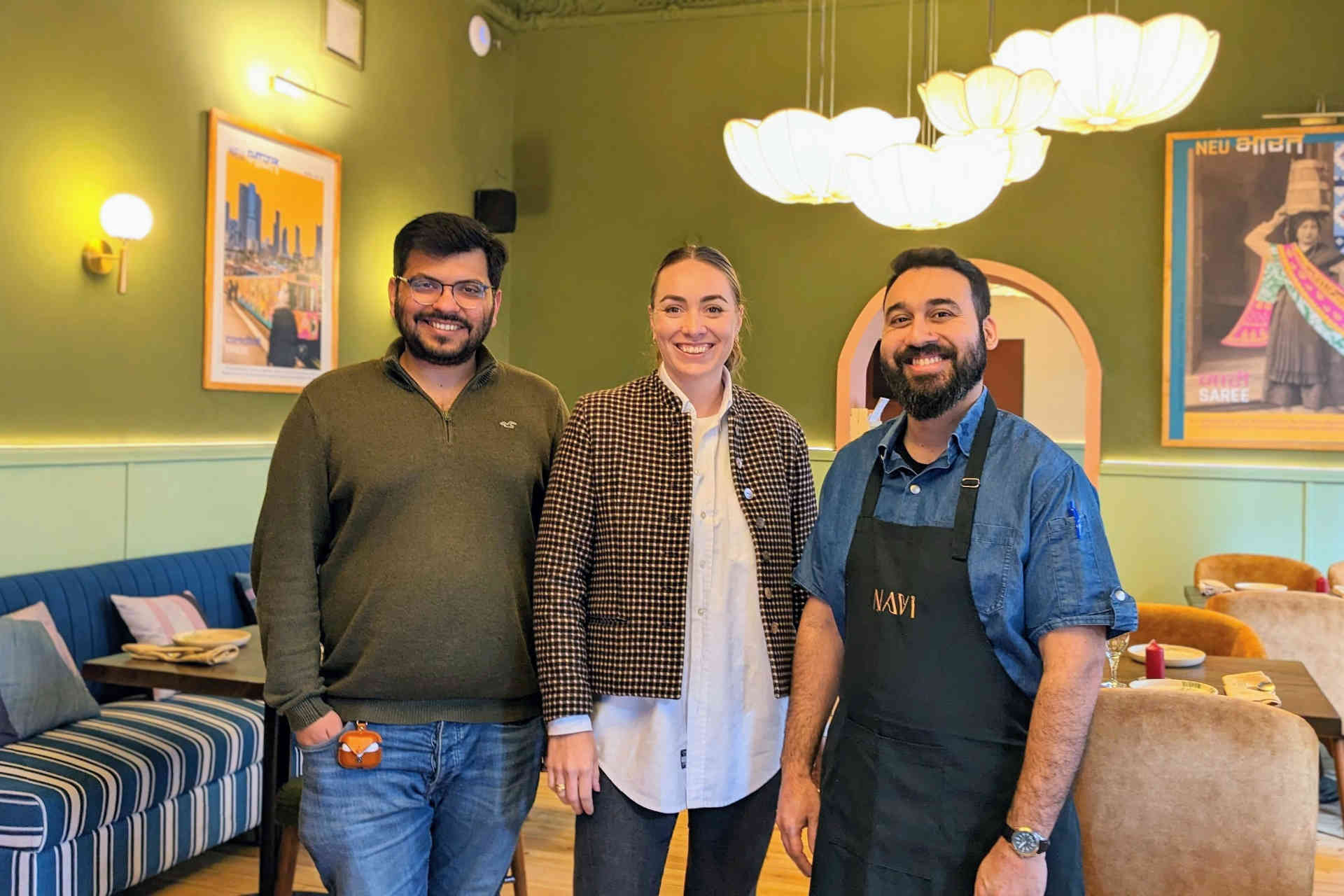
If Sophie Radtke hadn't regularly gone to Saravanaa Bhavan on Berlin's Potsdamer Platz for lunch and shared her culinary experiences on her foodie account “Gastroinferno”, we probably wouldn't be sitting in the new Navi in Kreuzberg today. It was precisely these posts that led her to help the restaurant find a new head chef. Both establishments – the Berlin branch of the world-famous vegetarian restaurant chain and the Navi, which opened at the end of 2024 – are run by Ritesh Taurani. He runs the latter together with his wife Heena Manglani and business partner Gurbir Gill.
It wasn't just Sophie's enthusiastic Instagram posts from Saravanaa Bhavan that caught Taurani's attention, but also her announcement that she had launched a new project together with her partner, Indian chef Sandeep Sreedharan: Chefsgate – a start-up that connects talented Indian chefs with opportunities in Austria and Germany.
The gateway for kitchen professionals
“And here I am now,” says Shannon Lawrence with a smile. He runs the kitchen at Navi with a team that now numbers seven. The chef, who grew up in Mumbai, worked at the luxury Taj Mahal hotel in Australia and the US after completing his training before returning to India, where he worked at The Bombay Canteen and as head chef at the new CIRQA, among other places.
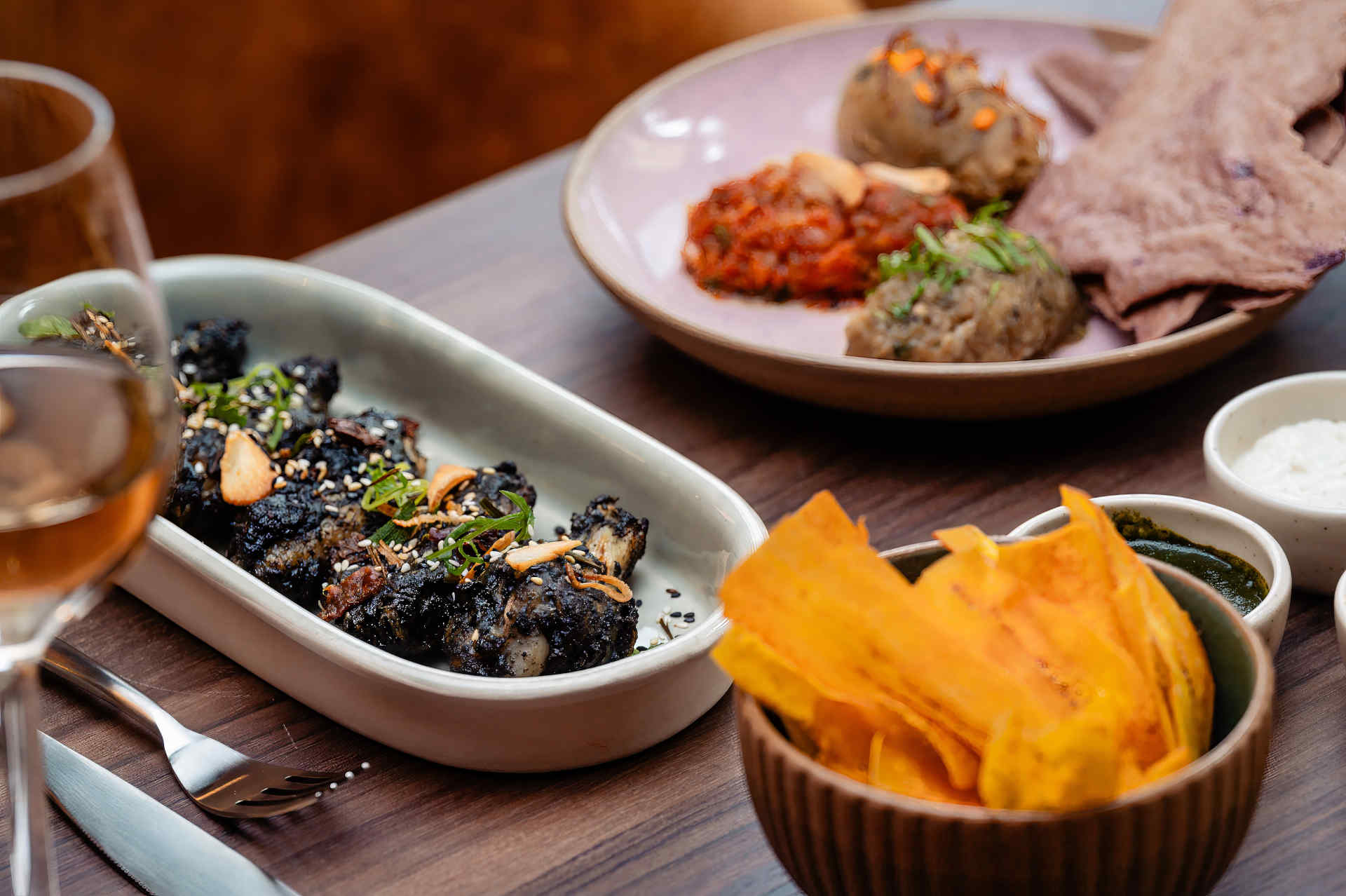
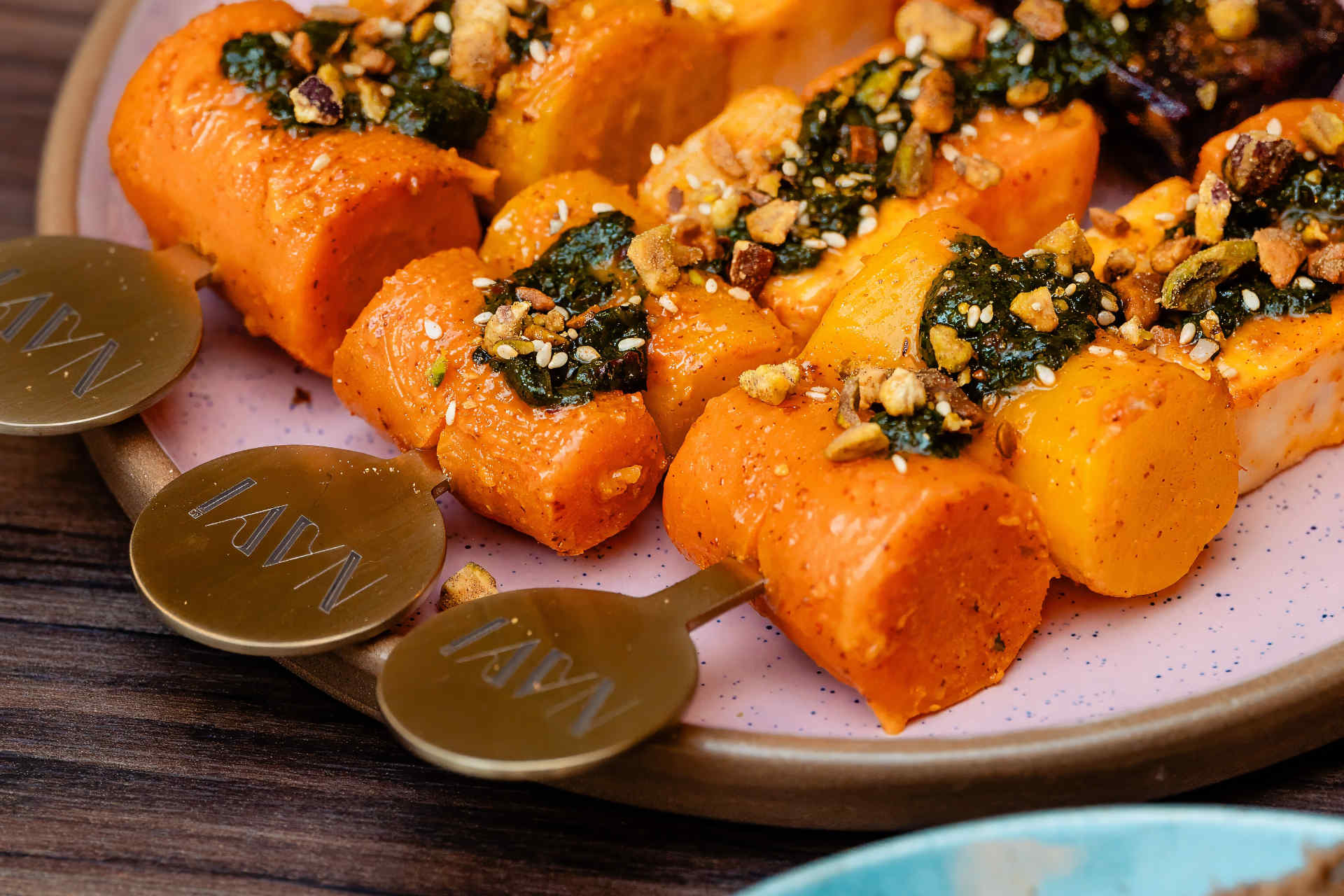
The Navi menu deliberately stands out from the usual Indian cuisine in Berlin. Instead of a domesticated version of South Indian cuisine, the dishes here reflect the diversity of the entire subcontinent: Achari Tikka – a vegetarian kebab skewer with glazed root vegetables, herb chutney, roasted sesame seeds, and pistachio crumble, or Ajwain – burnt cabbage with whipped spiced tofu, tomato masala, and thyme churma. Unknown but highly aromatic dishes that range all the way to extraordinary desserts such as Paruppu Payesam with lentils, coconut milk, mung bean praline, and charred pineapple coulis.
Berlin discovers the diversity of Indian cuisine
“My motivation is to provide a platform for regional Indian cuisine. Berlin is beginning to appreciate our food culture,” explains Lawrence. He actually didn't want to be in the kitchen anymore, but rather help young colleagues find their place in the restaurant industry. “Many take the first job they can find because they're afraid they won't find another one, and then they're unhappy,” he says. Through Chefsgate, he finally found his way to Berlin – as the head chef of an innovative concept.
New career opportunities for India's culinary talents
Chefsgate not only wants to place experienced chefs like Lawrence, but also promote young talents with little international experience. The idea was born three years ago when Sophie Radtke gained a deeper insight into the working conditions in Indian restaurants through her partner, who himself works in the restaurant industry. She recognized how much passion and professionalism goes into the cooking there – but also how limited the prospects are for many. Low wages, long working days, and little protection are often the reality. Chefsgate wants to make it easier for these chefs to find their way to Central Europe and enable them to pursue a professional future in top establishments.
Perfect match – only when the vibe is right
Demand is high: the Chefsgate database now contains almost four-digit numbers of talented chefs. However, only around a dozen chefs have been placed so far – because the team is very selective. The same applies to the businesses looking for staff. “If the vibe isn't right or the environment isn't suitable, we don't place anyone,” explains Radtke. Previous partners include the Figlmüller Group in Vienna, the A-Rosa in Kitzbühel, and the two-star restaurant at the Söl'ring Hof on Sylt. Chefsgate takes care of all the paperwork for work permits and visas – a complex bureaucratic process involving around 30 documents and lots of coordination with the authorities.
Through the bureaucratic jungle
“We have already faced many challenges,” says Radtke. Sometimes an authority declares that it is not responsible, sometimes complete documents are not accepted. Processing times are often long, and from the perspective of an IT country like India, digitization is lagging far behind. Nevertheless, Chefsgate's expertise grows with every successful placement. In Austria, the path leads to the Red-White-Red Card, which is awarded based on a points system for qualifications and language skills. In Germany, work permits are issued by the Federal Employment Agency. They receive support from the Austrian Business Agency (ABA) and ProRecognition, among others, which informs Indian professionals about career opportunities in Germany.
Successful onboarding for international colleagues
Another important part of Chefsgate is cultural and professional onboarding. Businesses need to prepare for new team members from India. While large companies such as A-Rosa in Kitzbühel already have English-speaking kitchen teams, smaller businesses are often not yet prepared for this. The Söl'ring Hof switched its team meetings to English even before the arrival of Indian chef Chitranshu Mandhyan – a measure that not only integrated the new colleague, but also benefited the guests.
“German guests want their own plate”
Shannon Lawrence's team has already gelled well at Navi. Thanks to his role model status, three other talented Indian chefs have already joined the team. What has he learned about German guests? “In India, we share food – here, everyone wants their own plate. Even for starters.” That's why the team takes special care to ensure that all dishes are served at the same time. Welcome to Germany!
India's culinary influence worldwide
- Spice it up! – Without India, world cuisine would be a lot more boring: turmeric, cumin, cardamom, and other spices have long been indispensable globally.
- Curry? Not just any curry! – There are hundreds of curries in India – from creamy butter chicken to spicy vindaloo. The term has taken on a life of its own worldwide.
- Tandoor technique – Whether Indian naan or juicy tandoori chicken: the high heat of the traditional clay oven creates roasted flavors that have been imitated worldwide.
- Street food power – Chaat, samosas, dosa – India's street food culture inspires gastronomic concepts from New York to Berlin.
- Vegetarian? No problem! – Indian cuisine shows how diverse plant-based food can be – from spicy dals to stuffed parathas.
- Chai instead of coffee? – Masala chai has long since achieved cult status. The mixture of black tea, spices, and milk is being reinterpreted worldwide.
Our conclusion for the future
Indian chefs bring not only their craft with them, but also a food culture that thrives on deep-rooted traditions, intense flavors, and masterful technique. Their expertise adds a new dimension to modern gastronomy – authentic, passionate, and full of flavor.
From Genusspunkt magazine, May-Aug 2025