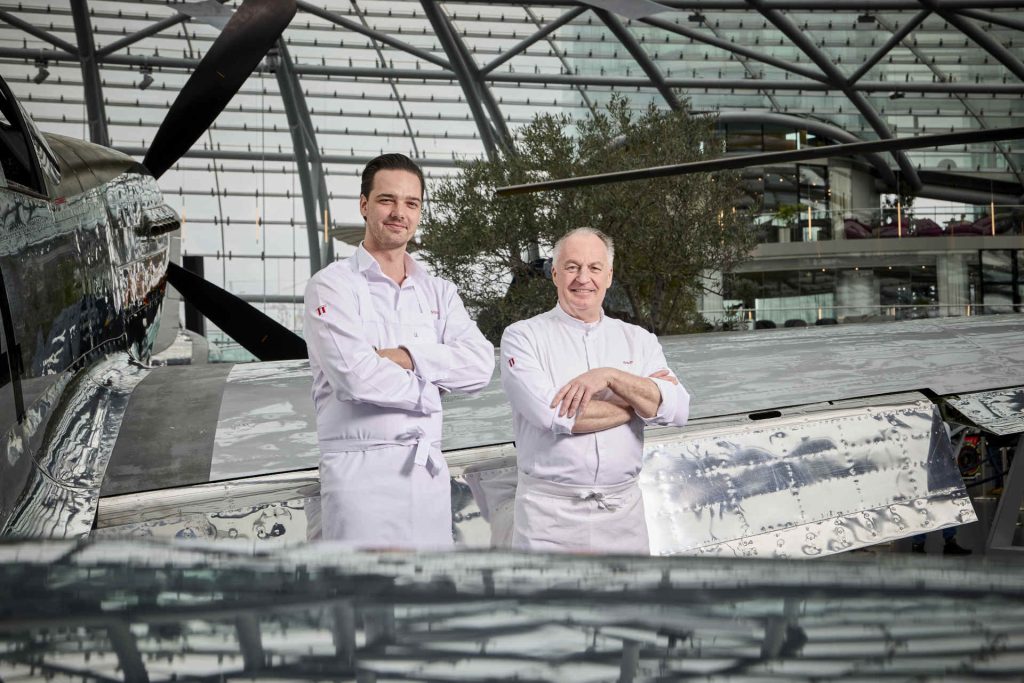

Stefan Stiller and Christiaan Stoop at Ikarus
There are evenings that are more than just a menu. They are a dialogue. An attitude. An experience that resonates far beyond the moment. Precisely such an evening is currently unfolding at Restaurant Ikarus in Hangar-7, where Stefan Stiller and Christiaan Stoop—two defining voices of international haute cuisine—are guest chefs in April 2026.
What is served here is not just a menu; it is the embodiment of a concept: fine dining as an immediate encounter. Without distance, without artifice, but with maximum precision and an almost radical clarity.
The evening begins: Balance as a Signature
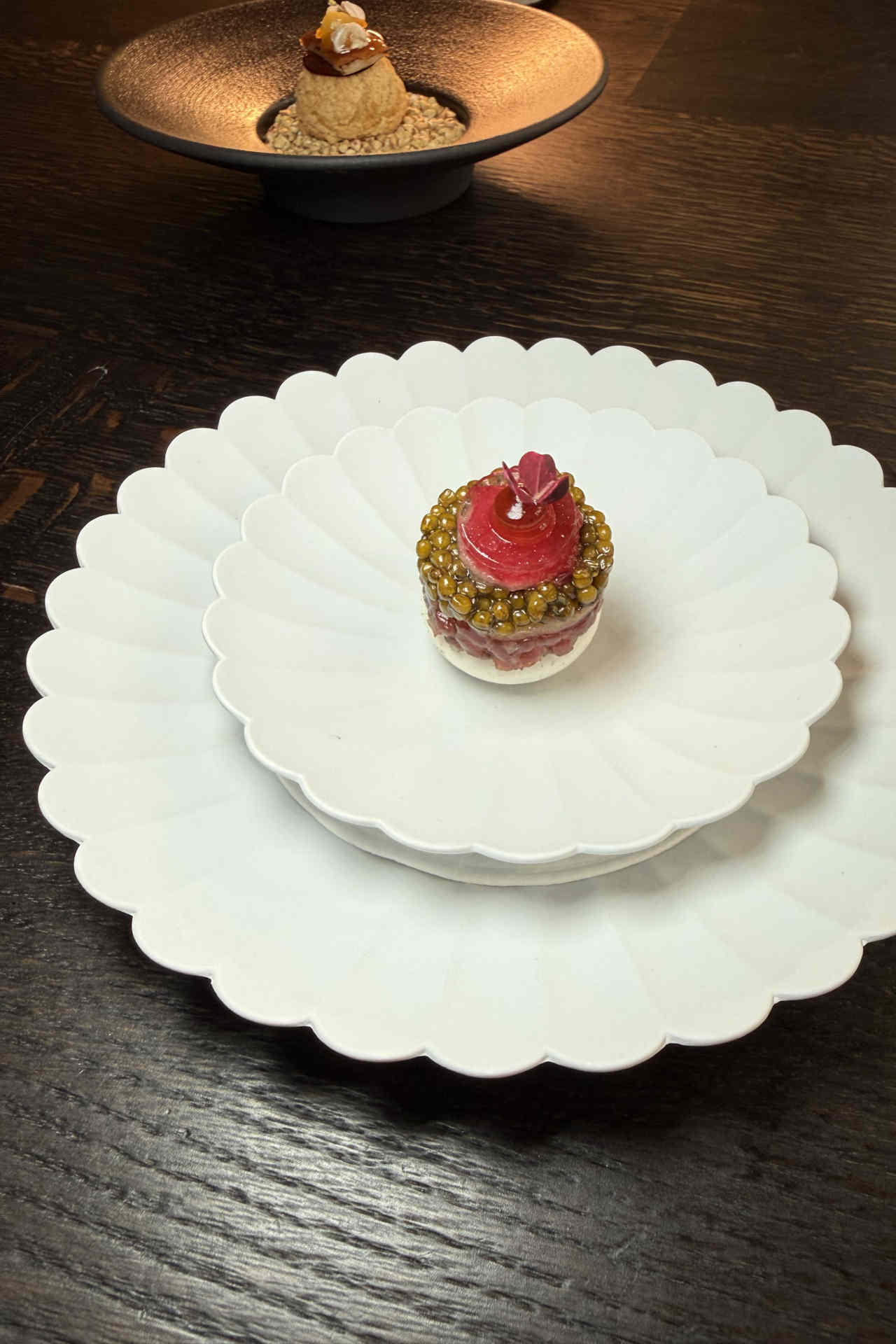
Even the first courses make it clear what this is all about: balance, but conceived at the highest level. The opening course—dashi macaron, otoro, caviar—is no gimmick, but a statement: umami is played out here not with boldness, but with elegance. This is followed by char siu, the classic Chinese flavor, yet in a precisely refined, almost purist interpretation.
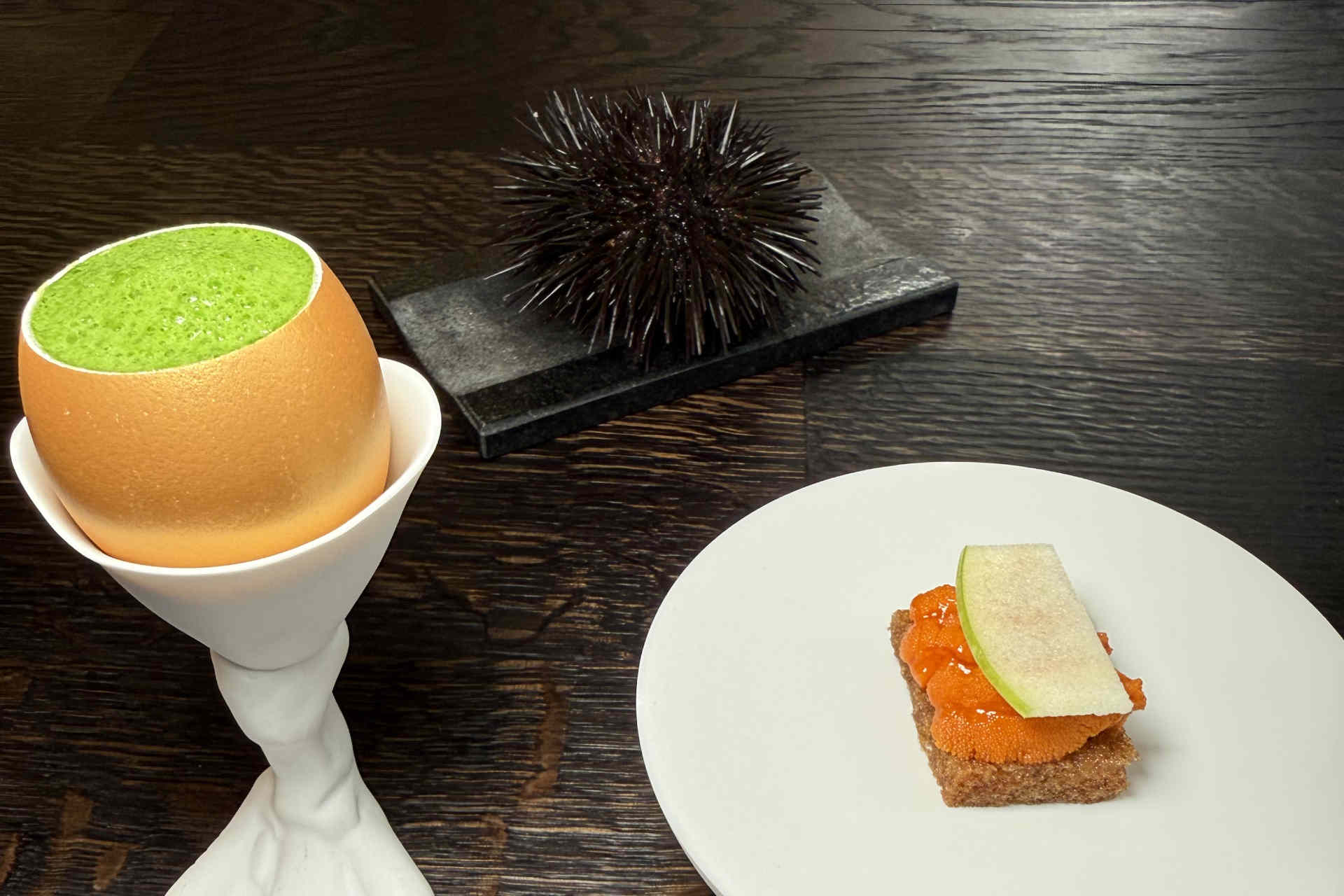
What particularly struck us and what clearly sets this evening apart from many other Michelin-starred menus: The appetizers are a masterclass in texture and tension. The interplay of heat, sweetness, and acidity is never jarring; the textures deliberately alternate between creamy, crispy, and melt-in-the-mouth, and the aromatic contrasts are not an end in themselves but are strategically placed. A prime example: sea urchin, sourdough bread, brown butter. Deep, salty, buttery, and yet carried by a lightness that surprises.
The exception that becomes an icon: Beef Tartare
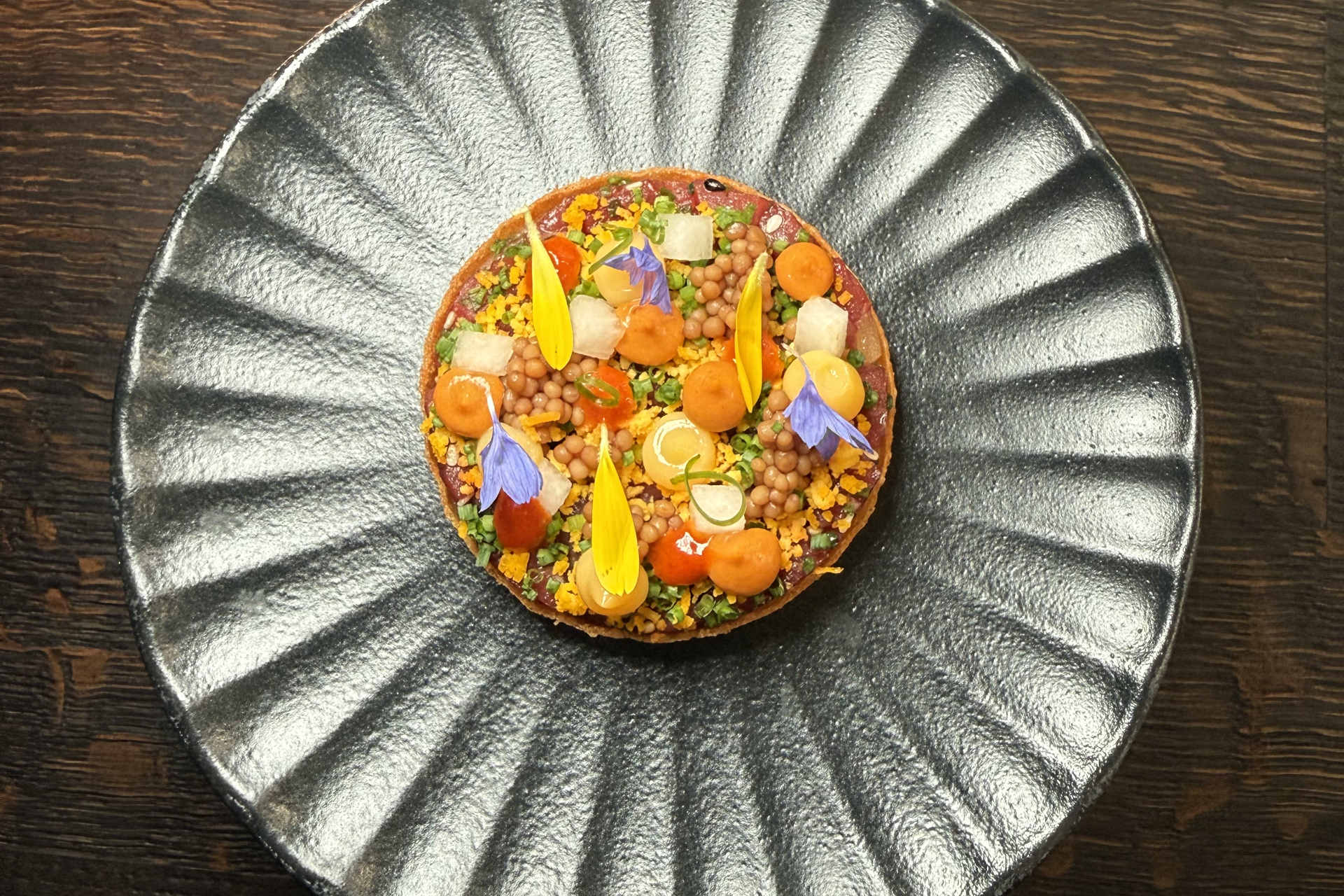
One dish deliberately breaks with the principle of constant renewal: Korean beef tartare with gochujang and Nashi pear. It is an exception, and that is precisely what makes it so special. While the menus at Taian Table change regularly, this dish keeps reappearing on the menu. Why? Because it’s in demand. Because it works. Because it resonates emotionally. And indeed: This tartare is more than a classic. It embodies a modern flavor profile: heat from gochujang. Prominent, but never overpowering. The counterpoint is the fruity freshness of the Nashi pear. The texture is perfect—delicate, yet with substance. A dish that proves: Repetition is allowed when it signifies excellence.
Main Courses & Depth: Precision Meets Ingredient
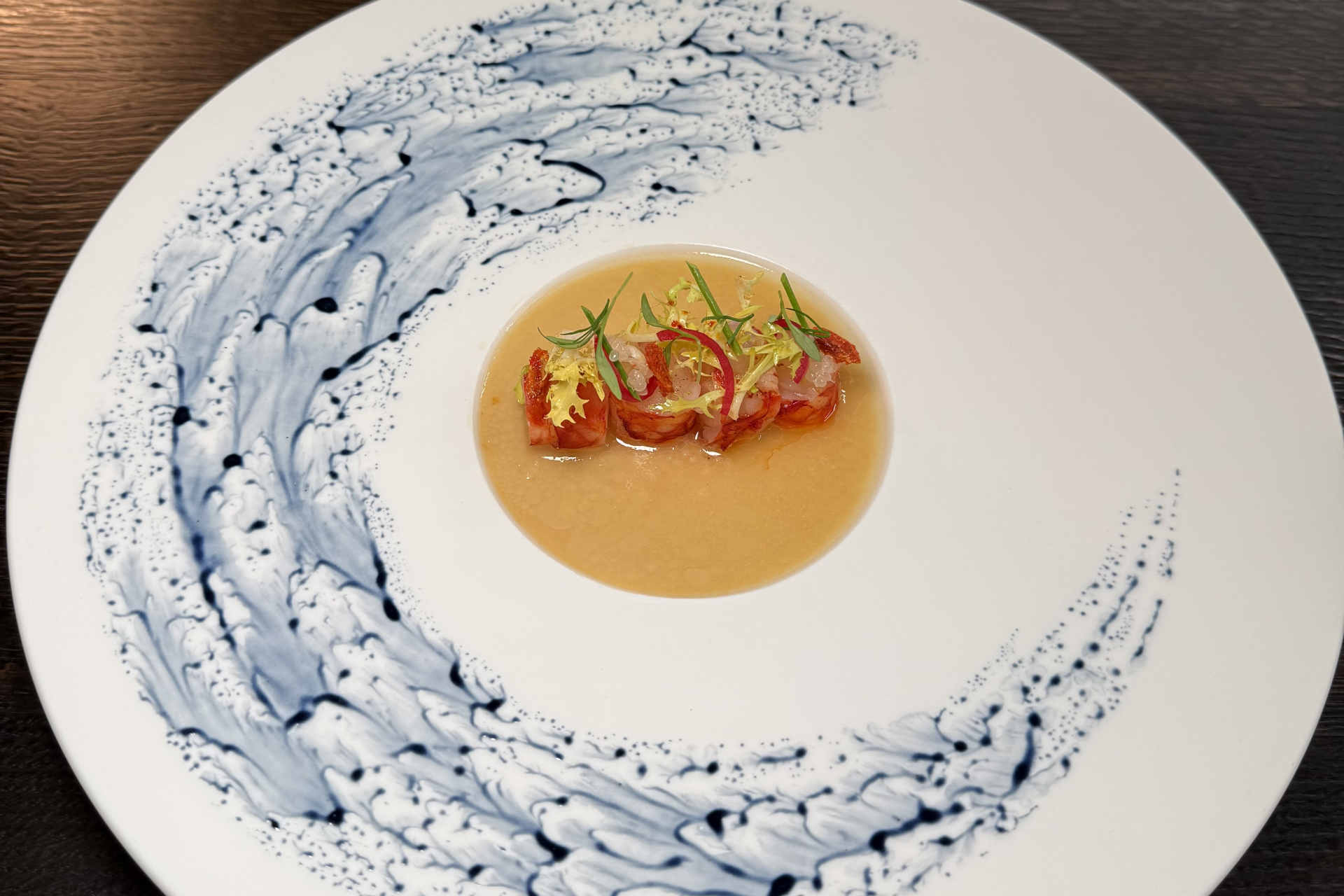
The Spanish carabinero marks the start of a new phase in the menu: more depth, more intensity. The combination with finger lime and ginger oil brings a vibrant freshness, almost electric on the tongue. The shallot dashi with Gruyère and Périgord truffle is pure reduction. A course that demonstrates just how much power can lie in apparent simplicity.
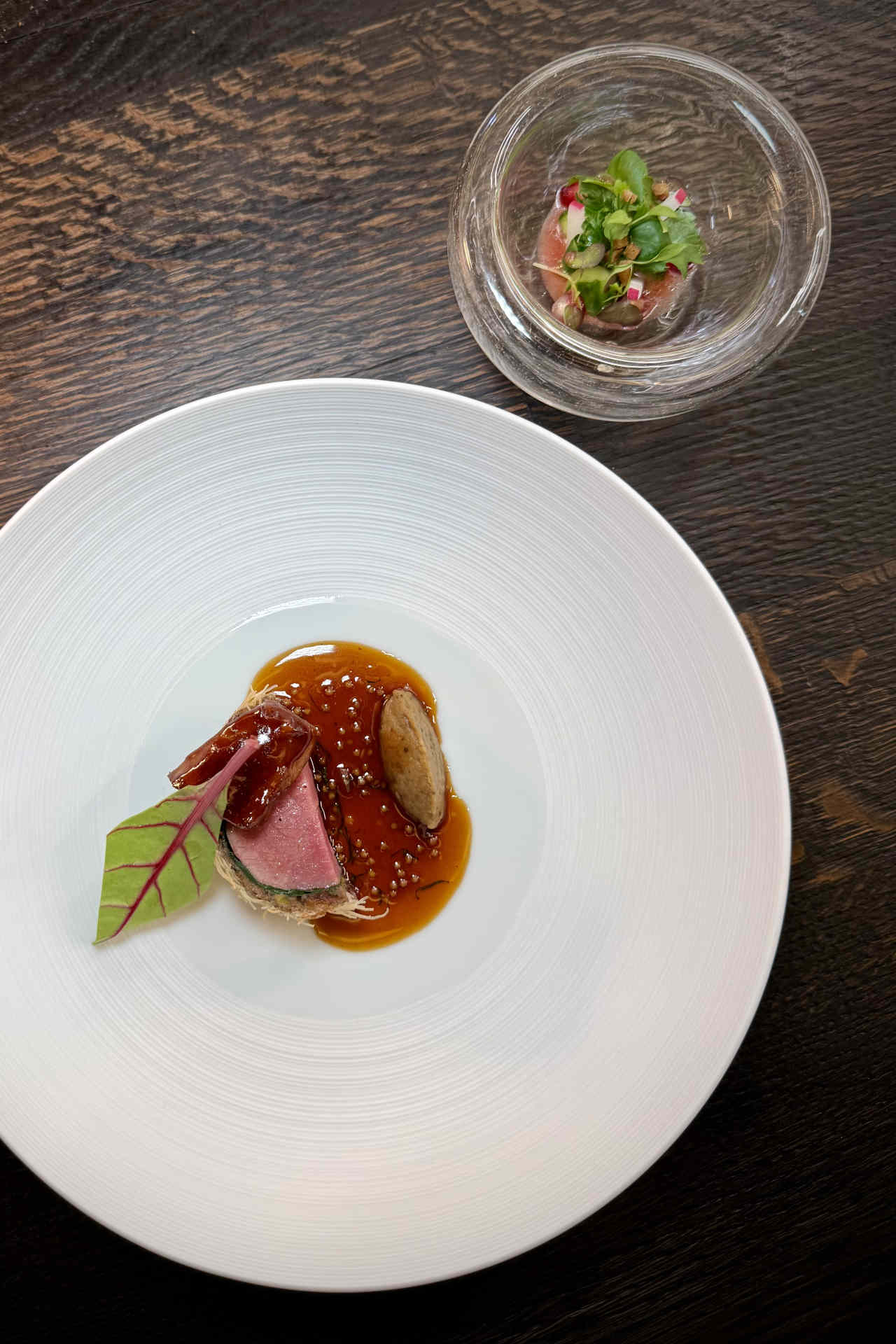
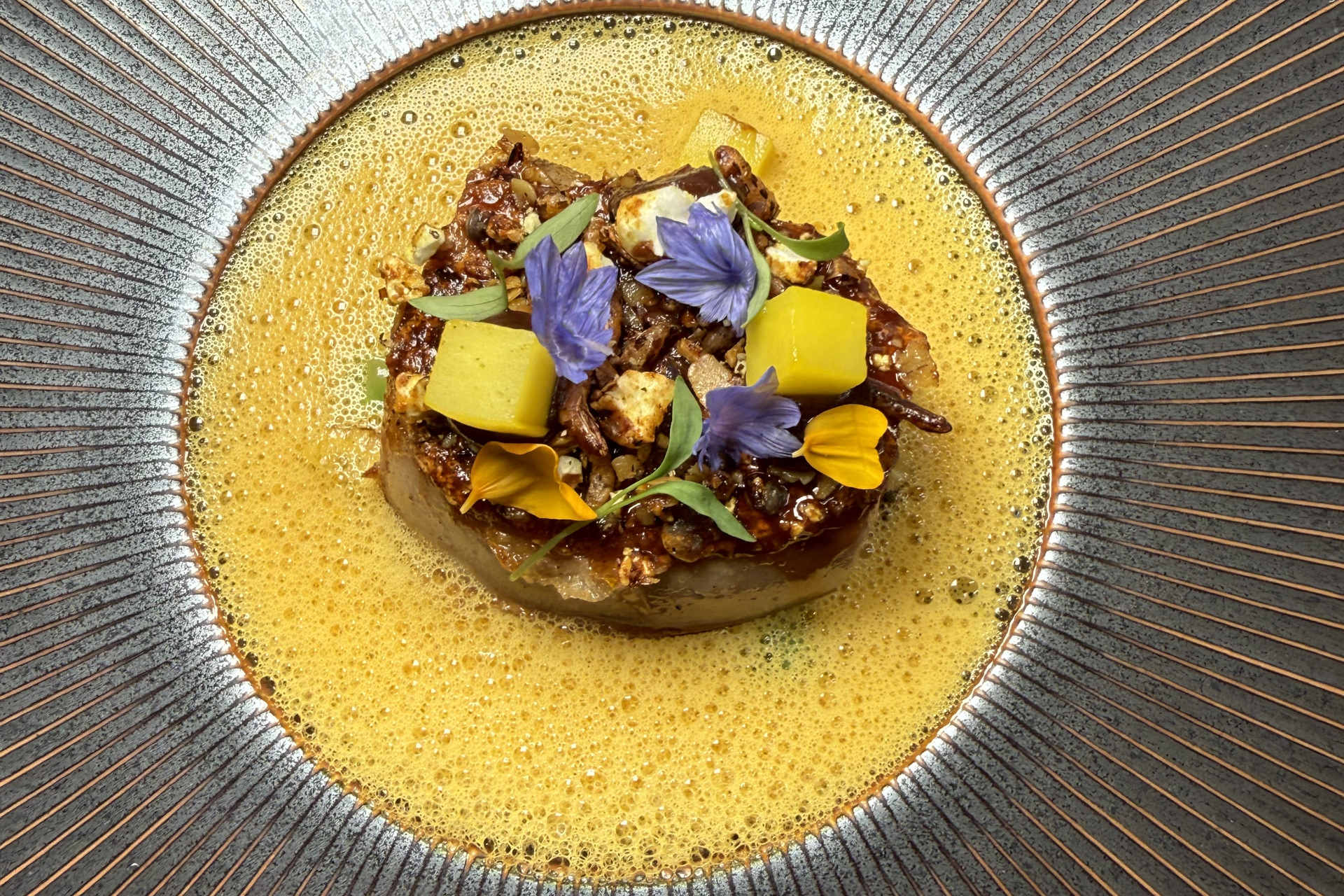
By the time the foie gras with tamarind, green mango, and vadouvan arrives, it becomes clear: this isn’t fusion; this is composition. And the lamb? “Poltinger” lamb with kadaifi and fattoush: a play on crunch, juiciness, and oriental freshness. Technically flawless, emotionally accessible.
Wine Pairings: Intelligence in a Glass
These pairings are not merely accompaniments, but stand-alone stories:
- Egon Müller Winery Riesling Scharzhof 2020 – precise acidity as a contrast to the tartare
- Artadi Viñas de Gain Blanco 2019 – structured, with depth to complement the carabinero
- Pol Roger Brut Réserve Vinothèque 2004 – maturity meets opulent foie gras
- Château Musar 2017 – a bold yet brilliant partner for the lamb
What stands out: The selection is not a classic comfort zone, but rather challenges—and rewards.
Dessert: Subtle Rather Than Sweet
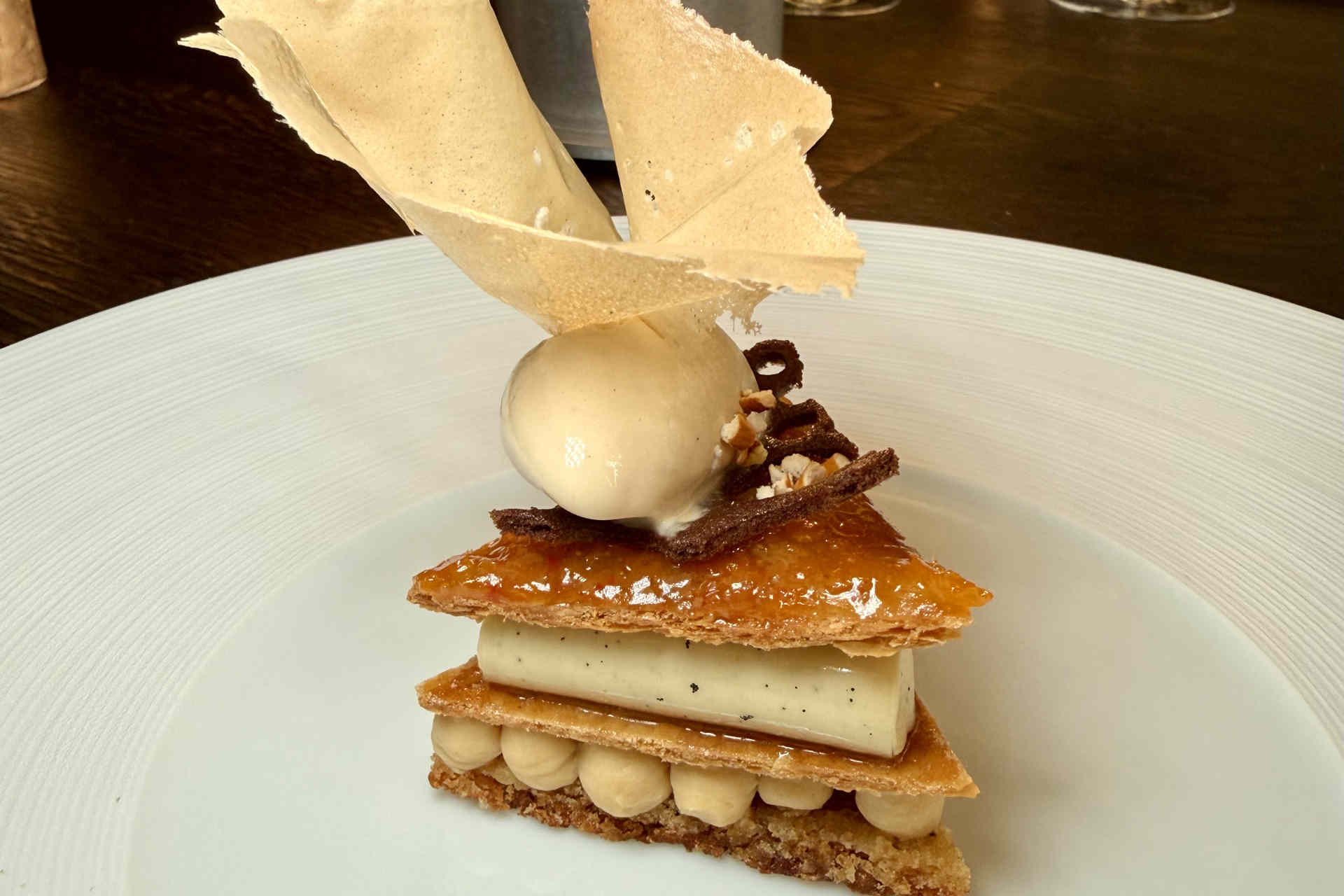
Even in the finale, the kitchen stays true to itself: rhubarb and tonka bean play with acidity and warmth, while pretzel gelato with banana and kumquat provides a surprising, almost playful conclusion. No excessive sweetness, no grand finale with a bang, but a quiet, intelligent conclusion.
When Proximity Becomes the New Luxury Ingredient
What makes this guest appearance at Hangar-7 so remarkable becomes clear not only in the moment of enjoyment, but above all in what remains of it. It is a subtle yet distinct shift in how fine dining can be conceived today.
What stands out is the conscious avoidance of excess. Instead of spectacular effects, precision takes center stage. Flavors are not loud, but clearly defined. Textures are not whimsical, but purposefully employed. This form of reduction does not appear simple; it is the result of the utmost control.
This is particularly evident in the decision to keep a dish like Korean beef tartare on the menu time and again. In a world that often thrives on constant reinvention, this almost seems like a counter-concept. And that is precisely where its strength lies: if something truly works, it can stay. Quality trumps the compulsion to innovate.
The handling of international influences here is also remarkably precise. It is not about arbitrary fusion, but about deliberately crafted connections. Stiller and Stoop’s travels and activities abroad are deliberately reflected in the dishes. Every ingredient, every technique serves a clear purpose. The result is a cuisine that thinks globally but never feels arbitrary. A menu that not only impresses but also provides direction, and thus perhaps delivers exactly what the industry needs right now: clarity.
The People Behind It
About Stefan Stiller
Born in 1966 in Hildesheim, Germany, Stiller is one of the leading figures in international haute cuisine. Trained in renowned Michelin-starred restaurants in Germany and Switzerland, he earned his first Michelin star early on with his own restaurant, “Grand Cru.” Since 2004, he has lived and worked in Shanghai, where he played a pivotal role in shaping Western-influenced haute cuisine. With Taian Table, he realized his vision of a radically open fine-dining concept in 2016, which was awarded three Michelin stars. His cuisine combines classic techniques with global influences and stands for culinary exchange at the highest level.
About Christiaan Stoop
Born in Germany in 1995 to Dutch parents, Christiaan Stoop has worked in international settings ranging from Barcelona to Shanghai. At just 26 years old, he joined Taian Table as Chef de Cuisine; only 18 months later, he became Executive Chef for Shanghai and Guangzhou. In 2025, he led the restaurants, together with Stefan Stiller, to three and two Michelin stars, respectively, and was also honored with the “Best Chef Award” (three knives). Stoop represents a new generation of top chefs: globally influenced, precise in technique, and distinct in culinary style.