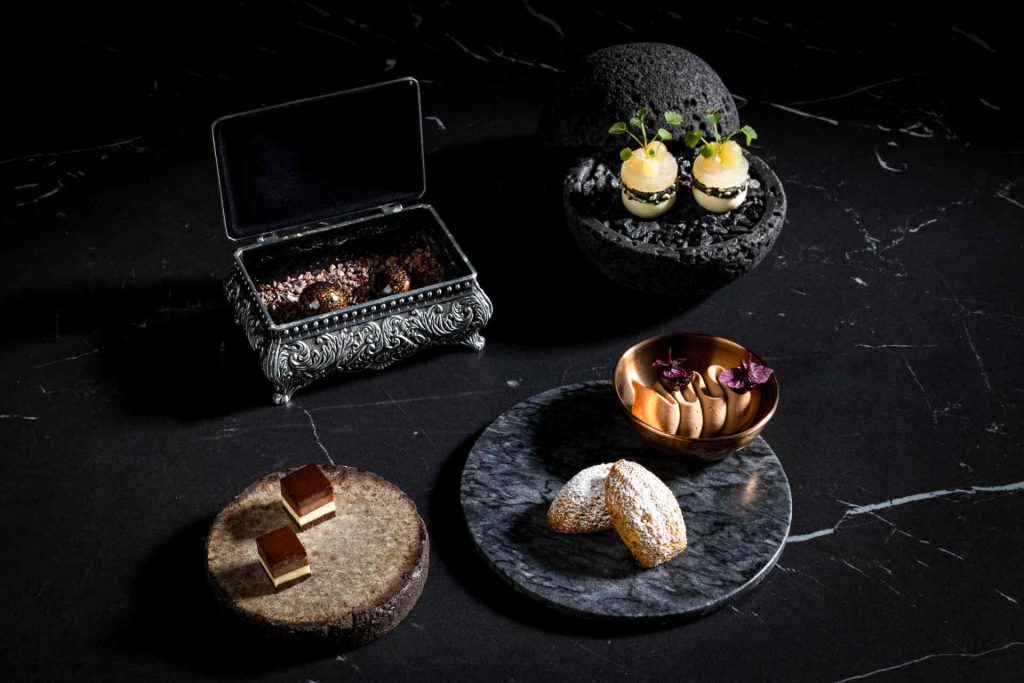

Mindset: Reduction instead of sacrifice
“Sacrifice is hardly an issue these days,” says Jakob Szedonja, Head Pastry Chef at Das Central in Sölden. So let's start with the best news: guests shouldn't “miss out” on anything. The aim is to achieve intense flavor with controlled sweetness. Many establishments are successfully pursuing a low-sugar approach, with some components even being vegan—without guests noticing. Reduction means fewer components, but more complex in design and more precise in execution.
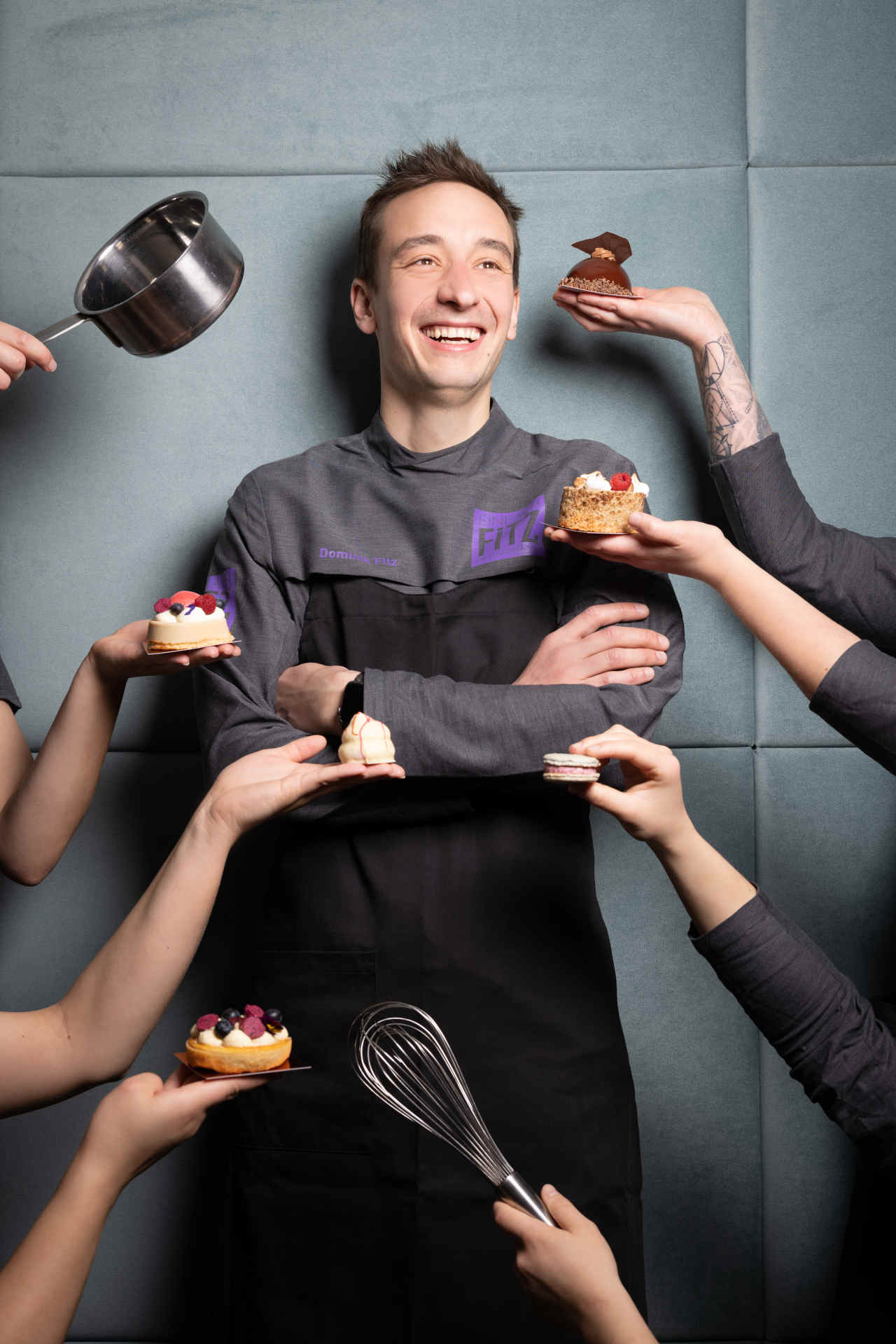
Dominik Fitz, owner of Einfach Fitz – Die Zuckerbäcker, adds: “Those who work with fully ripe fruit often save on household sugar – the difference between a green and a fully ripe banana is enormous in terms of taste.” And: “Sweet cuisine is a lifestyle – less sugar, more awareness and appreciation.”
Sensory properties & structure: What sugar really does
Sugar is not just sweetness. It influences:
- Freezing point & scoopability (ice cream, parfait)
- Water activity & shelf life (Aw management)
- Viscosity & glazing behavior
- Browning & caramelization (Maillard/caramelization)
- Crystallization control (pralines, fudges, creams)
Consequence: Reducing sweetness ≠ blindly cutting out sugar.
The functions should be replaced in a targeted manner:
- Freezing point control: Glucose/dextrose, invert sugar, erythritol/polyols (dose carefully; note compatibility)
- Crystallization inhibition: glucose syrup, invert sugar, isomalt (stable, non-hygroscopic – ideal for meringues/showpieces; tip from Szedonja)
- Viscosity & mouthfeel: pectins (NH/LM), inulin, puree solids, fibers
Vegan patisserie: building blocks that deliver
“The variety of pectins is enormous—today, you can create textures with great precision,” explains Szedonja.
Structure enhancers & emulsifiers
- Pectin NH (nappage, firm fruit toppings), LM pectin (calcium-reactive, lower sugar quantities possible)
- Starches: tapioca (clear, elastic; Fitz's favorite), potato, corn (depending on desired break/melt)
- Proteins: potato protein (instead of egg white in large quantities; tip from Fitz), aquafaba (meringues, mousses – test stability)
- Fats: cocoa butter, high-quality vegetable creams (check stability/melting point), nut pastes (mouthfeel, emulsion)
- Hydrocolloids: agar, iota/k-carrageenan (plant milk puddings, slices), guar/LBG (viscosity)
Flavor profile
- Acidity as a sweetness enhancer: citrus, verjus, fermented juices (kombucha, e.g., apricot propolis – tip from Szedonja)
- Salt & bitterness as contrast: cocoa beans, grapefruit, espresso, roasted notes
- Fat quality determines melt; vegan ≠ waxy finish – cleanly tempered cocoa butter, nut fats balance.
Ferment, salt & umami: More depth, less sugar
“Apricot propolis kombucha adds dynamism and balances dominant components,” says Szedonja – aptly describing how fermentation redefines flavor. Kombucha jellies, veganized kefir sorbets, or koji crumbles not only provide acidity complexity and umami depth, but also give desserts narrative power: they represent craftsmanship, time, and precision. Combined with subtle salty notes—such as miso dulce de leche, olive brittle, or celery seeds—they create an aromatic tension that rounds out the sweetness and completes the taste experience.
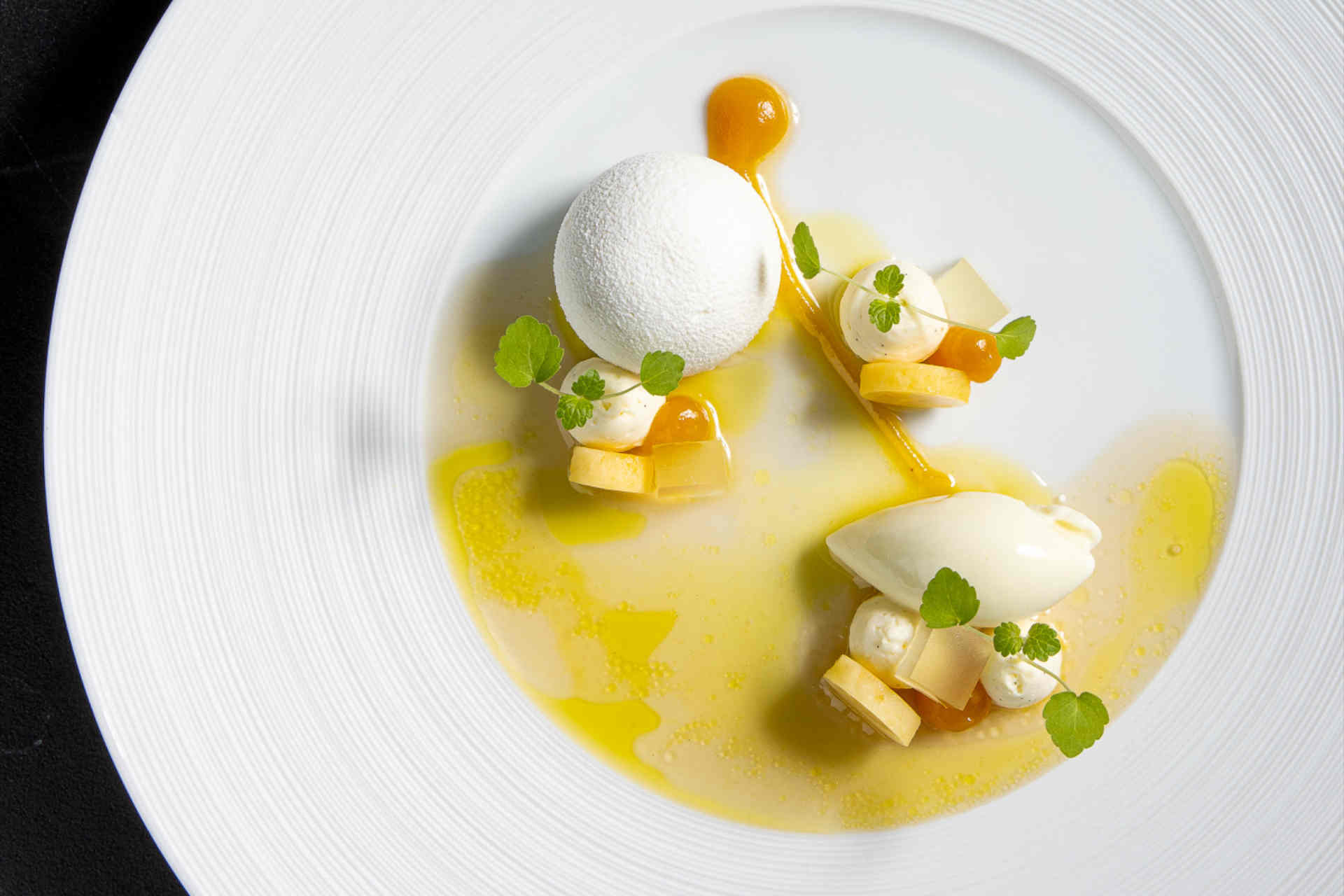
Practical framework: How a modern dessert works
- Define the hero (variety/region/season) – e.g., rhubarb from Stetten/Vienna Szedonja recommends: “Regionality first”
- Design the acidity-sweetness balance (acidity 0.6–0.9% as a starting point for fruit gel).
- Texture triad: creamy + crunchy + fresh/juicy
- Split sweetness: fruit solids + small amount of muscovado/glucose + dates/reduction if necessary
- Check stability: cut test, shelf life, dew point, transfer safety
- Blind test: without “vegan/reduced sugar” label – only aroma & mouthfeel count
Calculation & positioning
Fitz knows that reducing sugar is not just a question of technology, but also of calculation: “Replacing white sugar – in ice cream, for example – is ultimately also a question of price. If the target group is willing to pay more, high-quality alternatives are worthwhile.” In practice, it is advisable to think in terms of a two-stage concept: a core line that remains economical and low in sugar, and a highlight line that uses rare ingredients, ferments, and a high proportion of manual labor. When it comes to communication, he has a clear principle: enjoyment before dogma. Terms such as “conscious,” “reduced,” or “plant-based” should inspire, not proselytize.
Pro tip from Dominik Fitz:
Carrot juice can be transformed into a natural sweetener and color concentrate: "When you reduce carrot juice, it produces a wonderful sweetness that can be used to replace classic table sugar. The bottom line is that guests won't notice any difference." To do this, slowly reduce 100% direct juice to 35–45%, strain it finely, and incorporate it into creams or glazes. Just 5–12% is enough to add color, freshness, and a rounded sweetness – without any added sugar.
Common mistakes – and quick fixes
- Waxy melt in vegan creams – optimize fat blends, lower melting point (nut fats), finer emulsion
- Cold, “crystalline” sweetness (polyols) – reduce proportion, balance with acidity & salt, add glucose
- Unstable meringue without sucrose – isomalt + low humidity + shorter whipping time – (pro tip from Szedonja)
- “Flat” fruit in low-sugar products – acid layer (verjus/citrus), reduction instead of syrup, pinch of salt
Our conclusion for the future
Reducing sugar—or consciously replacing it with plant-based alternatives—is no longer just a trend, but a clear statement of craftsmanship. Those who use degrees of ripeness, carefully compose acidity and fat, understand the technical functions of sugar, and precisely build textures create desserts that are contemporary, stable, and full of character.
Vegan patisserie is not at odds with enjoyment, but proves that plant-based ingredients, precision, and emotion can harmonize perfectly. It is less about sacrifice and more about transformation – about desserts that are created in a more sustainable way, taste more consciously, and are also economically sound. Vegan and “low sugar” are not labels – they are the result of good craftsmanship that demonstrates attitude.
From Genusspunkt 3/2025