The silent giant

Like a bowl 181 soccer fields of plastic replaced
Photo provided
Photo provided
Alexandra Gorsche © Conny Leitgeb Photography
12. November 2025 | 
Alexandra Gorsche
12. November 2025
|
Alexandra Gorsche

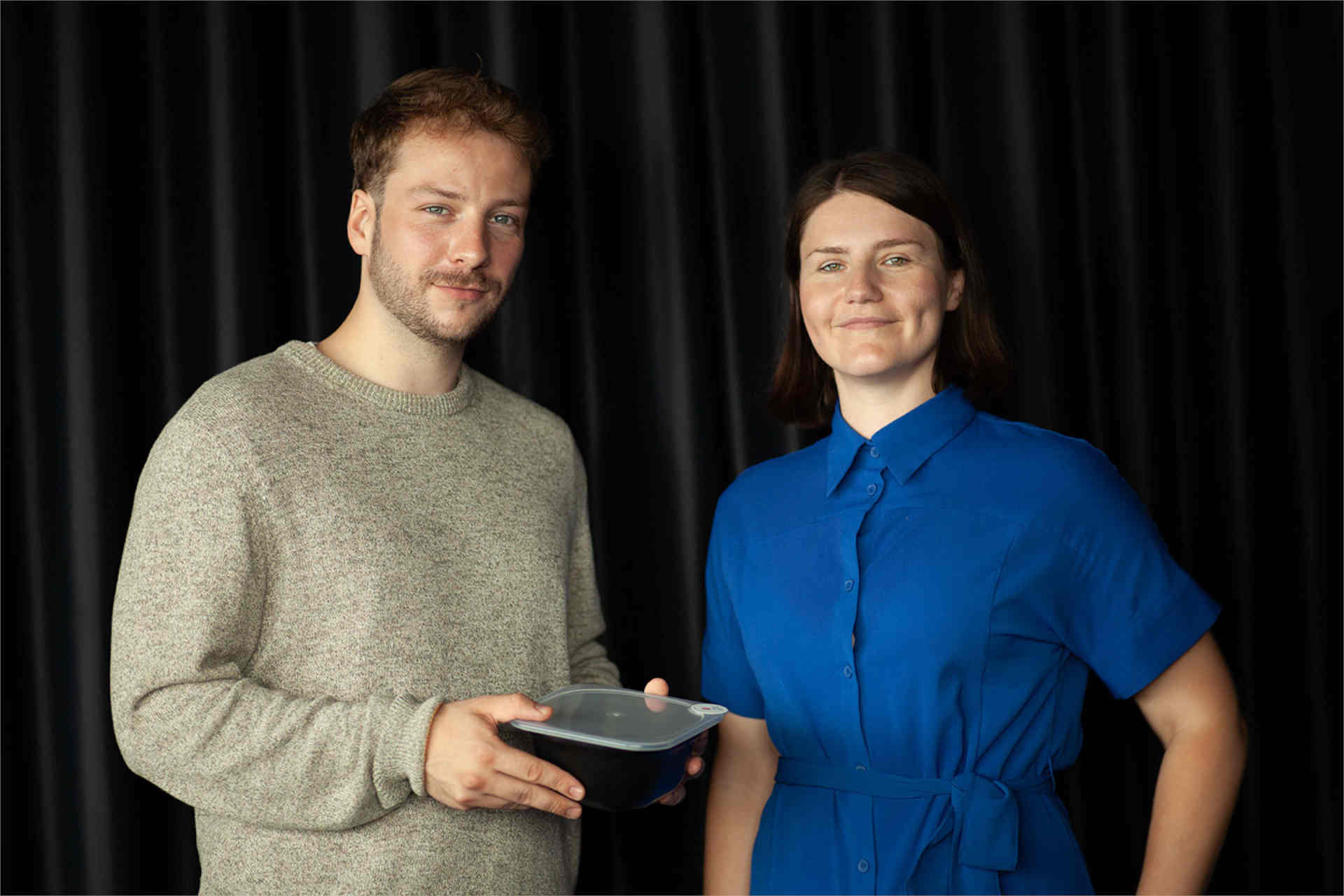
“Our goal is to draw attention to the inconspicuous but massive waste stream in communal catering.”
Victoria Berger, CEO & Founder of and-less

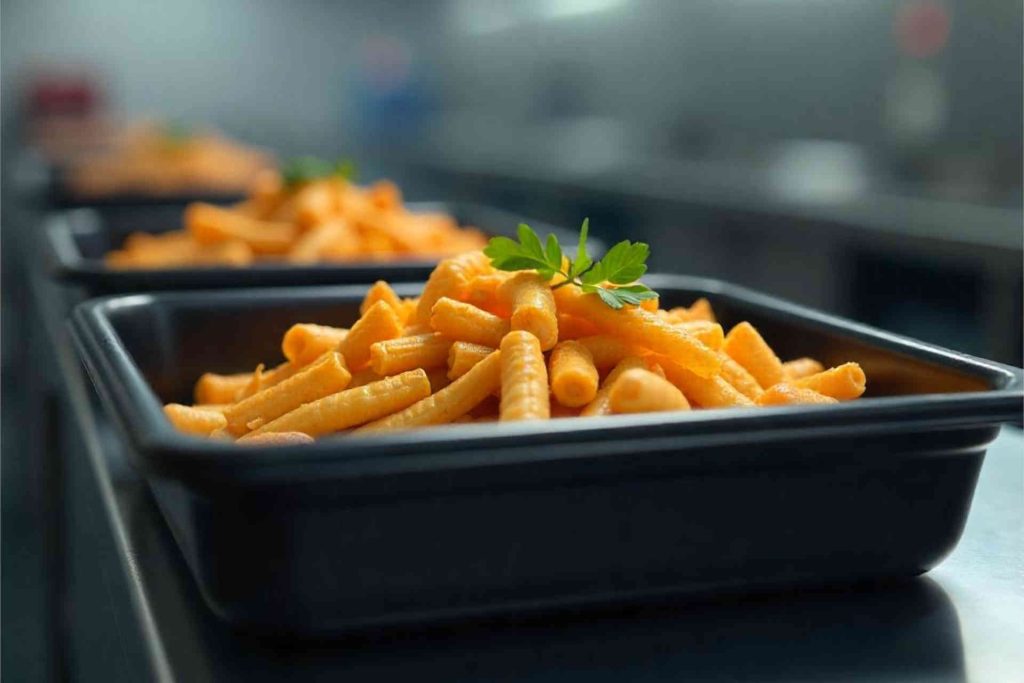
Vienna-based start-up and-less is revolutionizing commercial kitchens with a simple but ingenious reusable idea: Sustainability in the hospitality industry doesn’t start with the guest’s plate – it often starts much earlier, behind the scenes. One example of this is communal catering: every day, thousands of meals are delivered to schools, nursing homes, and canteens in disposable containers, which end up in the trash immediately after being emptied. Barely visible to the public, this creates a mountain of waste that, according to and-less, is equivalent to the area of around 181 soccer fields every year.

Reusable packaging that really works

With the and-less XL, the Vienna-based company is now launching a practical solution onto the market: a reusable, sealable reusable tray in the standard 1/2 GN size, specially developed for cook-chill processes. Existing stainless steel alternatives have often been too heavy or not leak-proof enough – one reason why many large companies continue to rely on disposable packaging despite their sustainable intentions.

The advantages speak for themselves: with 5,000 trays in use and an average of 250 cycles per year, over 1.25 million disposable containers and up to 250 tons of plastic waste can be avoided – without any changes to logistics processes.

The system is also a game changer in economic terms: the reusable tray is cheaper than disposable containers after just three uses. Large companies can save between €40,000 and €60,000 per year, depending on disposable prices and cleaning structures. This makes the and-less XL not only an ecological statement, but also a relevant business tool.

“Sustainability doesn't have to be complicated – it has to work.”
Philip Kohlbecher, co-founder & product developer at and-less
Impetus for the industry

  • Start where guests don't see it – and still reap huge benefits
  • Consider existing infrastructure: returning items using the same delivery system lowers barriers
  • Sustainability and profitability are not mutually exclusive – on the contrary

From Genusspunkt Sept-Oct 2025

A la table, s'il vous plaît! A la table, s'il vous plaît! A la table, s'il vous plaît! A la table, s'il vous plaît!
Copyright for the featured images used:
Photo provided

Trend Report: Sectors of the Hospitality Industry

New Demands on the Food Service Industry in a Modern World

Across all areas of life, the food service industry is becoming more emotional, flexible, and relevant: Chain restaurants are showing more character, transit dining is evolving from a quick stop to an experiential space, and in the context of New Work, cuisine is becoming a central factor for culture, health, and employer attractiveness.

Trend Report: Segments of the Hospitality Industry

Culinary Arts as the Driving Force Behind Urban Spaces

Culinary arts are becoming a central component of urban spaces: In mixed-use projects, they drive foot traffic, foster a sense of identity, and redefine places. As a social engine, gastronomy connects people, revitalizes neighborhoods, and often becomes the first visible sign of change. At the same time, it gives brick-and-mortar retail new relevance—extending dwell times, increasing foot traffic, and making brands immediately tangible.

Trend Report: Sectors of the Hospitality Industry

From Product to Experience – How Bakeries and Hotels Are Captivating Customers in New Ways

Bakeries are transforming into favorite urban destinations. Less variety, more statement. Bread becomes an experience – visible, fragrant, emotional. But hotels, too, are becoming living environments – and F&B the strongest differentiator in the competition for attention.

quick & dirty
and-less, photo provided
The silent giant

Vienna-based start-up and-less is revolutionizing commercial kitchens with a simple but ingenious reusable idea: Sustainability in the hospitality industry doesn’t start with the guest’s plate – it often starts much earlier, behind the scenes. One example of this is communal catering: every day, thousands of meals are delivered to schools, nursing homes, and canteens in disposable containers, which end up in the trash immediately after being emptied. Barely visible to the public, this creates a mountain of waste that, according to and-less, is equivalent to the area of around 181 soccer fields every year.