Trend Report: Sectors of the Hospitality Industry

From Product to Experience – How Bakeries and Hotels Are Captivating Customers in New Ways
© Pierre Nierhaus
© Pierre Nierhaus
Pierre Nierhaus © Foto Joppen
4. March 2026 | 
Pierre Nierhaus
4. March 2026
|
Pierre Nierhaus

Bakeries are transforming into favorite urban destinations. Less variety, more statement. Bread becomes an experience – visible, fragrant, emotional. But hotels, too, are becoming living environments – and F&B the strongest differentiator in the competition for attention.

The Oven as a Stage: Bakery-Café

Bakeries are transforming from mere suppliers into places of experience. Bread is becoming emotional again—through open bakeries, fragrant dough, visible craftsmanship, and standout signature products. This new concept combines artisanal production, a café, a community hub, and a design space.

Smaller product ranges and more iconic products shape the experience. Quality, origin, and artisanal integrity become the narrative core. The bakery becomes a “third place,” shaping urban routines and enhancing everyday moments. It is no longer a place of passage but a destination—a sign of the return of authenticity in a digitalized world.

The key to success is the visible stage of baking—open, multisensory, and accessible. Breakfast and brunch become social events. Product selection follows a clear narrative: less variety, more impact. Quality replaces compromise; presentation replaces interchangeability.


BEST PRACTICES

  • Steinleitner – Purism and a radical focus on tradition and in-house sourdoughs.
  • Zeit für Brot – Open bakery + iconic hero products.
  • Bread & Roses, Munich – French flair + brunch culture.
  • E5 Bakehouse, London – Slow fermentation + community building.
  • Sain, Paris – Hip, purist, artisanal, style-defining.

The room is secondary. Dining is what matters: Hospitality & Tourism

Travel is changing radically, becoming more spontaneous, digital, and experience-driven. Guests aren’t looking for places to sleep, but for atmospheres. Hotels are becoming emotional destinations where dining makes all the difference. Lobbies, bars, rooftops, and restaurants are turning into social stages—for locals and travelers alike. Rooms are getting smaller, while common areas are getting larger. Hotels that view F&B as the core of identity-defining experiences are setting the standard—everyone else is falling behind.

At the same time, new competitive dynamics are emerging: Google, AI, and OTA platforms are changing booking behavior. It’s becoming more digital and emotional; visibility comes from content, not from classification.

Success comes to those who develop unique concepts, integrate local communities, and use digital tools for booking and distribution. Spaces must radiate charm, not just function.


Best Practices

  • 25hours Hotels – Dining as identity, not as an afterthought.
  • Beyond by Geisel – Living room instead of lobby – dining as a gathering.
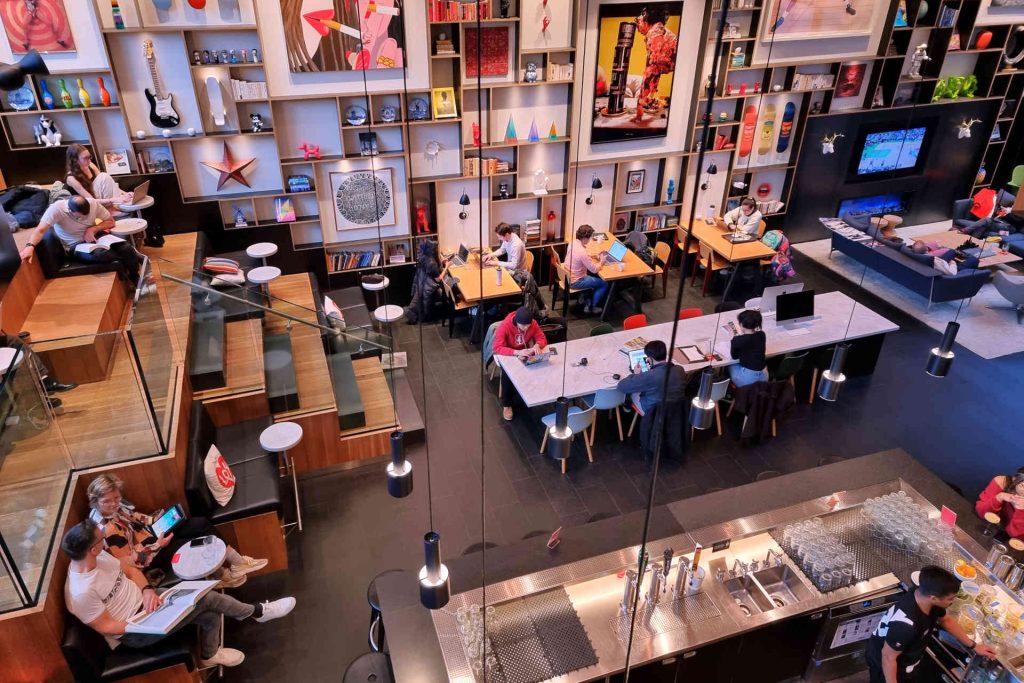
  • citizenM – 12 square meters, always digital – with huge communal spaces.
  • Mama Shelter – Urban, loud, colorful – community first.
  • The Hoxton – Public spaces as the heart of the brand.

A la table, s'il vous plaît! A la table, s'il vous plaît! A la table, s'il vous plaît! A la table, s'il vous plaît!
Copyright for the featured images used:
© Pierre Nierhaus

AI 2026

From Experiment to Structural Integration

Artificial intelligence has become part of everyday life in many businesses – but by 2026, it will become a structural imperative. The focus is no longer on testing individual tools, but on the question of how AI can be deployed reliably, effectively, and across the entire organization. Examples from tourism, events, and organizations already demonstrate today how scaling works in practice – and where AI specifically reduces the workload.

A clear turning point is emerging for the year 2026. The company-wide deployment of AI is taking center stage. This is the conclusion reached by Hamburg-based AI expert and interim manager Eckhart Hilgenstock, who has analyzed numerous national and international studies on the development of artificial intelligence. His conclusion is clear: “Following the pilot project phase in 2024/25, many companies are aiming to scale AI within their organizations by 2026.”

Trendspotting Munich

Dry January: From a Monthly Phenomenon to an Industry Standard

Dry January is no longer just a month of abstinence. It’s a barometer. For changing guest preferences. For more conscious consumption patterns. For a new aesthetic of enjoyment. Anyone who still believes in 2026 that non-alcoholic drinks are merely lemonade in a crystal glass has failed to grasp the trend. At Bar Montez in the Rosewood Munich, Bar Manager Mario Sel demonstrates just how sophisticated, structured, and gastronomically relevant non-alcoholic creations can be today – and why they have long been a strategic component of contemporary bar culture.

Future Menus 2026

An overview of the most important food service trends, from AI to street food couture

The food service industry is at a turning point. Not quietly, not gradually, but with full force. What is currently emerging in kitchens around the globe is more than just a trend cycle: it is a structural transformation of culinary value creation. The latest “Future Menus” report from Unilever Food Solutions shows just how profoundly expectations, processes, and business models are changing, while also providing a tool that makes this transformation actionable: an AI-powered tool that combines kitchen practice with data intelligence.

Over 1,100 industry experts from 20 countries, as well as 250 chefs, contributed to the analysis. The result: four key trends that will not only be relevant in 2026 – but strategically decisive.

quick & dirty
CitizenM, New York © Pierre Nierhaus
Trend Report: Sectors of the Hospitality Industry

Bakeries are transforming into favorite urban destinations. Less variety, more statement. Bread becomes an experience – visible, fragrant, emotional. But hotels, too, are becoming living environments – and F&B the strongest differentiator in the competition for attention.