
Curated diversity instead of cookie-cutter food courts: Food Courts & Mixed-Use
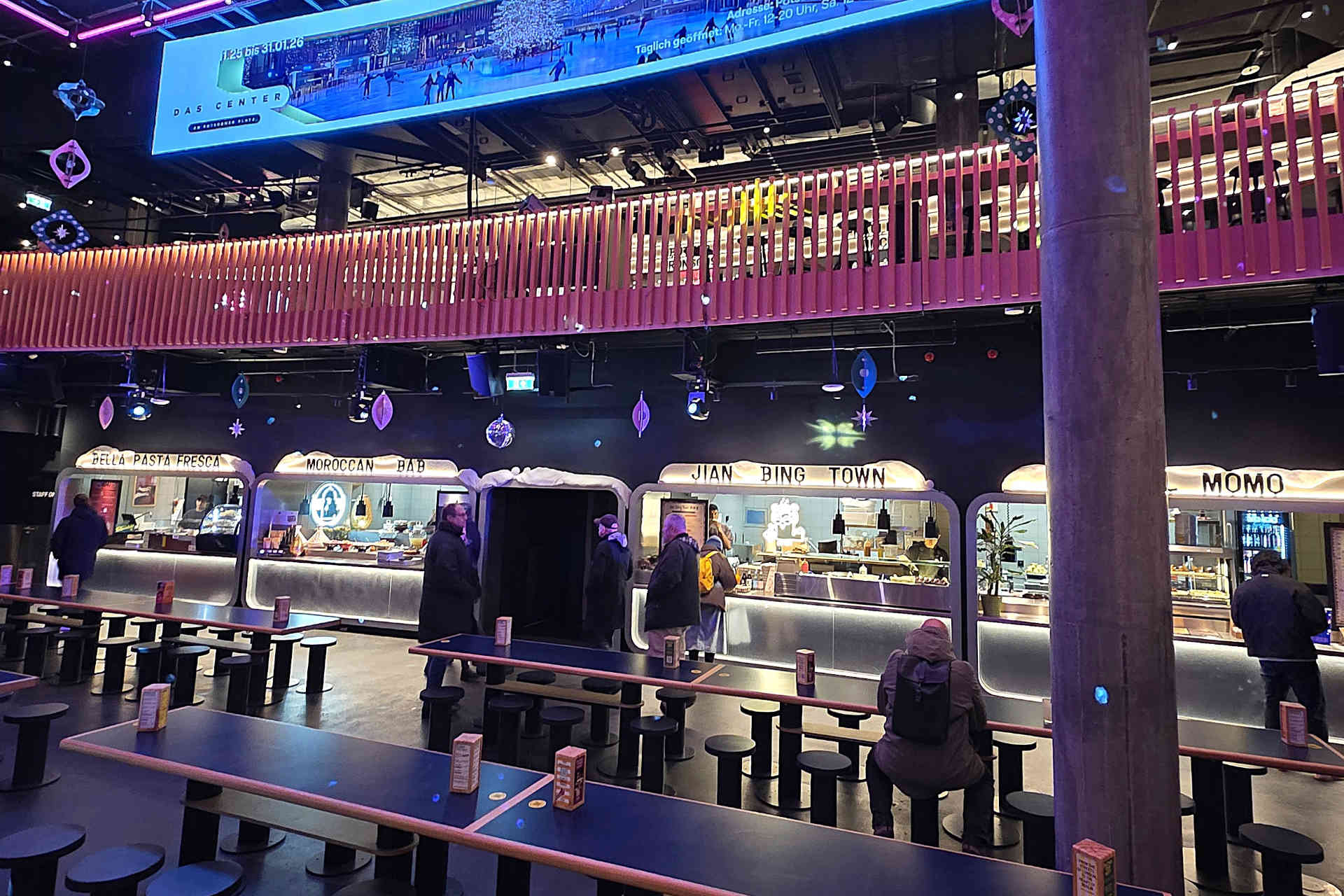
Food courts and mixed-use properties are becoming urban catalysts. They orchestrate diversity, build community, and give neighborhoods a distinct character. Instead of uniform spaces, curated concepts, modular formats, and digital ordering systems define the landscape. Gastronomy is becoming an integral part of modern urban development—not an afterthought, but a driving force.
It lends places identity, orientation, and social value. Mixed-use only works when gastronomy acts as a unifying force: as a meeting place, a stage, a social network.
Success comes to those who shape space, brand, and story into a unified whole. Curating instead of leasing, utilizing digital services (mobile ordering, loyalty programs, data analytics), and designing atmospheres—these are the key levers.
BEST PRACTICES
- Überseequartier Hamburg – Urban district with a curated mix of dining options.
- Foodtopia Frankfurt – experiential dining above the rooftops.
- Time Out Market, worldwide – local fine dining curated under one roof.
- Eataly – marketplace, cultural space, and dining all in one.
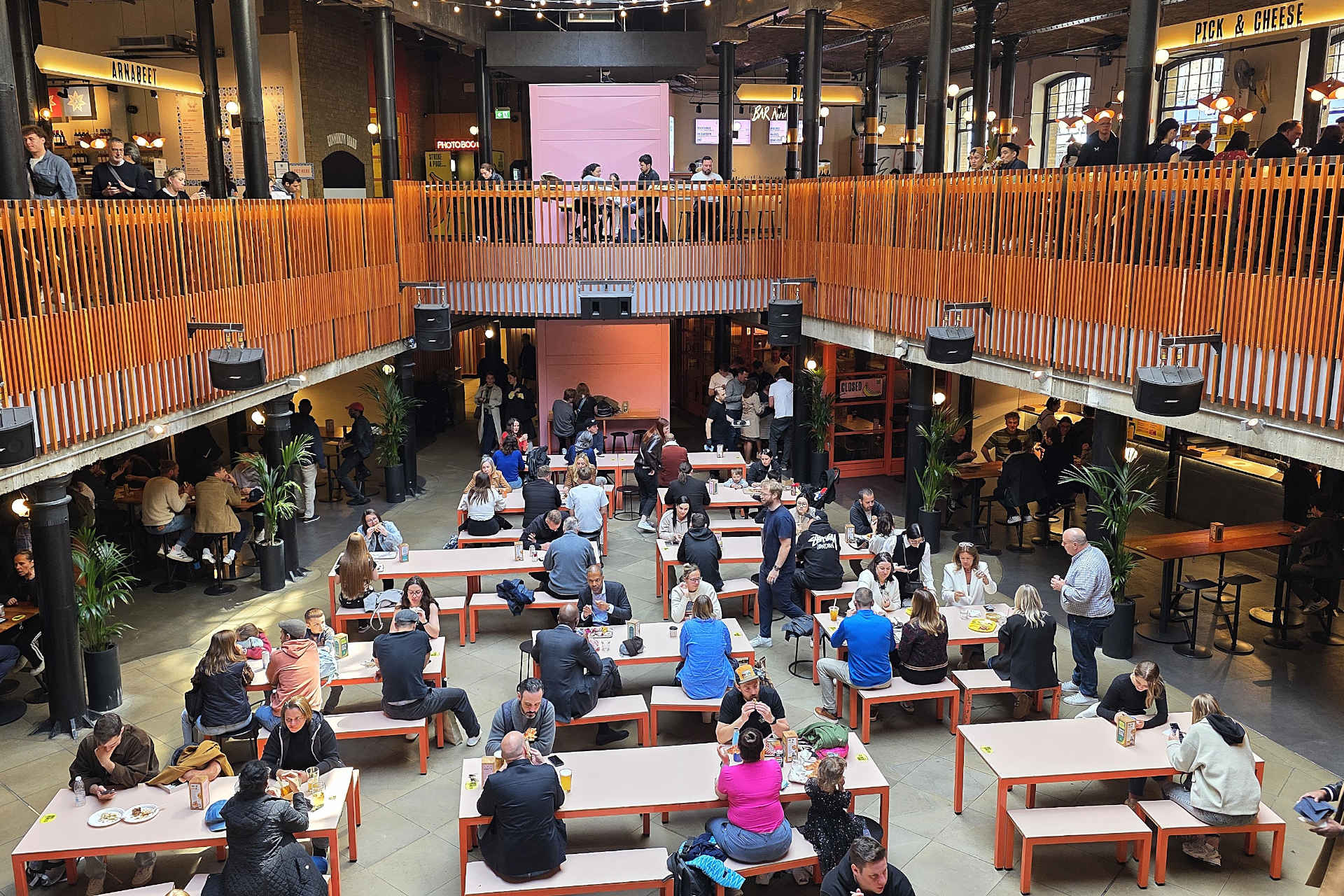
- Seven Dials, London – A food court full of individualists – centrally managed by KERB (also in Berlin).
No vibrant city without dining: Neighborhood Life & Real Estate
Dining is the most powerful catalyst for urban spaces. It generates foot traffic, atmosphere, and identity—functions that traditional retail spaces are increasingly losing. In neighborhoods, it becomes a central building block for revitalization, establishing a distinctive identity, and fostering community bonds.
Real estate developers recognize its strategic importance and integrate dining early into their planning. It establishes a premier address and gives buildings a distinct character. Curated diversity replaces a one-size-fits-all approach and provides the narrative for the neighborhood. Urban planning is embracing this trend and focusing on “15-minute city” models, ground-floor-oriented revitalization, and low-traffic neighborhoods. Catering thus becomes an urban curator—economically, socially, and culturally.
Success comes to those who understand catering as a strategic building block of the city, plan early, and think flexibly—modular, seasonal, and socially integrated. Communities, especially smaller ones, that fail to grasp this will sink into irrelevance.
BEST PRACTICES
- Heckmann-Höfe, Berlin – Courtyards as experiential spaces bridging gastronomy and culture.
- Knast.de, Berlin – Culinary arts in a historical context – a place comes to life.
- Tai Kwun, Hong Kong – Culture, community, and cuisine in the former police headquarters.
Dining Makes Retail Sexy Again: Shopping & Lifestyle
Brick-and-mortar retail needs an experience—and gastronomy delivers exactly that. It creates sensory appeal, encourages longer stays, and fosters social connection. People want to be inspired. Gastronomy in a shopping context can achieve this—as a sensory experience, a cultural offering, and a place to take a break. Premium locations and concept stores, in particular, are increasingly relying on food + design, espresso + exclusivity, and culinary stories to boost sales.
Gastronomy becomes part of the brand world and creates places that people seek out voluntarily. Without gastronomic appeal, retail spaces lose relevance, foot traffic, and brand loyalty. With it, destinations are created.
Success factors include sensory storytelling, architectural integration, and experiences that resonate on social media. Gastronomy thus becomes the emotional anchor of every modern retail concept.
BEST PRACTICES
- Breuninger – in Stuttgart and Düsseldorf, Sansibar by Breuninger, Eduard’s, and karls kitchen ...
- Goldene Bar x Art Scene – art, drinks, culture – a magnetic concept in Munich.
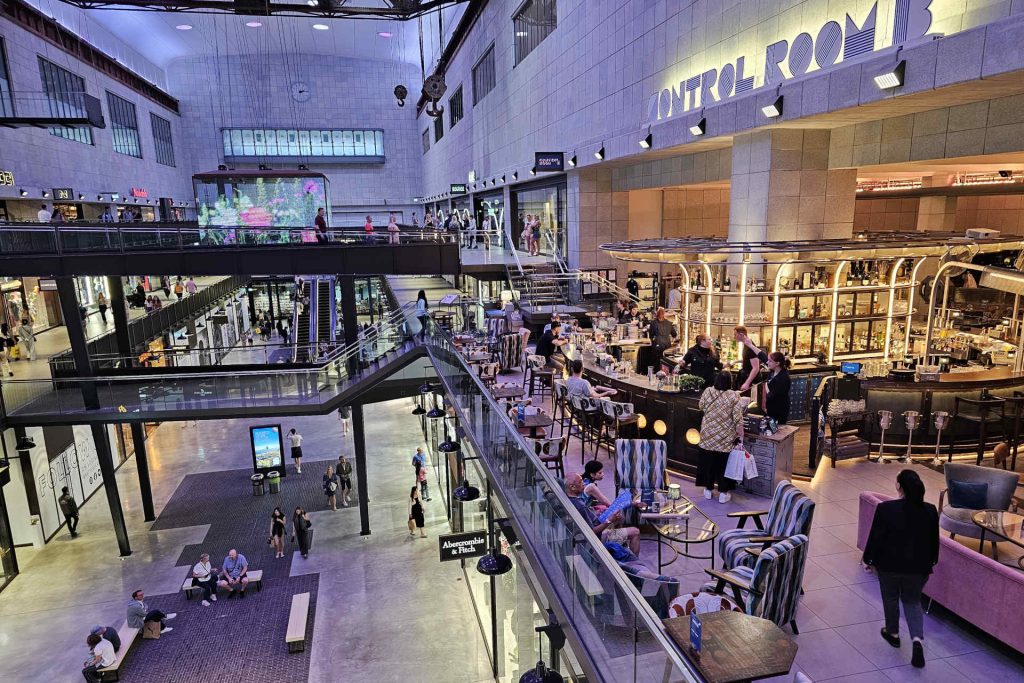
- Control Room B, London – Battersea Power Station – a megamall in a repurposed power plant.
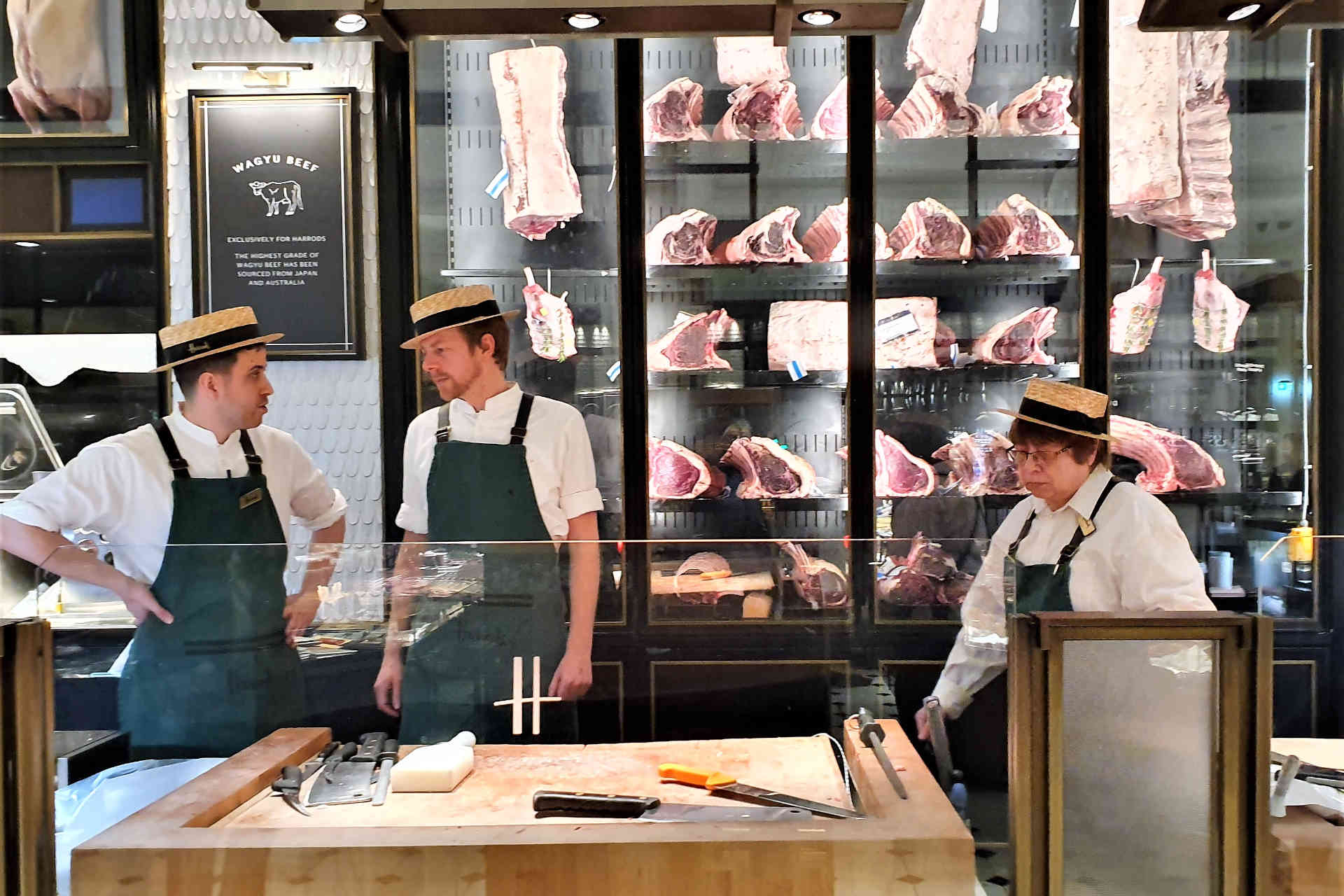
- Harrods, London – the famous food hall and over 20 additional food concepts.
- Merci, Paris – a café serving as a curated component of the brand.