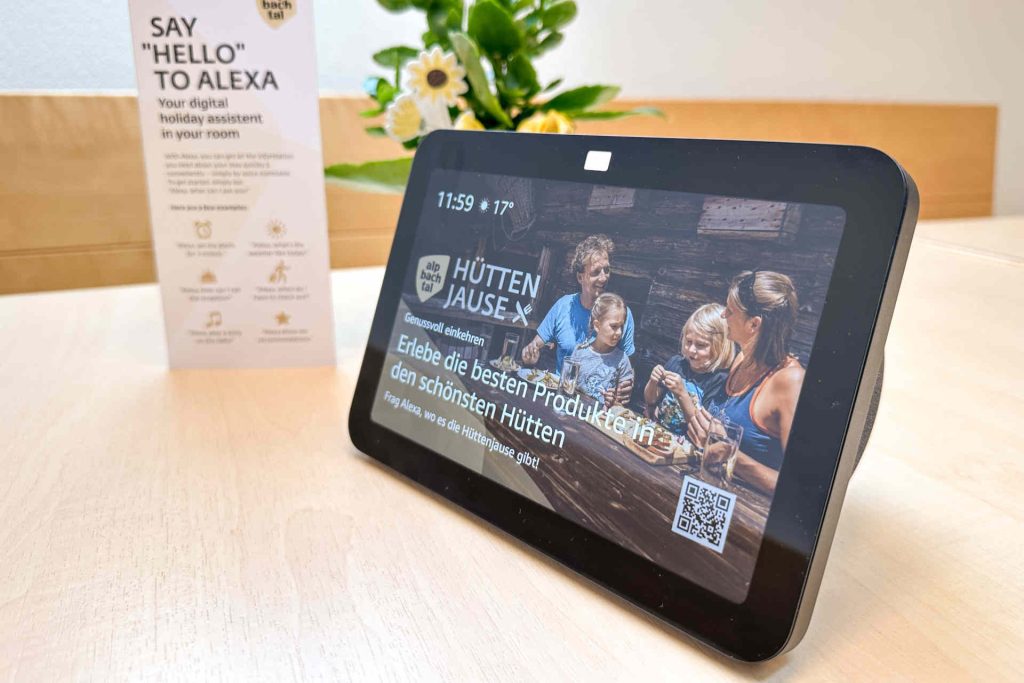

1. Alpbachtal: Voice assistants as digital hosts
With the “Alpbachtal Voice Concierge” pilot project, which is unique in Europe, the Tyrolean region is taking a big step: 500 Alexa-based devices have been installed in 24 accommodation establishments. They answer questions such as “When is breakfast served?”, book tables in restaurants, or provide information about events – directly by voice, without a reception desk or telephone.
Frank Kostner, chairman of Alpbachtal Tourism, emphasizes: “Routine tasks can be automated in this way. This gives our employees time to focus more on personal service.”
Particularly exciting: a dedicated MICE module for the congress sector. The service was tested for the first time during the European Forum Alpbach with 4,000 guests – a model that could inspire conference hotels across Europe.
Conclusion for businesses: voice assistance relieves teams, offers guests convenience, and, with the congress version, also becomes a real USP for business hotels.
2. Ecolab ReadyDose: Sustainability in tablet form
Another field, but just as forward-looking: cleaning. With ReadyDose, Ecolab is launching a revolutionary tablet system. Instead of heavy canisters and complicated dosages, businesses are now turning to handy cleaning tablets that generate up to 98.8% less plastic waste and require 84% less storage space.
Kris Kielsa, Executive Vice President at Ecolab: “ReadyDose is like having a professional cleaning team packed into a tab.”
In addition to simplicity and safety (no PPE required), the system scores points with QR-based training videos in 11 languages – ideal for international teams in the hotel and catering industry.
Conclusion for businesses: Sustainability is becoming part of everyday life. Anyone who wants to make cleaning processes more efficient and environmentally friendly will find a way to save costs, space, and resources here.


3. AI implementation: Strategy instead of hasty decisions
While many are still hesitant, the United Interim Economic Report 2025 shows how to successfully get started with AI. Three steps are considered key:
- Launch a pilot project
- Optimize results
- Scale up – step by step
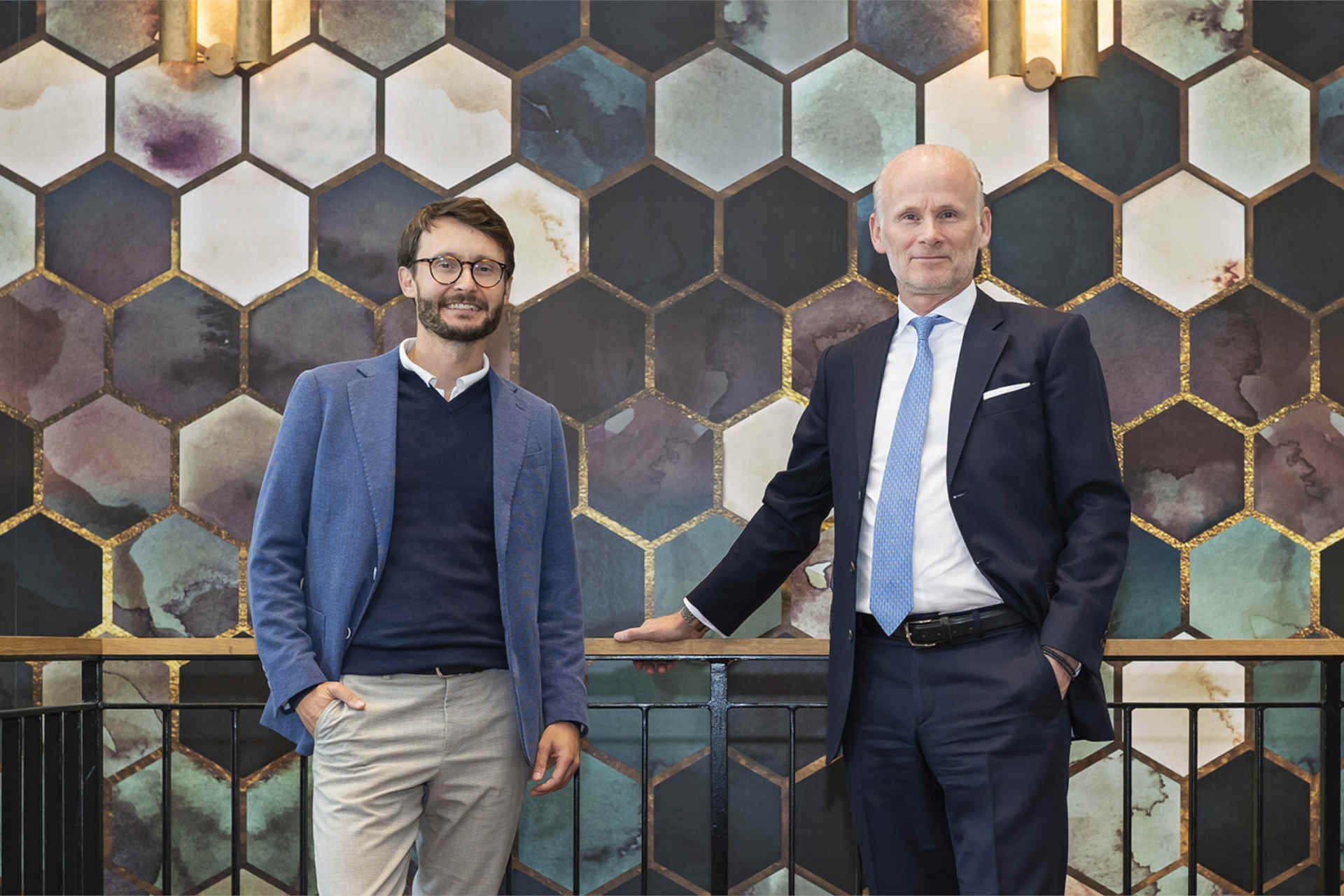
Eckhart Hilgenstock, AI expert and interim manager, warns against false expectations: “It's not about immediately converting the entire company to AI. Rather, use cases must be defined that will pay off within 12 to 18 months.”
Two-thirds of those surveyed see customer communication as the most sensible way to get started: chatbots, voice dialogue systems, or recommendation engines deliver quick wins and increase guest satisfaction.
Conclusion for businesses: Hotels and restaurants should start small – for example, with AI-supported guest communication or intelligent booking optimization – and then expand the systems.
4. Mandatory AI training: EU gets serious
Since August 2025, training has been mandatory in the EU for the use of AI. This also applies to everyday tools such as ChatGPT or Copilot as soon as they are used in sensitive areas.
Alois Krtil, CTO of PINKTUM, warns: “Many people underestimate the fact that even the use of everyday tools can trigger a training obligation. Those who wait risk compliance violations.”
With e-learning modules and certification, the EdTech company PINKTUM offers a scalable solution – important for hoteliers and restaurateurs who use AI in service or administration.
Conclusion for businesses: Those who introduce AI must provide their employees with technical and legal support. Early training creates acceptance, security, and competitive advantages.
Inspiration for the industry
The four examples show how broadly digitalization is changing the hospitality industry:
- Voice assistance makes service barrier-free and efficient.
- Sustainable cleaning reduces costs and environmental impact.
- AI pilot projects create tangible competitive advantages.
- Mandatory training ensures safe use of technology.
Key learnings for hoteliers and restaurateurs
- Pilot instead of wait: Test technologies on a small scale first, then roll them out in a targeted manner.
- Relieve employees: Automation creates space for personal service.
- Take advantage of sustainability: Smart solutions are also environmentally beneficial today.
- Keep an eye on legal requirements: Compliance becomes part of the digital strategy.
Conclusion
To ensure that the hotel and restaurant industry remains competitive in the future, it is now important to invest boldly, get employees on board, and see innovation as an opportunity – not a risk.