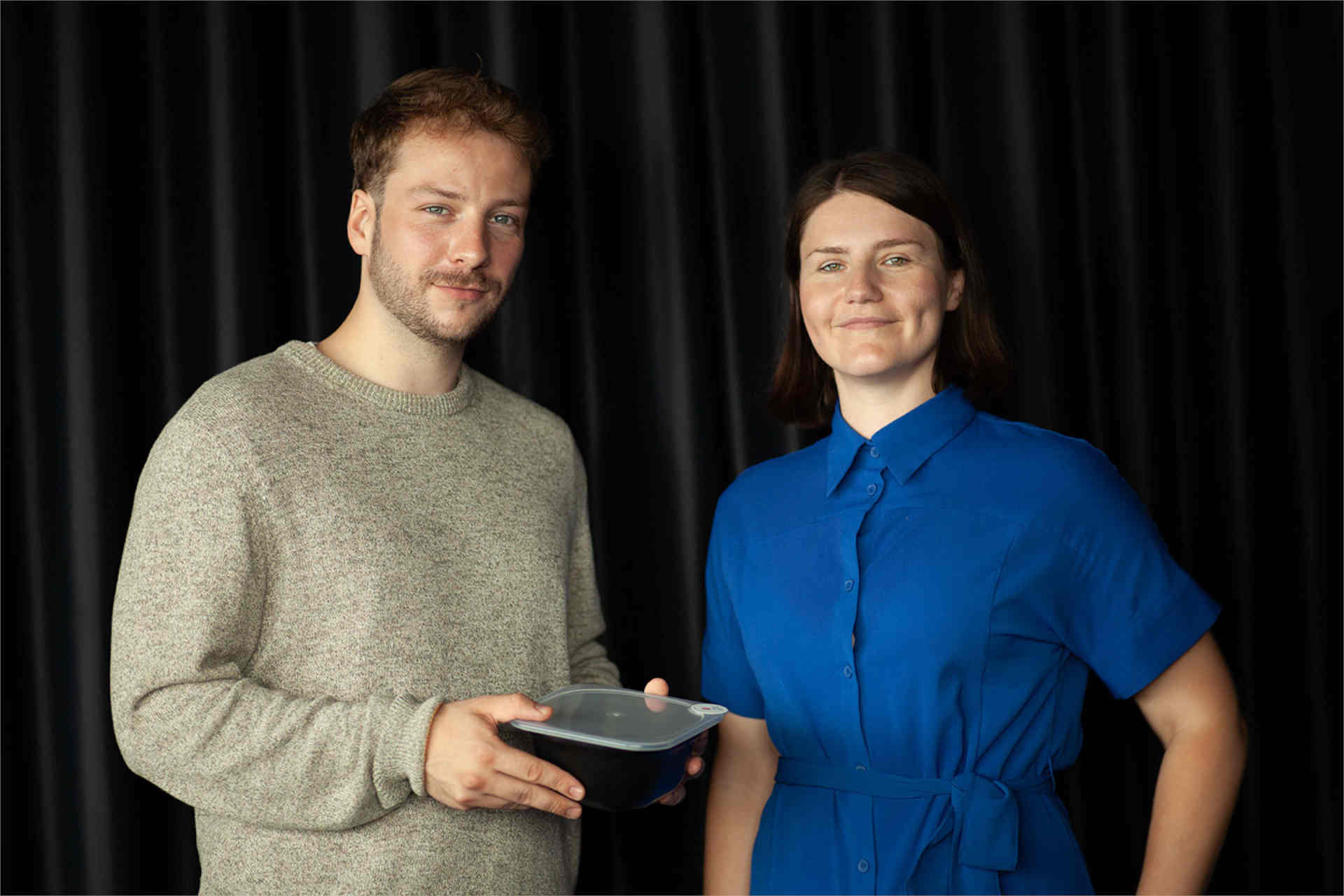
“Our goal is to draw attention to the inconspicuous but massive waste stream in communal catering.”
Victoria Berger, CEO & Founder of and-less
Vienna-based start-up and-less is revolutionizing commercial kitchens with a simple but ingenious reusable idea: Sustainability in the hospitality industry doesn’t start with the guest’s plate – it often starts much earlier, behind the scenes. One example of this is communal catering: every day, thousands of meals are delivered to schools, nursing homes, and canteens in disposable containers, which end up in the trash immediately after being emptied. Barely visible to the public, this creates a mountain of waste that, according to and-less, is equivalent to the area of around 181 soccer fields every year.
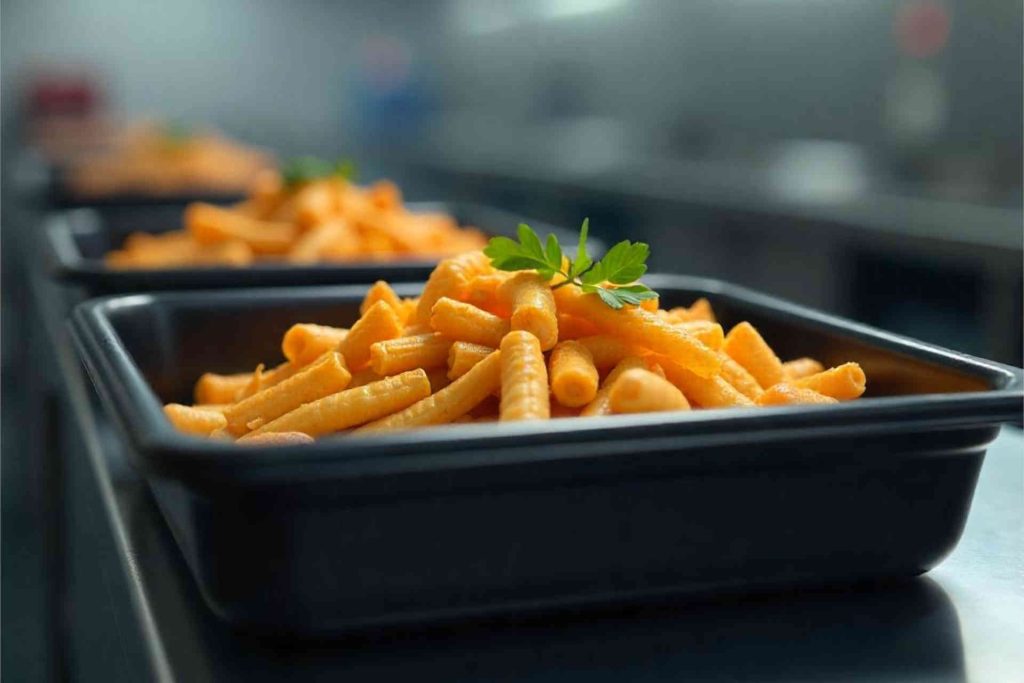
With the and-less XL, the Vienna-based company is now launching a practical solution onto the market: a reusable, sealable reusable tray in the standard 1/2 GN size, specially developed for cook-chill processes. Existing stainless steel alternatives have often been too heavy or not leak-proof enough – one reason why many large companies continue to rely on disposable packaging despite their sustainable intentions.
The advantages speak for themselves: with 5,000 trays in use and an average of 250 cycles per year, over 1.25 million disposable containers and up to 250 tons of plastic waste can be avoided – without any changes to logistics processes.
The system is also a game changer in economic terms: the reusable tray is cheaper than disposable containers after just three uses. Large companies can save between €40,000 and €60,000 per year, depending on disposable prices and cleaning structures. This makes the and-less XL not only an ecological statement, but also a relevant business tool.
“Sustainability doesn't have to be complicated – it has to work.”
Philip Kohlbecher, co-founder & product developer at and-less
Artificial intelligence has become part of everyday life in many businesses – but by 2026, it will become a structural imperative. The focus is no longer on testing individual tools, but on the question of how AI can be deployed reliably, effectively, and across the entire organization. Examples from tourism, events, and organizations already demonstrate today how scaling works in practice – and where AI specifically reduces the workload.
A clear turning point is emerging for the year 2026. The company-wide deployment of AI is taking center stage. This is the conclusion reached by Hamburg-based AI expert and interim manager Eckhart Hilgenstock, who has analyzed numerous national and international studies on the development of artificial intelligence. His conclusion is clear: “Following the pilot project phase in 2024/25, many companies are aiming to scale AI within their organizations by 2026.”
Dry January is no longer just a month of abstinence. It’s a barometer. For changing guest preferences. For more conscious consumption patterns. For a new aesthetic of enjoyment. Anyone who still believes in 2026 that non-alcoholic drinks are merely lemonade in a crystal glass has failed to grasp the trend. At Bar Montez in the Rosewood Munich, Bar Manager Mario Sel demonstrates just how sophisticated, structured, and gastronomically relevant non-alcoholic creations can be today – and why they have long been a strategic component of contemporary bar culture.
Across all areas of life, the food service industry is becoming more emotional, flexible, and relevant: Chain restaurants are showing more character, transit dining is evolving from a quick stop to an experiential space, and in the context of New Work, cuisine is becoming a central factor for culture, health, and employer attractiveness.
Vienna-based start-up and-less is revolutionizing commercial kitchens with a simple but ingenious reusable idea: Sustainability in the hospitality industry doesn’t start with the guest’s plate – it often starts much earlier, behind the scenes. One example of this is communal catering: every day, thousands of meals are delivered to schools, nursing homes, and canteens in disposable containers, which end up in the trash immediately after being emptied. Barely visible to the public, this creates a mountain of waste that, according to and-less, is equivalent to the area of around 181 soccer fields every year.