Trend Report: Segments of the Hospitality Industry

Character Trumps Concept in Independent Dining
© Pierre Nierhaus
© Pierre Nierhaus
Pierre Nierhaus © Foto Joppen
18. February 2026 | 
Pierre Nierhaus
18. February 2026
|
Pierre Nierhaus

When everything looks the same, uniqueness becomes the strongest currency. Independent dining is a creative laboratory and the avant-garde. Guests want stories instead of gimmicks, intimacy instead of noise.

Not perfection, but character

Independent dining is the antithesis of uniform interchangeability. It is a space for experimentation, a curatorial approach, and an identity-building force all at once. Today’s guests don’t demand perfection, but character—a place that has a clear vision and lives it visibly. Independent dining creates exactly that: it tells stories that you can taste, feel, and understand.

The strongest establishments rely not on volume, but on depth: a precise signature style, radical reduction, and distinctive compositions. At the same time, hybrid spaces are emerging that blend restaurant, workshop, gallery, and shop. Individual gastronomy thus becomes a cultural player that shapes neighborhoods, binds communities, and defines trends before they reach the mainstream.

Best Practices

  • Otto, Vienna – Radical simplicity: natural wines, seasonal cuisine, pure honesty.
  • Klinker, Hamburg – Culinary Arts + Retail + House-Made Products as a Powerful Trio.
  • Kol, London – Mexico Meets the North: Uncompromisingly Local.
  • Le Doyenné, France – Fine Dining on the Farm – Agriculture as Luxury.
  • De Kas, Amsterdam – Vegetarian Cuisine in an Old Greenhouse in the Garden.

Our Conclusion

The key is not to hide one’s attitude and individuality, but to make them a guiding principle. Relationships are cultivated like networks, not handled like transactions. Those who want to create relevance develop places with added value: gastronomy that integrates culture, retail, or workshops—and thus offers experiences rather than mere meals.

A la table, s'il vous plaît! A la table, s'il vous plaît! A la table, s'il vous plaît! A la table, s'il vous plaît!
Copyright for the featured images used:
© Pierre Nierhaus

Trend Report: Segments of the Hospitality Industry

Culinary Arts as the Driving Force Behind Urban Spaces

Culinary arts are becoming a central component of urban spaces: In mixed-use projects, they drive foot traffic, foster a sense of identity, and redefine places. As a social engine, gastronomy connects people, revitalizes neighborhoods, and often becomes the first visible sign of change. At the same time, it gives brick-and-mortar retail new relevance—extending dwell times, increasing foot traffic, and making brands immediately tangible.

Trend Report: Sectors of the Hospitality Industry

From Product to Experience – How Bakeries and Hotels Are Captivating Customers in New Ways

Bakeries are transforming into favorite urban destinations. Less variety, more statement. Bread becomes an experience – visible, fragrant, emotional. But hotels, too, are becoming living environments – and F&B the strongest differentiator in the competition for attention.

The New Food Culture

Democratized, shared, staged.

In the gastronomy of tomorrow, social change is reflected on the plate—with new expectations regarding quality, identity, and experience. The new food culture is both accessible and sophisticated, local and global, healthy and indulgent.

quick & dirty
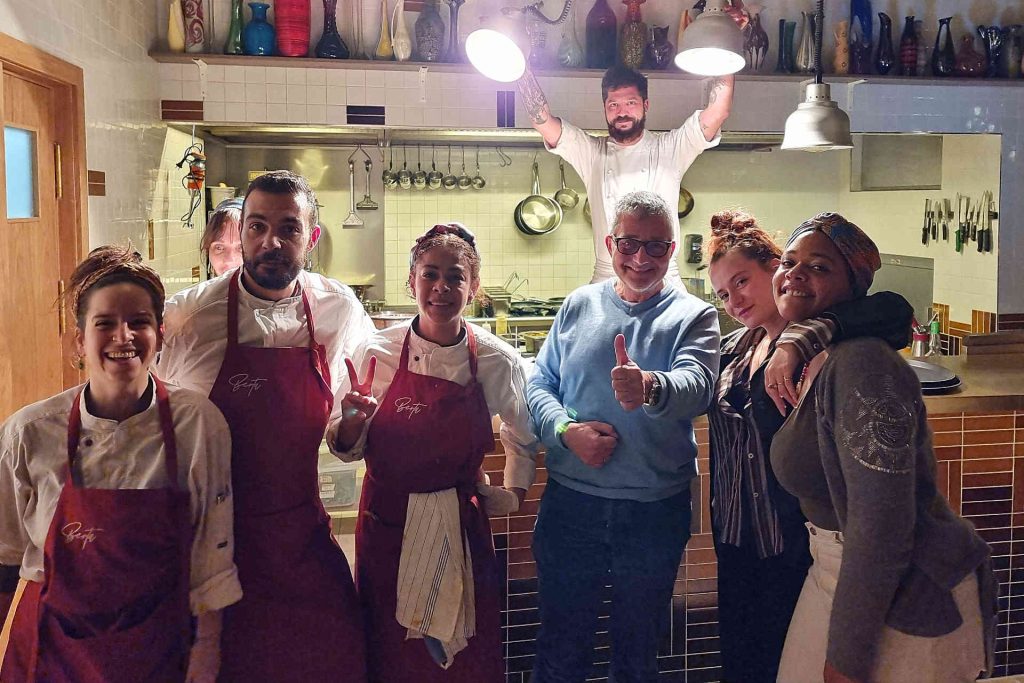
Berta, Berlin © Pierre Nierhaus
Trend Report: Segments of the Hospitality Industry

When everything looks the same, uniqueness becomes the strongest currency. Independent dining is a creative laboratory and the avant-garde. Guests want stories instead of gimmicks, intimacy instead of noise.