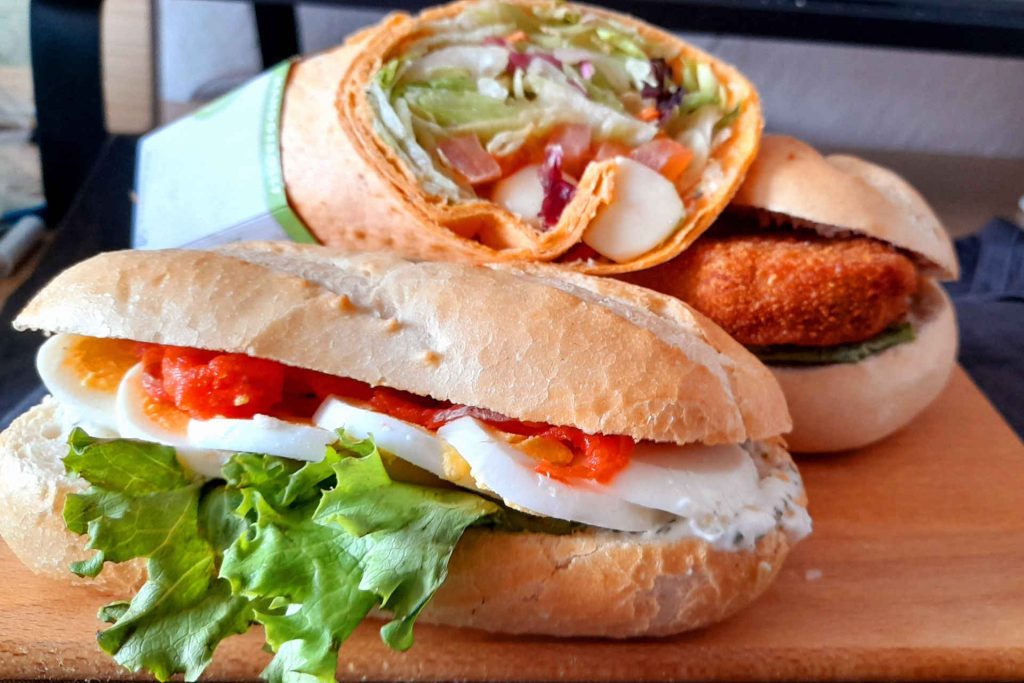

A sandwich with shipyard history – and cult status
Hardly any other sandwich is as deeply rooted in everyday American culture as the hoagie. Crispy on the outside, soft on the inside, filled with a generous portion of meat, cheese, salad, and dressing – a true classic of deli culture. But what is now sold on every corner of the US East Coast once had very humble beginnings: at a shipyard in Philadelphia.
Where does the name “hoagie” come from?
The term “hoagie” can be traced back to workers at the Hog Island Shipyard in Philadelphia, who brought long rolls with cold cuts, cheese, and vegetables to work with them in the early 20th century. The “Hog Island Sandwiches” became “Hoggies” in dialect and later Hoagies. The first written references can be found around 1928, particularly in connection with Italian-born deli operators in Philadelphia.
What is the original?
The classic hoagie consists of:
- a long Italian white bread roll (similar to a baguette, but softer)
- cold cuts such as salami, ham, mortadella
- provolone or American cheese
- iceberg lettuce, tomatoes, onions, peppers, vinegar and oil dressing
What makes it special is that it is not toasted but served cold – unlike its warm cousin, the sub or grinder.
Where is the hoagie at home today?
Especially in Philadelphia and the wider Pennsylvania area, the hoagie is still considered a culinary treasure – in 1992, it was even named the official sandwich of the city of Philadelphia. It also has cult status in parts of New Jersey, Delaware, and Maryland.
Different names, same love
Depending on the region, the hoagie is also known as:
- Sub or submarine sandwich (because of its shape)
- Grinder (especially in New England, often served warm)
- Hero (in New York City)
- Po'boy (in Louisiana, usually with fried fillings)
- Italian sandwich (in Maine)
Each name stands for a regional interpretation – sometimes with fish, sometimes with fried chicken, sometimes vegetarian. But the basic idea remains the same: a portable, hearty meal with character.
Modern variations
Today, the hoagie is experiencing a minor revival – as a gourmet version with homemade sauces, as a veggie hoagie with grilled vegetables and mozzarella, or as a fusion variation with Korean bulgogi or vegan cold cuts. Many American cities are seeing the emergence of new sandwich spots that take the classic and give it a modern twist.
Fun fact
Hoagie Day is celebrated every year as part of the Wawa Welcome America festivities in Philadelphia – a whole day in honor of the iconic sandwich.
Tradition meets the future: the hoagie reimagined
The US company Prime Roots proves that the hoagie will still be relevant in 2025. Instead of sausage and ham, they use plant-based delicacies made from koji, which are remarkably similar in taste and texture to classic deli fillings – just without the meat.
Plant-based hoagies are now on the menu at over 80 New York delis – a sign that even traditional classics have a place in modern food culture.
From Genusspunkt Sept-Oct 2025