Trend Report: Segments of the Hospitality Industry

Character Trumps Concept in Independent Dining
© Pierre Nierhaus
© Pierre Nierhaus
Pierre Nierhaus © Foto Joppen
18. February 2026 | 
Pierre Nierhaus
18. February 2026
|
Pierre Nierhaus

When everything looks the same, uniqueness becomes the strongest currency. Independent dining is a creative laboratory and the avant-garde. Guests want stories instead of gimmicks, intimacy instead of noise.

Not perfection, but character

Independent dining is the antithesis of uniform interchangeability. It is a space for experimentation, a curatorial approach, and an identity-building force all at once. Today’s guests don’t demand perfection, but character—a place that has a clear vision and lives it visibly. Independent dining creates exactly that: it tells stories that you can taste, feel, and understand.

The strongest establishments rely not on volume, but on depth: a precise signature style, radical reduction, and distinctive compositions. At the same time, hybrid spaces are emerging that blend restaurant, workshop, gallery, and shop. Individual gastronomy thus becomes a cultural player that shapes neighborhoods, binds communities, and defines trends before they reach the mainstream.

Best Practices

  • Otto, Vienna – Radical simplicity: natural wines, seasonal cuisine, pure honesty.
  • Klinker, Hamburg – Culinary Arts + Retail + House-Made Products as a Powerful Trio.
  • Kol, London – Mexico Meets the North: Uncompromisingly Local.
  • Le Doyenné, France – Fine Dining on the Farm – Agriculture as Luxury.
  • De Kas, Amsterdam – Vegetarian Cuisine in an Old Greenhouse in the Garden.

Our Conclusion

The key is not to hide one’s attitude and individuality, but to make them a guiding principle. Relationships are cultivated like networks, not handled like transactions. Those who want to create relevance develop places with added value: gastronomy that integrates culture, retail, or workshops—and thus offers experiences rather than mere meals.

A la table, s'il vous plaît! A la table, s'il vous plaît! A la table, s'il vous plaît! A la table, s'il vous plaît!
Copyright for the featured images used:
© Pierre Nierhaus

Trend Report: Sectors of the Hospitality Industry

New Demands on the Food Service Industry in a Modern World

Across all areas of life, the food service industry is becoming more emotional, flexible, and relevant: Chain restaurants are showing more character, transit dining is evolving from a quick stop to an experiential space, and in the context of New Work, cuisine is becoming a central factor for culture, health, and employer attractiveness.

Trend Report: Segments of the Hospitality Industry

Culinary Arts as the Driving Force Behind Urban Spaces

Culinary arts are becoming a central component of urban spaces: In mixed-use projects, they drive foot traffic, foster a sense of identity, and redefine places. As a social engine, gastronomy connects people, revitalizes neighborhoods, and often becomes the first visible sign of change. At the same time, it gives brick-and-mortar retail new relevance—extending dwell times, increasing foot traffic, and making brands immediately tangible.

Trend Report: Sectors of the Hospitality Industry

From Product to Experience – How Bakeries and Hotels Are Captivating Customers in New Ways

Bakeries are transforming into favorite urban destinations. Less variety, more statement. Bread becomes an experience – visible, fragrant, emotional. But hotels, too, are becoming living environments – and F&B the strongest differentiator in the competition for attention.

quick & dirty
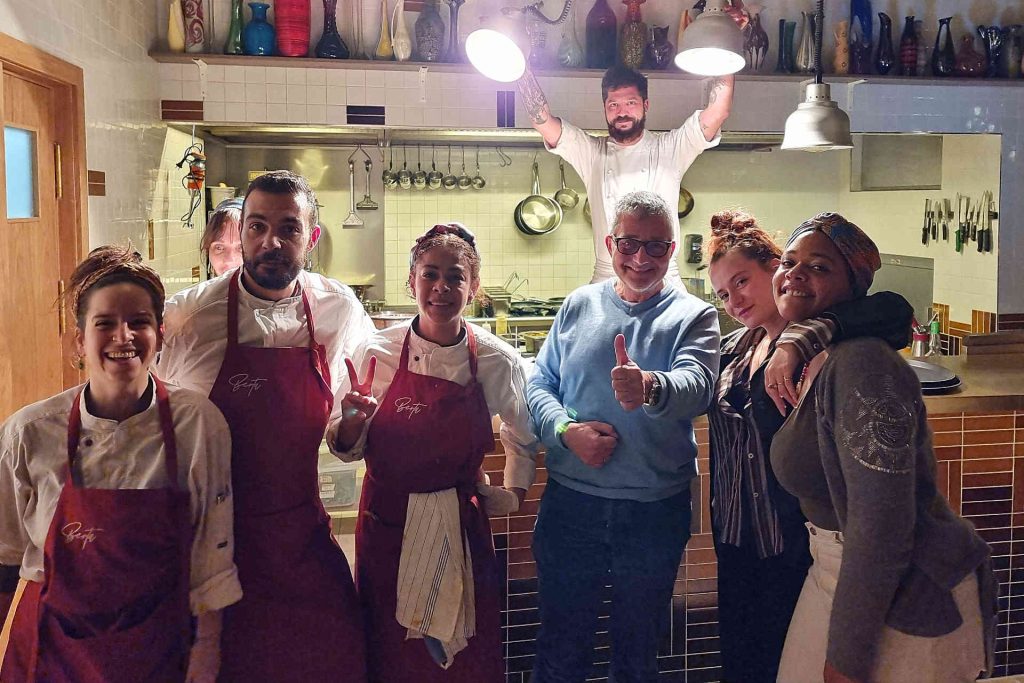
Berta, Berlin © Pierre Nierhaus
Trend Report: Segments of the Hospitality Industry

When everything looks the same, uniqueness becomes the strongest currency. Independent dining is a creative laboratory and the avant-garde. Guests want stories instead of gimmicks, intimacy instead of noise.