Health instead of exploitation

Tony’s Chocolonely
Photo provided
Photo provided
Alexandra Gorsche © Conny Leitgeb Photography
7. January 2026 | 
Alexandra Gorsche
7. January 2026
|
Alexandra Gorsche

“Everyone deserves access to good, affordable healthcare. For many cocoa farmers, however, this is still far from reality.”
Tony’s Chocolonely

Sweet isn’t enough – How Tony’s Chocolonely combines health equity with chocolate

Health program for cocoa farmers

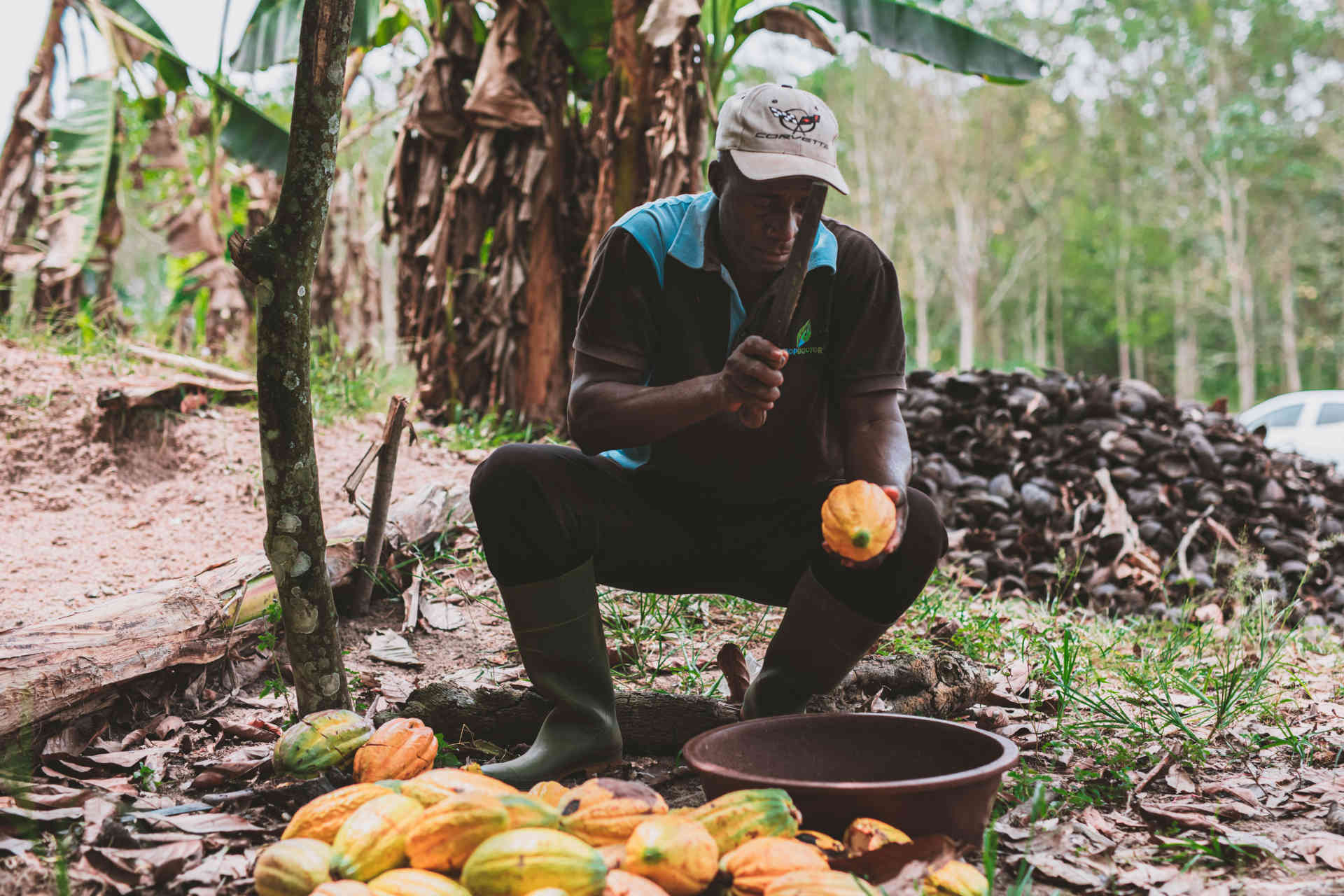
An expanded health program for 5,000 families shows that sustainability begins with fairness in the supply chain. Anyone talking about sustainability in the hospitality industry today needs to think beyond organic ingredients and fair trade labels. Sustainable gastronomy begins where the ingredients are grown. A prime example of this is Tony's Chocolonely, the Dutch impact company that fights exploitation, poverty, and child labor in cocoa farming with its open supply chain and radically fair business model.

The latest milestone: Together with the Elucid health network, Tony's is expanding its successful health program for cocoa farmers from Ghana to Côte d'Ivoire. This will give 5,000 more families access to medical care, vaccinations, and mobile clinical care – in a region where health is still a luxury.

Tony's health program in Côte d'Ivoire

  • Access to health insurance (CMU) for 5,000 families
  • Vaccinations for over 140,000 children, including malaria
  • Mobile clinics reach remote cocoa communities
  • Financing through long-term higher cocoa prices & support from GIZ, BMZ, GAVI
  • Goal: community-supported, lasting improvement in living conditions

Active step against exploitation

This is not just about medical aid, but about structural change: farmers are to gradually take on contributions themselves in order to support the programs in the long term. At the same time, Tony's continues to pay a premium for fair trade cocoa – an active step against the poverty that fuels exploitation in the industry.

Impetus for the industry:

  • Sustainability must be considered throughout the entire supply chain
  • Health care is a human right – and an economic lever against poverty
  • Brands that make responsibility visible and verifiable gain trust and relevance

From Genusspunkt 3/2025

A la table, s'il vous plaît! A la table, s'il vous plaît! A la table, s'il vous plaît! A la table, s'il vous plaît!
Copyright for the featured images used:
Photo provided

Food Trends 2026

How health, alcohol-free, AI, and social media are redefining our shopping habits

From gut health to alcohol-free enjoyment, from AI-supported shopping planning to viral food hypes: Austrian online supermarket Gurkerl.at sees four megatrends that will permanently change the food and beverage industry in 2026. Head buyer Nina Gerhardt explains why consumption is no longer just about price and availability – but about lifestyle, well-being, and digital intelligence.

Culinary art meets species conservation

Relais & Châteaux

When culinary excellence becomes an ecological statement—and top chefs take responsibility: Sustainability doesn’t end with packaging—it begins with product selection. This is impressively demonstrated by the Relais & Châteaux association, which, with over 580 member establishments, is considered the world’s largest gourmet community. Together with the NGO Ethic Ocean, it has launched an initiative that could not be more consistent: its chefs are committed to removing endangered fish and seafood species from their menus until stocks have recovered.

Team code decoded

What Human Design reveals about leadership

If you really want to understand your employees, you have to look deeper. How an unusual tool reduces conflicts, unleashes potential, and changes duty rosters.

quick & dirty
Photo provided
Health instead of exploitation

Sweet isn’t enough – How Tony’s Chocolonely combines health equity with chocolate