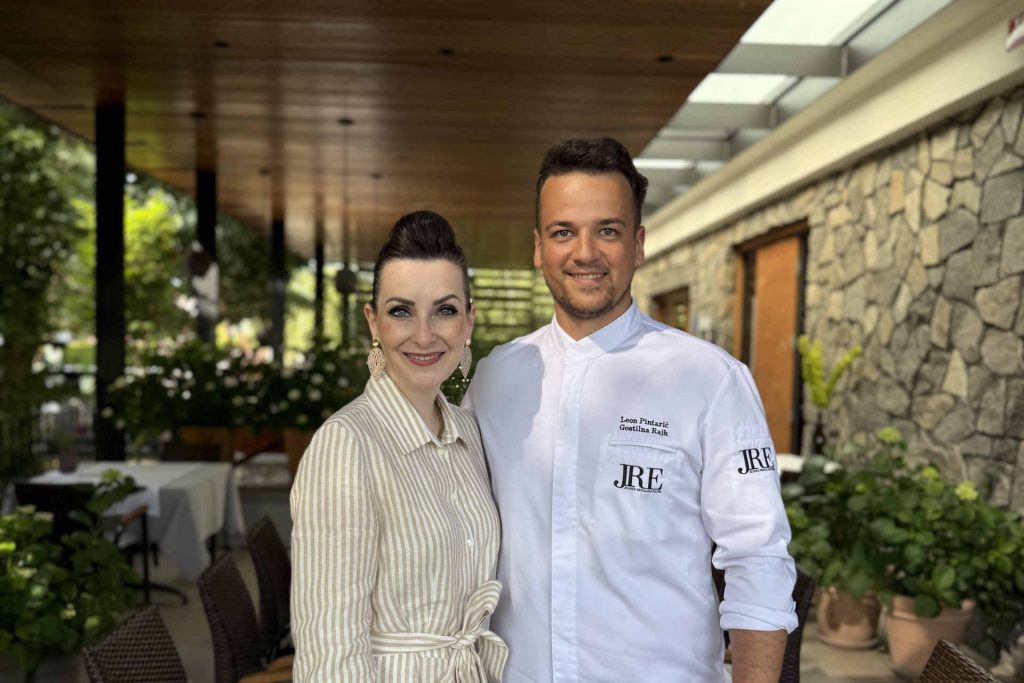

A place that doesn’t need to be loud to make an impression
Some restaurants need no lengthy introduction. You walk in, take a seat, feel the atmosphere and understand. Gostilna Rajh in Bakovci, not far from Murska Sobota in north-eastern Slovenia, is such a place. A place that doesn’t need to be loud to make an impression. A family-run business that has long been regarded as a culinary ambassador in the Prekmurje region. And a restaurant that demonstrates just how powerful a sense of place can be when it is understood not as nostalgia, but as a philosophy.
Gostilna Rajh is run by Tanja Pintarič and sommelier Damir Pintarič. In the kitchen, Leon Pintarič is now shaping the next phase of the establishment. He is part of the fifth generation and thus not only a chef, but also a translator of a family history that goes far beyond recipes. “Gostilna Rajh in three words? Tradition, heritage, good recipes,” says Leon Pintarič. A sentence that sounds simple at first glance, but describes the essence of this establishment with astonishing precision.
A family business as a culinary memory
At a time when many restaurant concepts rely on design, trends and presentation, Gostilna Rajh feels refreshingly down-to-earth. Here, the focus is not on posturing, but on the produce, the region, the family and the question of how to carry on a culinary heritage in a way that remains relevant for the next generation.
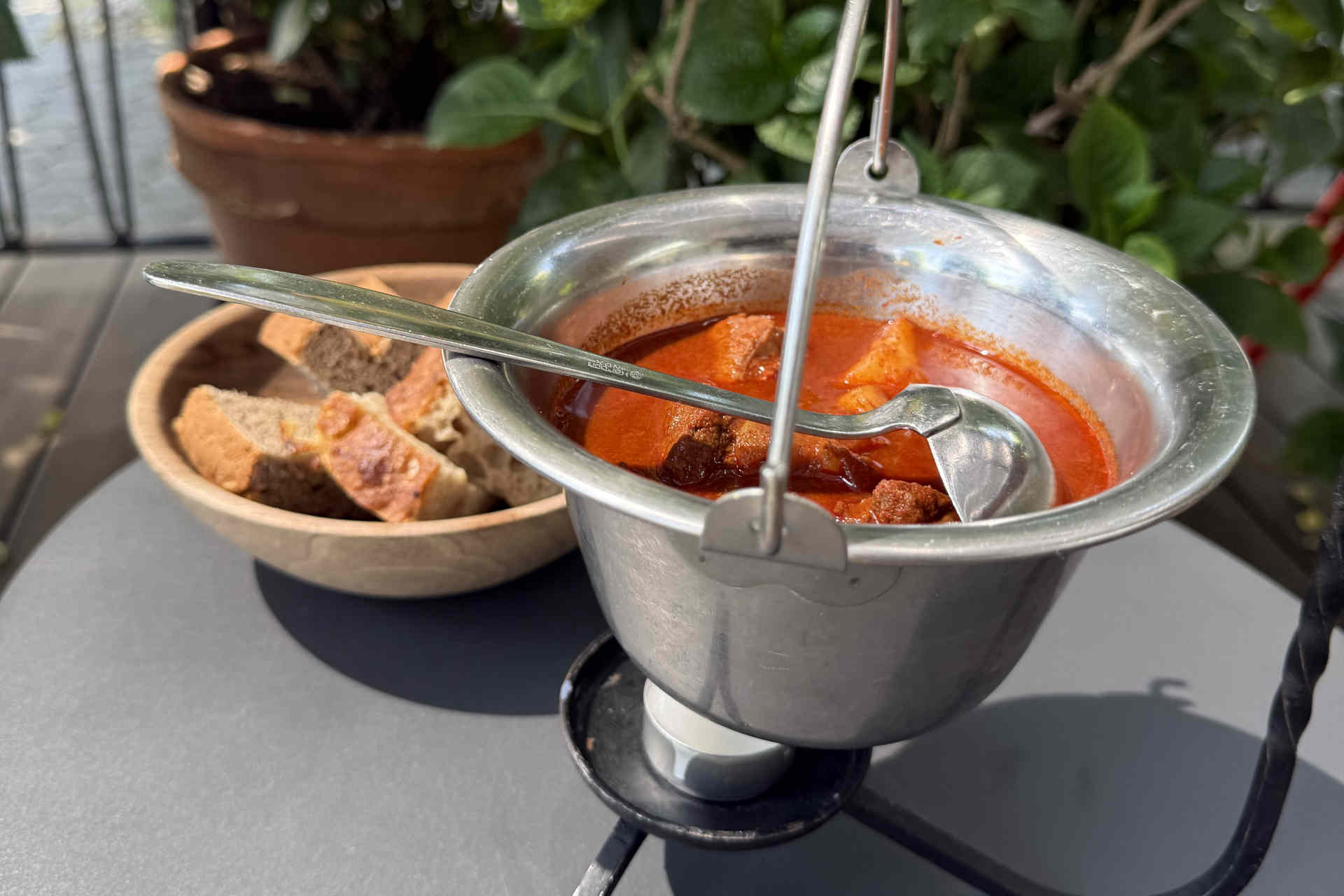
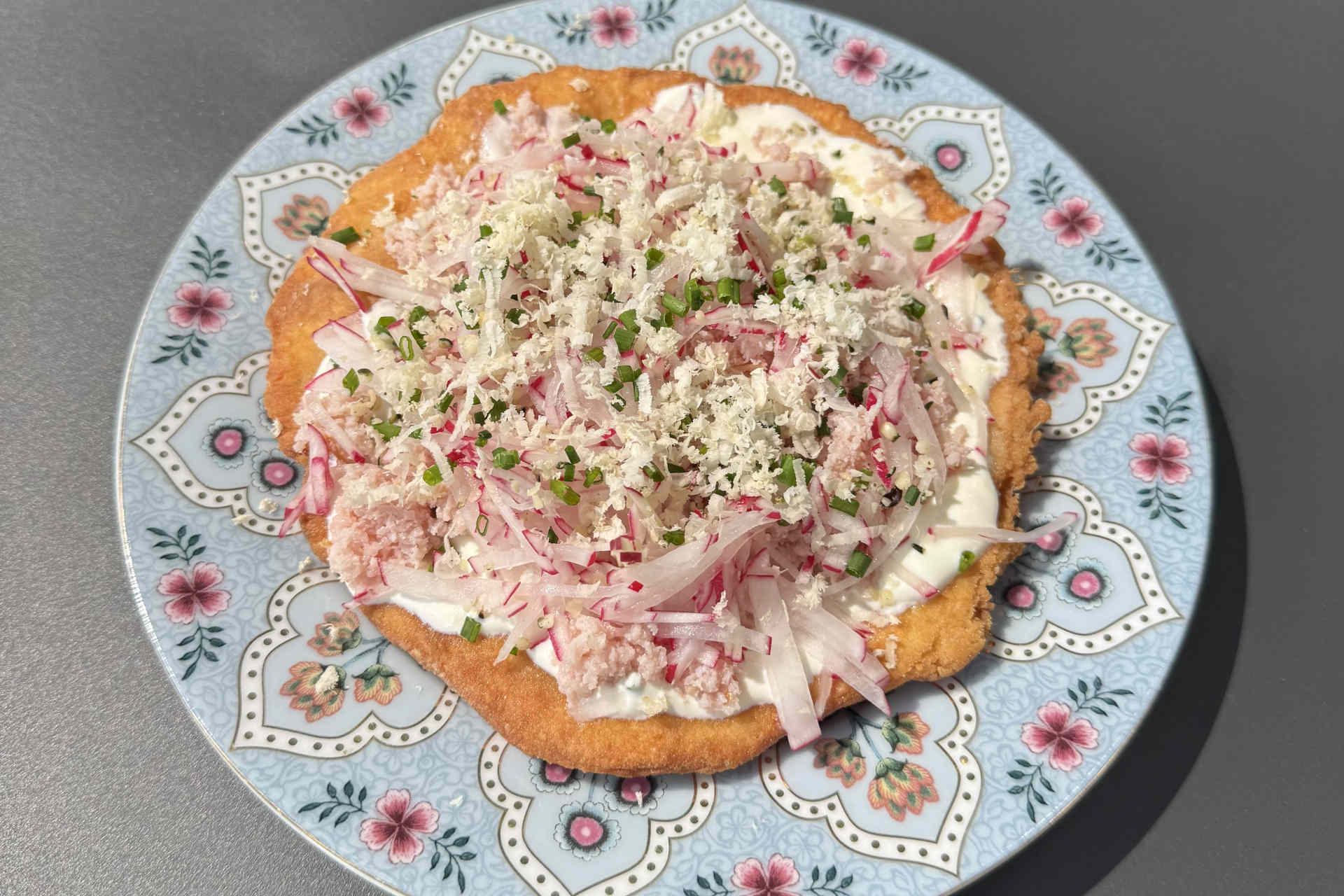
Leon Pintarič has gathered his knowledge not only in kitchens, but above all where many great culinary stories begin: within the family. From his great-grandmother, grandmother and his mother Tanja, from the recipes of earlier generations. It is particularly touching that he still works with his great-great-grandmother’s handwritten recipes. “I have a cookbook from my great-great-grandmother. The recipes are all written by her, handwritten,” he explains. His philosophy is clear: the dishes that built the restaurant will not be changed. “That’s Prekmurska gibanica, bograč and lángos. They’ll never be changed.” This approach is remarkable. For he does not confuse further development with interchangeability. The classics remain classics. Not because one doesn’t dare to try anything new, but because one knows that certain dishes are the backbone of a restaurant.
Prekmurje on a plate: Lángos, Bograč and 16 layers of tradition
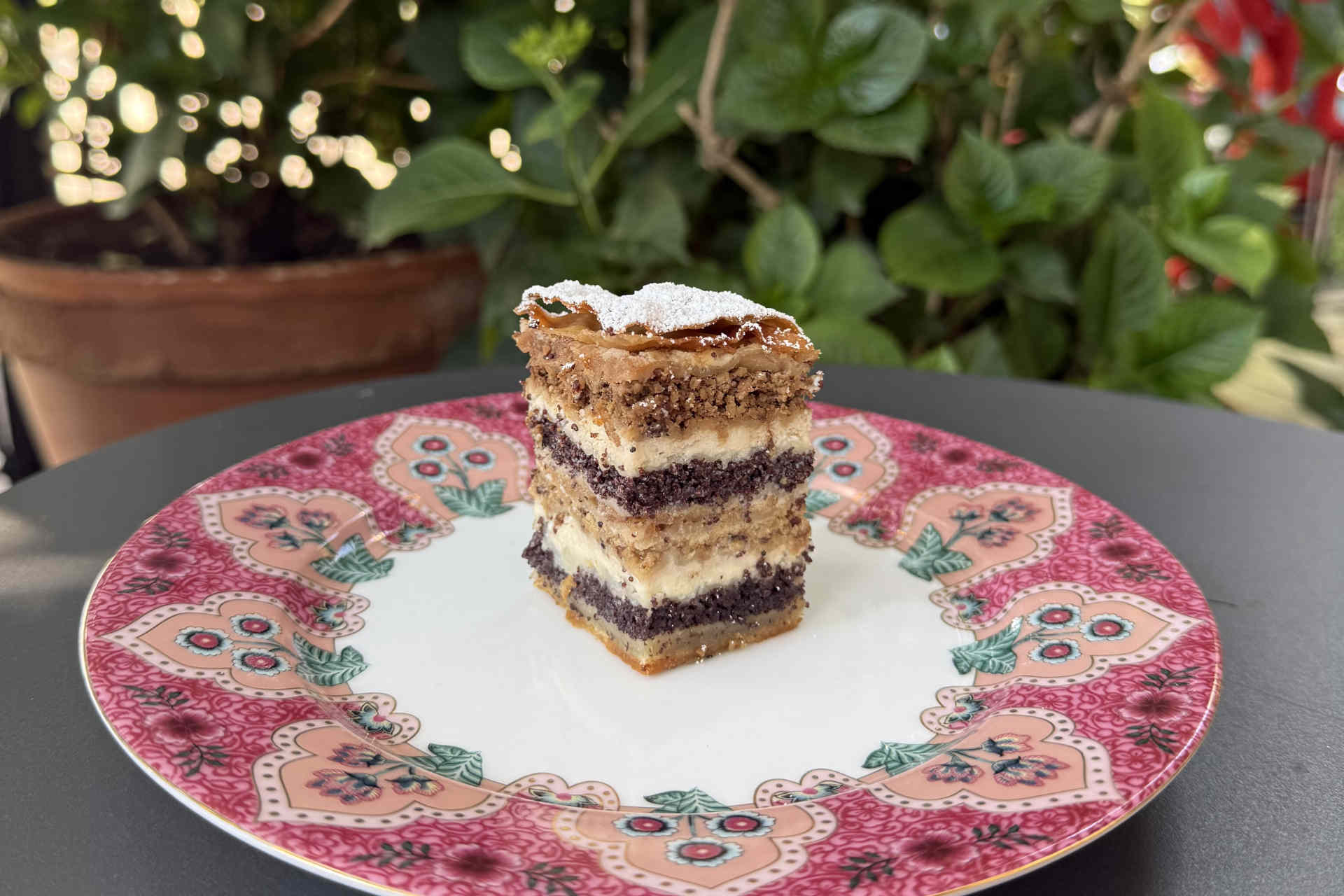
When asked what Prekmurje on a plate means, Leon Pintarič replies without hesitation: “Prekmurje, or our region here, is represented by three dishes. They are Lángos, Bograč and Prekmurska gibanica.” These three dishes say a lot about the region. Lángos, the fried dough, represents down-to-earth, indulgent cuisine that fills you up and makes you happy. Bograč, a hearty stew made with three types of meat – pork, beef and venison – is a dish of depth, warmth and regional roots. And Prekmurska gibanica, the famous dessert made with walnuts, quark, poppy seeds and apples, with its multiple layers, is almost a culinary symbol of the region itself. “It’s repeated twice, making a total of 16 layers,” explains Leon. Anyone wishing to understand just how much history, craftsmanship and identity can be packed into a dessert will find an impressive answer here.
Why vinegar, salt and umami go hand in hand here
One of the most fascinating stories from my conversation with Leon Pintarič concerns two simple yet fundamental ingredients: salt and vinegar. “I can remember two phrases from my great-great-grandmother: ‘Never forget the salt and the vinegar.’ What sounds like a kitchen adage is, in truth, a deep understanding of flavour. In regional cuisine, vinegar was used not only as an acidifier, but as a flavour enhancer, a balancing agent, and a means of adding depth to stews and hearty dishes.” Leon describes it as that fifth taste, that umami moment, which makes a dish more complete. This is precisely where Gostilna Rajh’s strength lies: tradition is not romanticised, but understood in culinary terms. It is not about simply reproducing old recipes. It is about grasping their logic and carrying them forward with contemporary precision.
The signature dish: pickled beef – a reason to return
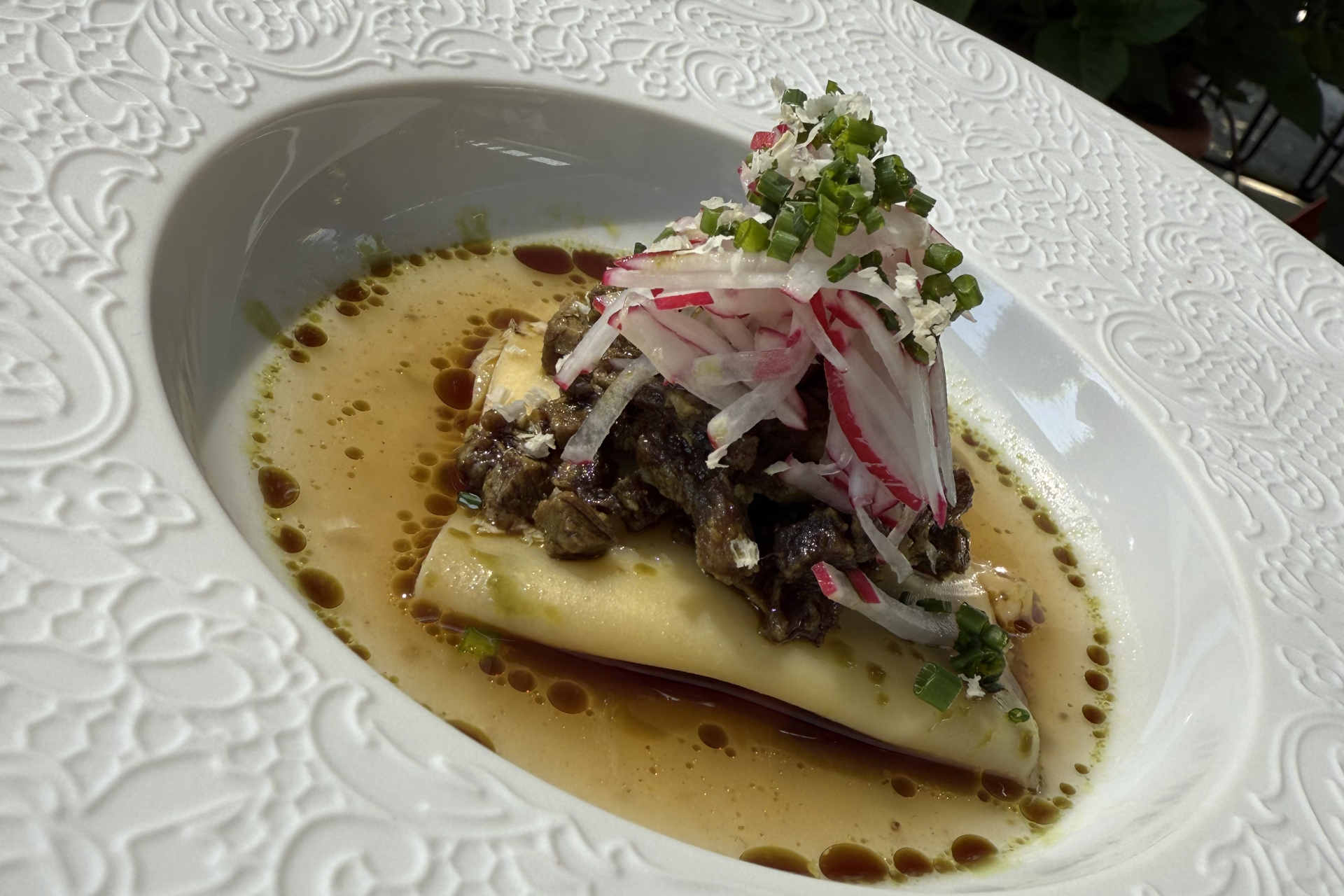
One dish that illustrates this philosophy particularly well is Gostilna Rajh’s pickled beef. Sour beef, delicately marinated, served with radishes, chives, horseradish and pumpkin seed oil. Served with a wafer-thin dumpling in an aromatic broth. This dish isn’t gimmicky; it isn’t designed for Instagram drama. And that is precisely why it sticks in the memory. It shows just how much elegance can be found in seemingly simple dishes when ingredients, technique and memory come together. A signature dish is not simply a restaurant’s best-known dish. It is the dish that defines its identity. The one people talk about. The one they want to eat again. The one they associate with the place. At Gostilna Rajh, the pickled beef is precisely such a dish: excellent, regional, precise and one that keeps you coming back.
Set menu or à la carte? Ideally, both
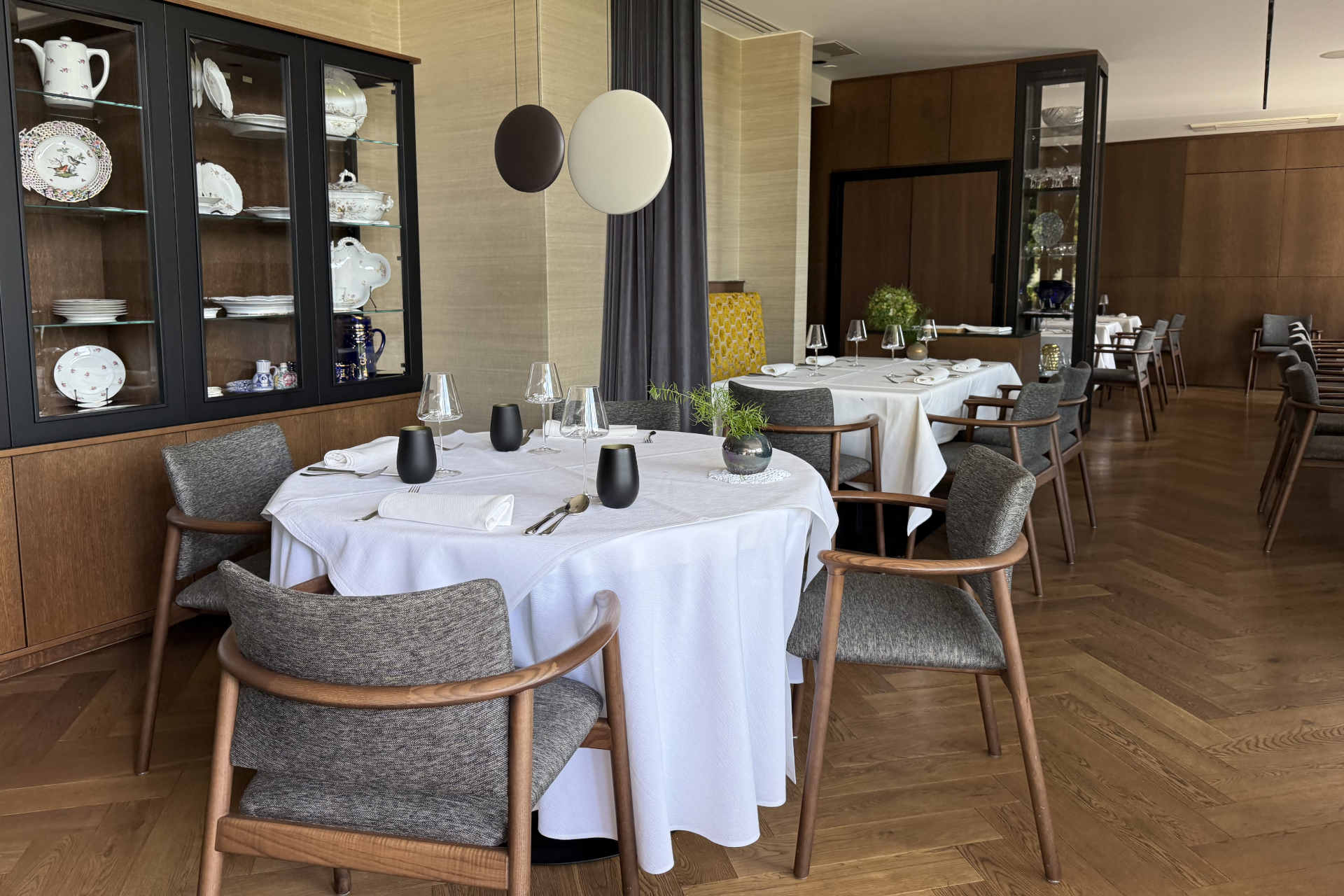
According to Leon Pintarič, anyone visiting Gostilna Rajh for the first time should opt for the set menu. “A five- or seven-course set menu, so you can really get a feel for everything we have to offer. And then à la carte on your next visit.” That’s a sensible approach. Because Rajh works on several levels. You can eat à la carte at lunchtime or in the evening. But you can also let yourself be guided through a set menu that reveals the restaurant’s signature style in greater depth.
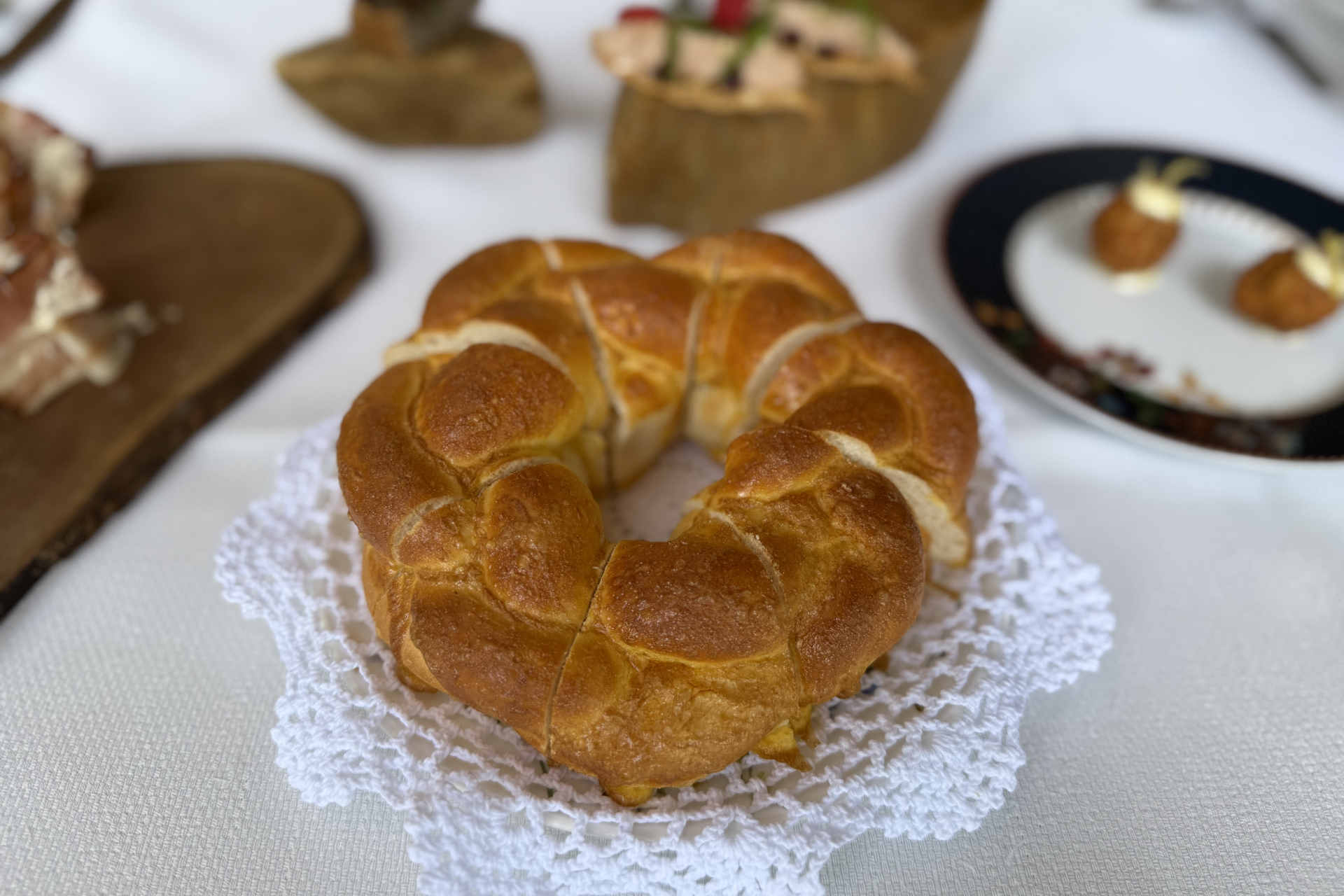
Right from the start, it’s clear just how deliberately the story is told here. Small appetisers are served on a stone from the River Mur. A lovely detail that isn’t just visually striking, but subtly underlines the restaurant’s regional roots. These are accompanied by, for example, buckwheat bread with pumpkin seed oil butter, chives and salt; a tart with cream cheese and cured meat; homemade pork pâté; spicy smoked bacon; duck liver pâté with Jurka grape jam and raspberries; or a deep-fried ball of couscous and asparagus with lemon mayonnaise. Accompanied by home-baked bread, a twisted yeast dough that proves: at Gostilna Rajh, hospitality doesn’t just begin with the main course.
When tomatoes become a regional narrative
A particularly summery start to the menu is devoted entirely to the tomato. Served hot and cold, in a variety of colours, textures and forms. Yellow, red and green tomatoes are paired with goat’s cheese, avocado cream, borage, preserved lemons and pumpkin seed oil. This is followed by a cold dish featuring lángos and tomatoes. What happens here is typical of Rajh: a product is not overloaded, but presented from different perspectives. A tomato is not simply a tomato. It becomes a stage for acidity, sweetness, freshness, fat, herbs and texture. The pumpkin seed oil gives the dish that regional fingerprint which immediately reveals where you are eating. Regional cuisine does not arise simply from the use of local produce. It emerges when these products are given a recognisable culinary language.
Somewhere between a traditional pub, fine dining and a warm, family atmosphere
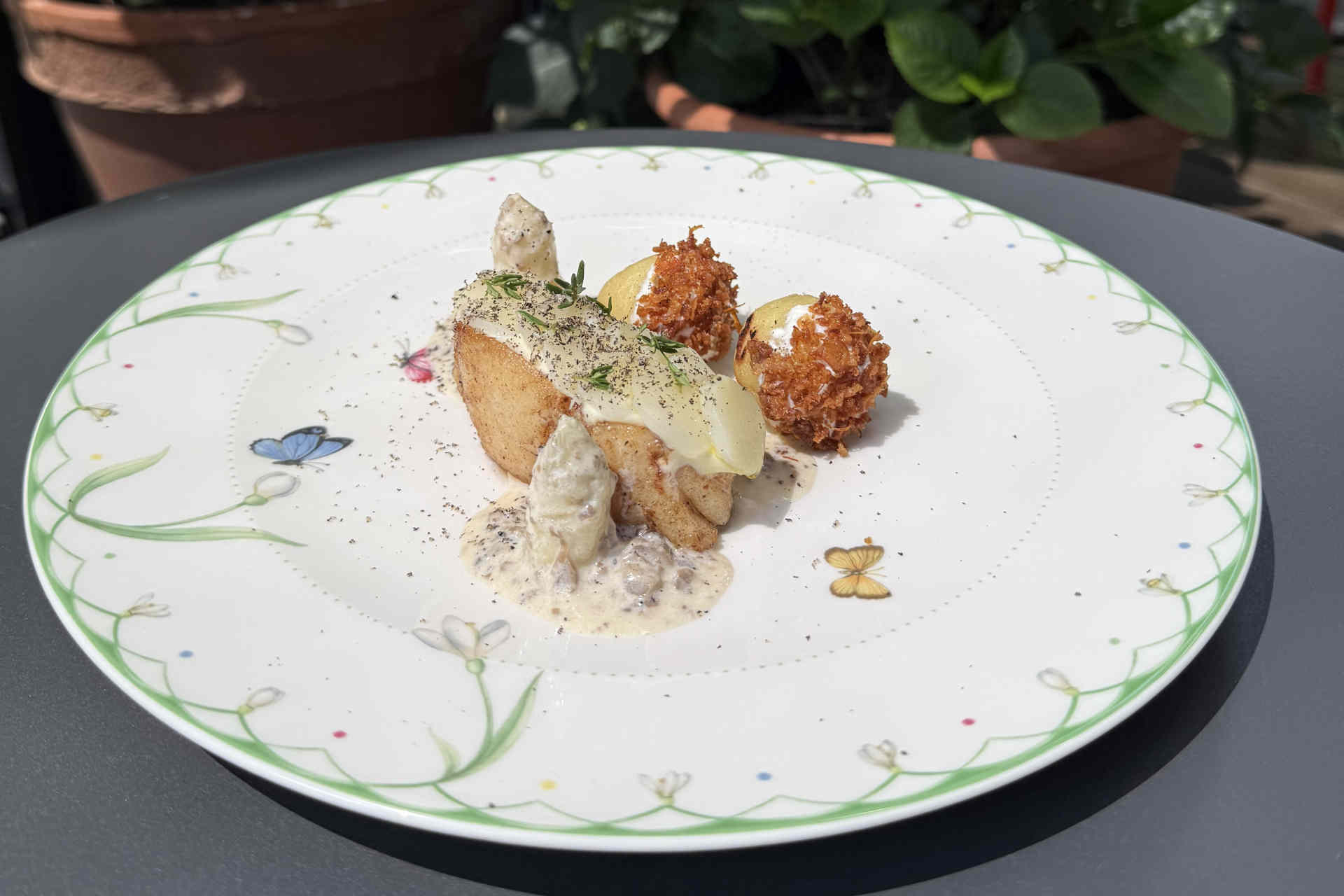
Gostilna Rajh defies easy categorisation. And that is precisely what makes it so intriguing. It is a traditional pub, a family restaurant, a culinary destination and, at the same time, a place where a finely crafted menu can be enjoyed. Dishes such as pike-perch with Dödeli, crackling, white asparagus and truffle demonstrate how confidently the restaurant bridges the gap between down-to-earth simplicity and sophistication. Dödeli and crackling bring regional substance and familiarity, whilst asparagus and truffle add aromatic elegance. This is not a cuisine that hides its origins to appear more international. It is precisely because it takes its origins seriously that it becomes so compelling.
This blend of hospitality, authenticity and contemporary standards is one reason why Rajh is also of interest to the hospitality industry. The establishment demonstrates how tradition can be used not as a hindrance, but as a distinguishing feature.
Rajh’s Pavlova: A dessert that’s worth the trip
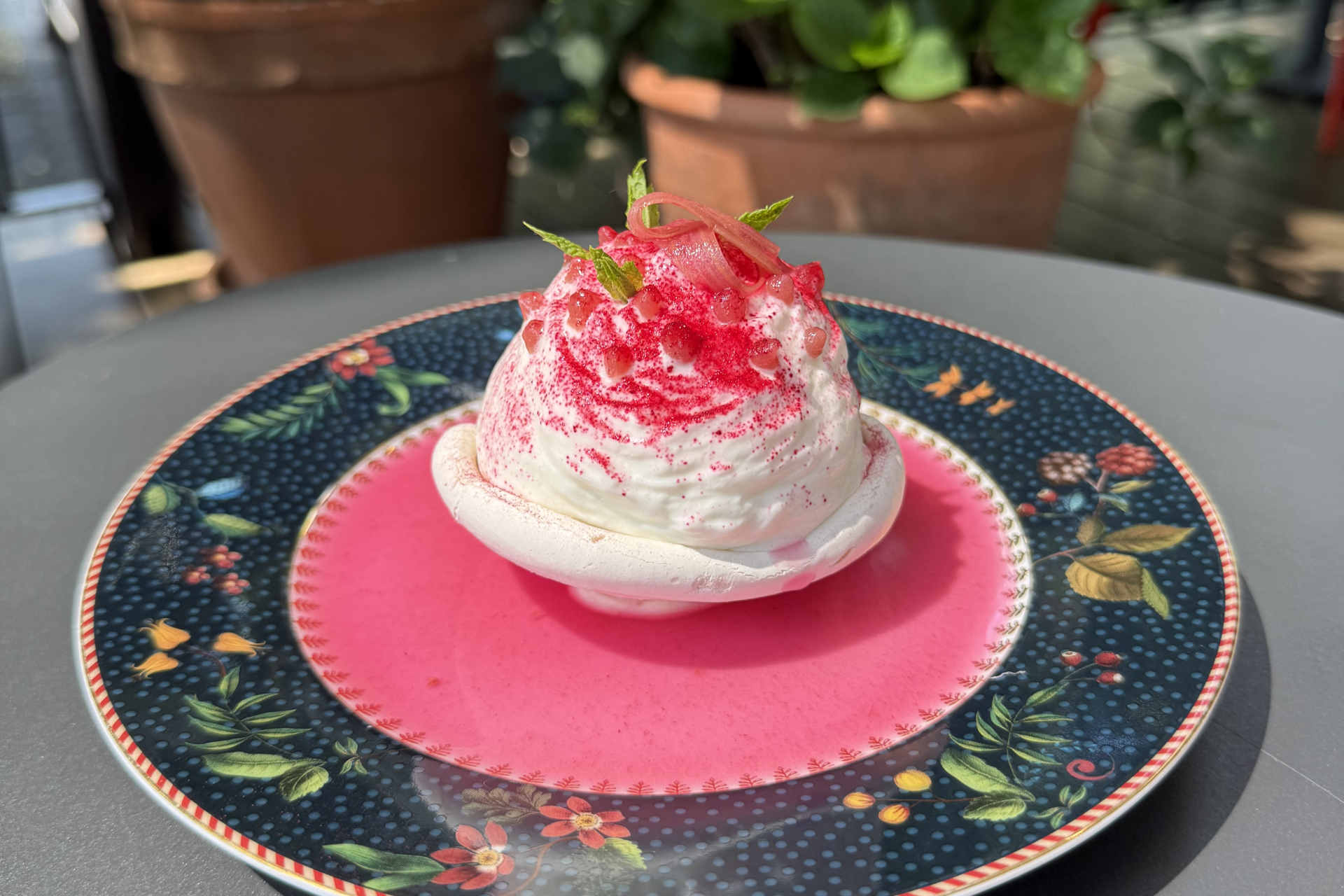
Rajh stays true to his style when it comes to dessert too: familiar elements, given a modern twist, and perfectly balanced. Rajh’s Pavlova with meringue, yoghurt foam, rhubarb gel, elderflower ice cream, strawberries and pickled rhubarb is a dessert that tastes of summer without being arbitrary. Crunchy, creamy, fresh, floral, tart and sweet – this Pavlova is not a heavy finale, but an elegant closing chord. A dessert that not only rounds off a meal but also makes you want to come back again. Especially at a time when desserts often seem either very traditional or overly contrived, Rajh demonstrates just how powerful a finale can be when it remains emotionally accessible whilst still impressing with its craftsmanship.
Three generations under one roof
It is well known that family-run businesses in the catering industry have a special dynamic. At Gostilna Rajh, this dynamic is not romanticised, but lived out with humour and as a matter of course. Leon describes working together in a single word: “interesting”. “There are three generations of us working here: my grandad, my mum and me. My grandad is in charge of procurement, my mum is on the floor and I’m in the kitchen”, he says. This sentence shows that roles are clearly defined, that experience and youth work together, and that a business becomes particularly strong when every generation finds its place. For family-run businesses in the hospitality industry, this holds significant added value: succession is not achieved through handover alone. It succeeds through trust, the distribution of tasks and the willingness to view what already exists not as a burden, but as a foundation.
Why Rajh is a destination
Gostilna Rajh is located in Bakovci, a village in the Prekmurje region of north-eastern Slovenia. For guests from Austria, the restaurant is an ideal destination for a culinary getaway: close enough for a day trip, special enough for a proper holiday. The surrounding area offers further attractions. Murska Sobota, with its historic castle, is one of the region’s cultural highlights. For the adventurous, there are hot-air balloon rides with the Balonarski Klub Bakovci. Yet the real reason for the trip remains the food. For Rajh conveys a feeling that has become rare in the restaurant trade: you don’t just come to eat. You come to understand a region.
Our conclusion: A restaurant with heritage, character and heart
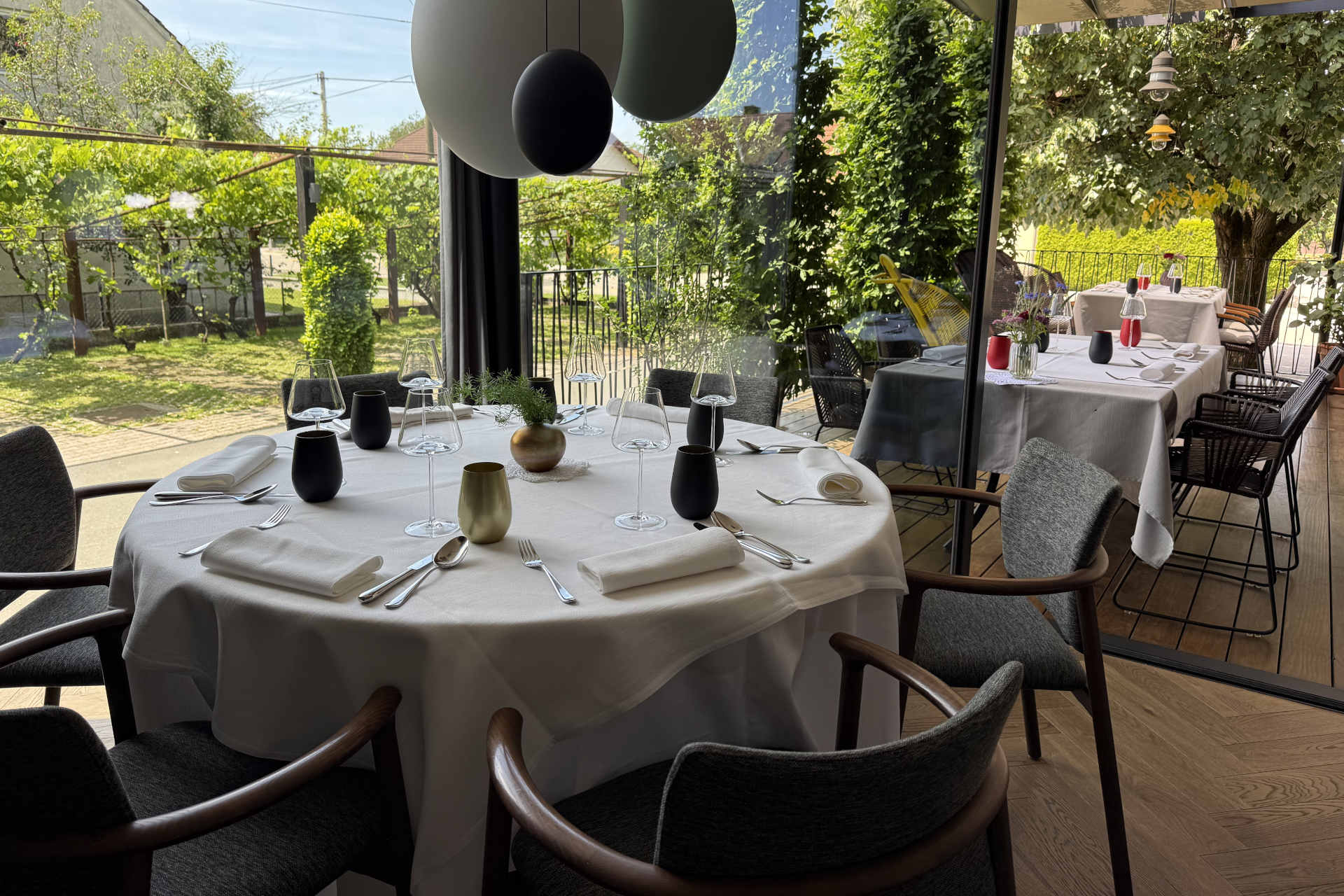
Gostilna Rajh is an establishment that demonstrates just how much power family history can hold when taken seriously in culinary terms. Tanja, Damir and Leon Pintarič run a restaurant that not only represents Prekmurje, but brings its flavours to life. Here, hospitality, craftsmanship, regional produce and modern flair come together. There is à la carte, there is a set menu, there is lunch and dinner, a terrace and a dining room, a pub atmosphere and culinary sophistication. Above all, however, there are dishes that linger in the memory. A vinegar-marinated meat dish that keeps you coming back. A pavlova that tastes of summer. A Prekmurska gibanica with 16 layers of history. And a young chef who has understood that the future sometimes begins precisely where you know what must never be changed. Or as Leon Pintarič says: “This region stands for good food.” That’s really all you need to know about Prekmurje. You just have to taste it.
Gostilna Rajh at a glance
Address: Soboška ulica 32, Bakovci, 9000 Murska Sobota, Slovenia
Cuisine: Regional Slovenian cuisine with a focus on Prekmurje
Character: Fifth-generation family business, traditional inn, culinary destination and modern interpretation of regional classics
Hosts: Tanja Pintarič and sommelier Damir Pintarič
Cuisine: Leon Pintarič, representing the fifth generation, shapes the culinary evolution of the establishment
Awards and memberships:
- Guide MICHELIN Slovenia 2025: Bib Gourmand for good quality and good value for money
- Falstaff International Restaurant Guide 2025, Slovenia: 91 points, 3 forks
- JRE Jeunes Restaurateurs: Member
- Slovenia Green Cuisine: Restaurant with the Slovenia Green sustainability label
- Chaîne des Rôtisseurs: Member
About Alexandra Gorsche
Alexandra Gorsche is an Austrian food journalist, moderator, speaker, consultant and culinary voice with a strong focus on fine dining, hospitality and contemporary restaurant culture. She is editor-in-chief of Genusspunkt, responsible for the culinary direction of stayinart and contributes to renowned publishers and media brands such as Callwey Verlag. Her work explores the intersection of gastronomy, culture, design, travel and entrepreneurship from Michelin-starred restaurants to emerging food trends, chefs and hospitality concepts.